

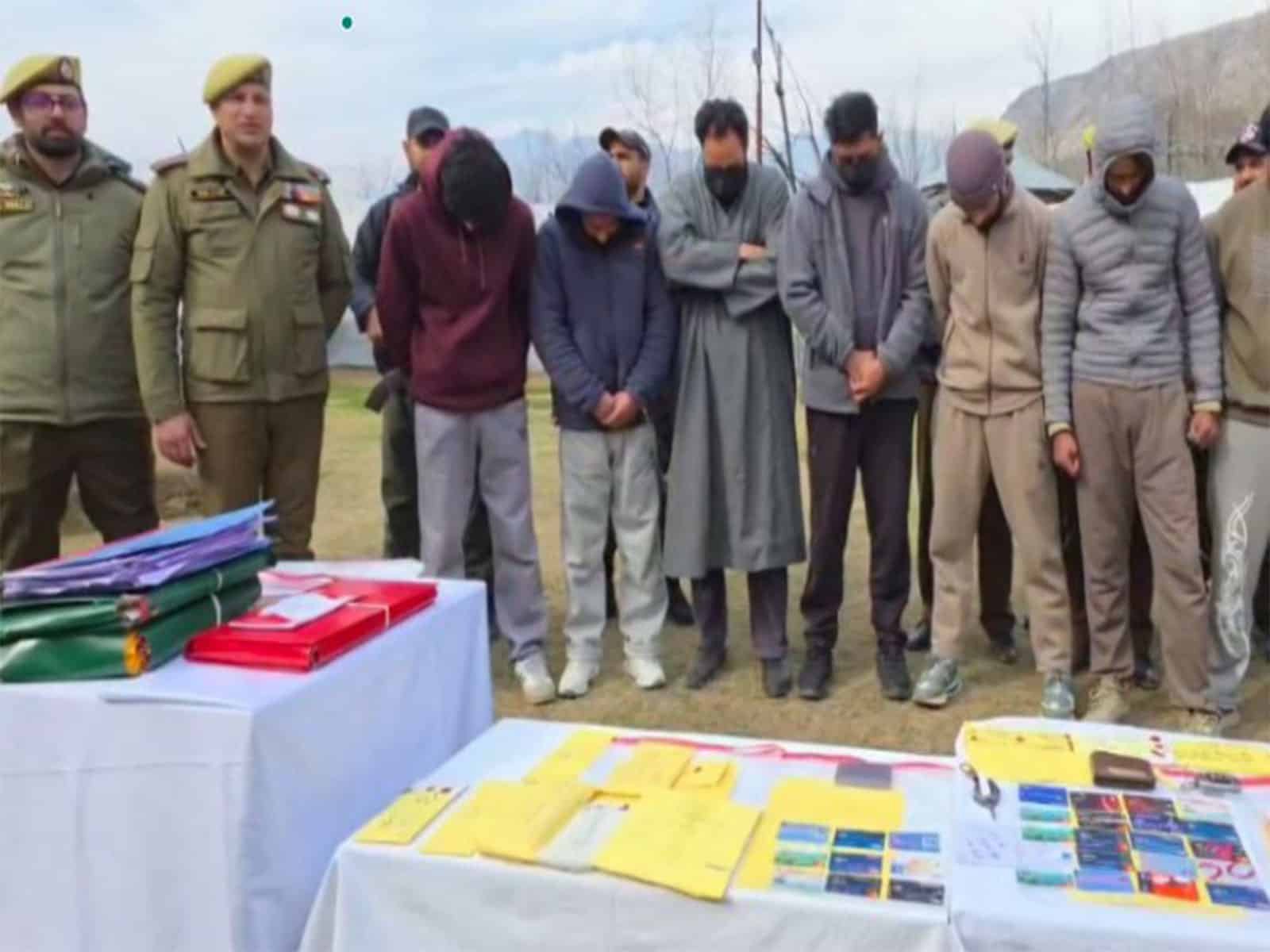

Srinagar: Jammu and Kashmir Police have busted a major transnational online investment fraud involving ₹209 crore, arresting nine people including the alleged kingpin, an MBBS doctor from Haryana identified as Ekant Yogdutt alias “Dr Morphine.” He was apprehended at Delhi’s Indira Gandhi International Airport while returning from China.
The case surfaced following a complaint by a resident of Ganderbal, after which a Special Investigation Team (SIT) was constituted. With the help of cyber experts, investigators analysed layered bank transactions, fake website networks and digital trails to expose the organised racket.
Fake Portals and the Crypto Profit Trap
According to police, the gang promoted bogus investment portals on social media and search engines, luring victims with promises of high and risk-free returns through cryptocurrency and coin trading schemes. Once funds were invested, the money was routed into bank accounts opened in Budgam, Srinagar, Ganderbal and Baramulla, then rapidly moved through multiple layers to other states and abroad to obscure the money trail.
Certified Cyber Crime Investigator Course Launched by Centre for Police Technology
So far, 835 bank accounts linked to the operation have been identified, with verified transactions worth ₹209 crore in 290 accounts. Officials estimate the total fraud could exceed ₹400 crore as the probe expands. Investigators are examining remaining accounts, conducting forensic analysis of digital evidence and initiating attachment of properties belonging to the accused.
The Mule Account Network
Interrogation revealed that the main accused learned cyber fraud techniques while studying in the Philippines and later established links with Chinese nationals. He allegedly ran the network through local operatives in Kashmir who mobilised bank accounts, facilitated fund transfers and communicated with investors.
A key component of the racket involved recruiting economically vulnerable individuals, who were paid ₹8,000 to ₹10,000 per month to rent out their bank accounts and ATM cards. These mule accounts were used to receive and transfer defrauded funds. Investigators also found suspected involvement of certain bank insiders who provided QR codes linked to such accounts, which were embedded into fake investment websites.
SIT Investigation and Digital Forensics
The gang operated Telegram channels where new QR codes were regularly uploaded. Whenever an account was frozen by cybercrime units, it was immediately replaced with another, allowing the fraud to continue without disruption. The module relied on digital layering, multi-stage fund transfers and cross-border money movement.
Police said the case highlights the growing sophistication of cyber-enabled financial crimes involving fake digital platforms, organised mule-account ecosystems and foreign connections. Agencies are now tracing the international money trail and analysing technical logs to identify additional associates. More arrests are likely.
Legal Action and Broader Crackdown
Authorities have warned the public against online platforms that promise unusually high or guaranteed returns, especially those linked to cryptocurrency trading. Citizens have also been advised not to rent out bank accounts, ATM cards or QR codes for monetary incentives, as this can lead to criminal liability.
Officials said strict action is being taken under cybercrime, money laundering and criminal conspiracy laws. The operation is part of a broader crackdown aimed at dismantling mule-account networks and fake investment platforms driving large-scale digital financial fraud.
