

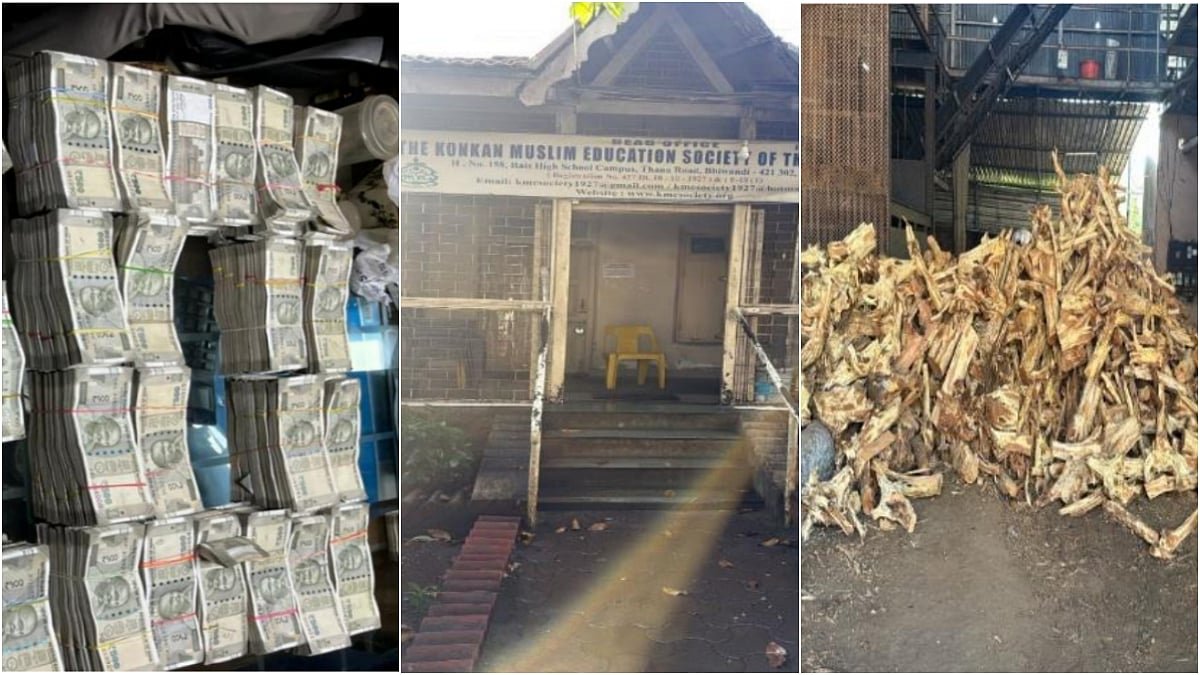

Mumbai / New Delhi: In a major action against terror financing, the Mumbai Zonal Office of the Directorate of Enforcement (ED) carried out extensive search operations on December 11, 2025, under the provisions of the Prevention of Money Laundering Act (PMLA), 2002. The searches were conducted at 40 locations across several districts and states, including the Padgha–Borivali region near Mumbai, Delhi, Kolkata, Hazaribagh, Prayagraj, Daman and Ratnagiri.
The action forms part of an ongoing money laundering investigation against a highly radicalised ISIS-linked module, involving Saquib Nachan and other accused persons, officials said.
₹9.70 crore in cash and gold seized
According to the ED, movable assets worth approximately ₹9.70 crore were recovered and seized during the search operations. This included cash amounting to about ₹3.70 crore and gold jewellery and bullion valued at around ₹6 crore.
In addition, the agency froze 25 bank accounts belonging to the accused persons and suspects linked to the case. Officials also seized a large number of incriminating documents, radical literature, digital devices, and other material relevant to the investigation. Documents relating to various immovable properties owned by the accused and other suspected individuals were also recovered during the searches.
Probe based on NIA case
The ED initiated the money laundering investigation on the basis of FIRs registered and charge sheets filed by the National Investigation Agency (NIA) in case RC-29/2023/NIA/DLI. The NIA case was registered under various provisions of the Indian Penal Code (IPC), the Unlawful Activities (Prevention) Act (UAPA) and the Explosive Substances Act.
Investigations revealed that the accused were part of a well-organised and highly radicalised ISIS-linked module, actively engaged in recruitment, indoctrination, training, procurement of weapons and explosives, and in raising funds to sustain terrorist activities.
Illegal activities used to fund extremism
The ED said intelligence inputs received from the Anti-Terrorism Squad (ATS), Mumbai, indicated that individuals associated with this ISIS module were also involved in illegal revenue-generating activities to finance extremist operations.
These activities reportedly included the clandestine cutting, smuggling and sale of Khair (Kaith) wood. The proceeds from these illegal forest-based operations were suspected to have been diverted to support terrorist activities, investigators said.
Hawala links and financial trail uncovered
Financial analysis conducted by the ED revealed that several suspects had monetary linkages with the main accused in the case. These connections were identified through a detailed examination of bank accounts and transaction patterns.
The investigation also unearthed details relating to hawala operations, suggesting that illicit funds were being moved through informal channels to evade detection. Based on the gravity of the offence and the serious threat posed to national security, the ED expanded the scope of searches to include premises linked to the accused persons, their close associates and family members, as well as entities reflecting suspicious financial transactions with them.
Network extends to kattha industry
Further investigation revealed that individuals linked to the Borivali–Padgha ISIS module were involved in the illegal cutting and smuggling of Khair trees from reserve forest areas in the region. To unravel the entire nexus, the ED also conducted searches at premises of companies and entities involved in kattha production, which were allegedly procuring Khair wood from the accused and suspects.
During the search operations, Khair wood suspected to have been illegally sourced was found. The ED informed officials of the jurisdictional Forest Department for initiating appropriate action under applicable forest and environmental laws.
Investigation continues
ED officials said the agency’s focus is to dismantle terror financing networks by targeting both fund-raising mechanisms and money laundering channels. Further investigation in the case is currently underway, and more action is likely as the financial and operational links of the module are examined in greater depth.
