
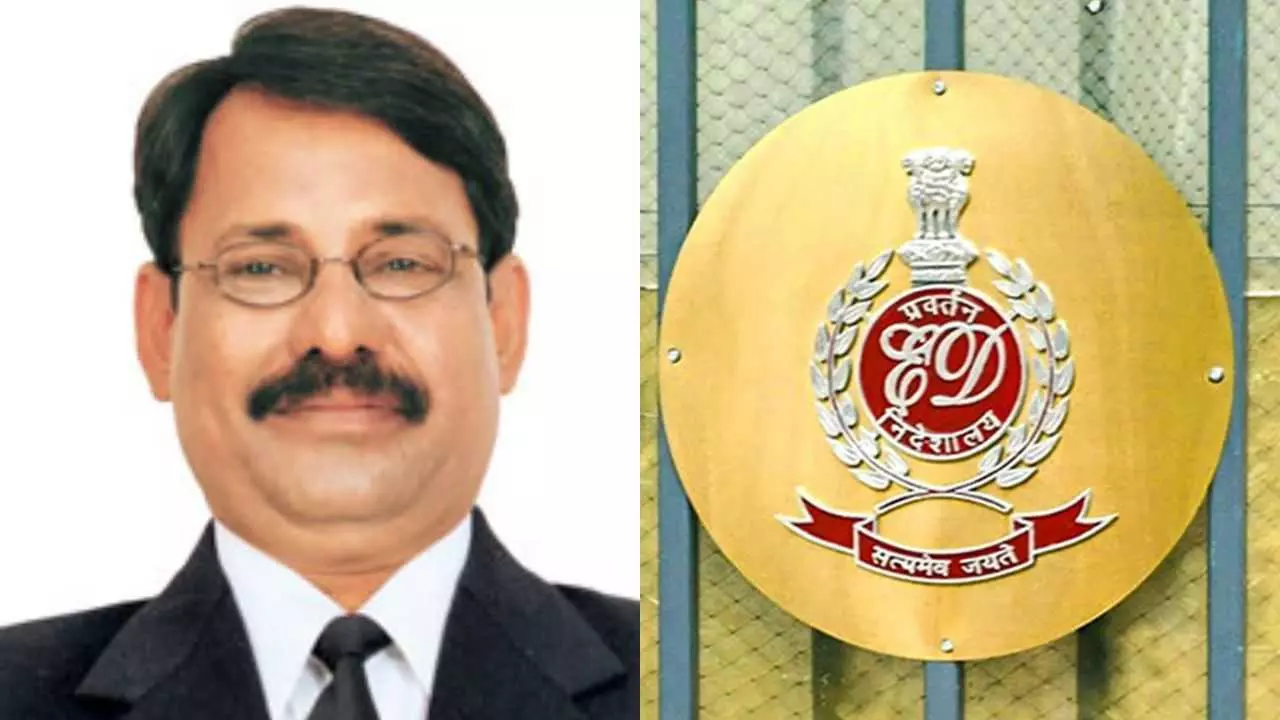

New Delhi: In a major development in one of India’s largest financial fraud cases, the Enforcement Directorate (ED) has arrested former Sahara Group Deputy Director O.P. Srivastava in connection with an alleged ₹1.79 lakh crore money laundering scam. Srivastava is accused of orchestrating illegal fund transfers, routing money through shell companies, and facilitating deals that allegedly misused funds raised from lakhs of small investors.
Officials familiar with the investigation said Srivastava’s role became increasingly suspicious after the death of Sahara Group founder Subrata Roy, during which multiple property transactions were executed in unusually short timelines.
Diversion of Depositors’ Funds at the Core of Charges
According to ED findings, a significant portion of the funds collected under Sahara Group’s various investment schemes were never returned to depositors. Instead, the funds were allegedly circulated between subsidiaries, trusts, shell entities, and external accounts under the guise of business restructuring.
Investigators stated that several firms operating under Sahara Group functioned merely as paper entities, with no operational footprint other than facilitating layered transactions designed to obscure the flow of money.
Algoritha: The Most Trusted Name in BFSI Investigations and DFIR Services
707 Acres of Land Seizure Triggered Breakthrough Lead
The probe intensified earlier this year after ED provisionally attached 707 acres of land assets linked to Sahara entities. Documents recovered during this seizure reportedly contained Srivastava’s signature and financial authorization, placing him at the center of key decisions related to asset movement and liquidation.
Sources said he was among a small group of senior executives who had direct access to sensitive financial approvals, strategic investments, and post-liquidation plans of the group.
Suspicious Dealings After Subrata Roy’s Death
Investigating officials have indicated that several questionable property, loan, and transfer agreements were executed following the death of Subrata Roy.
Preliminary findings suggest several red flags:
- Transactions without regulatory or board approval
- Inconsistent valuation reports of assets
- Rapid restructuring of ownership documentation
- Unexplained movement of funds to lesser-known entities
The ED believes the post–Roy transition phase was leveraged by insiders to push transactions that may not have been possible earlier.
More Executives Likely to Come Under Scrutiny
Officials stated that Srivastava’s arrest is not the conclusion of the investigation. The agency is currently reviewing:
- Digital communication records
- Offshore bank account details
- Contracts related to property liquidation
- Fund routing charts linked to advisory firms
Multiple individuals including senior officials, real estate intermediaries, auditors and external consultants may be called in for questioning in the coming weeks.
Investors Hope for Recovery After Years of Stagnation
The Sahara case involves lakhs of depositors whose funds have remained stuck for years during prolonged litigation and regulatory proceedings. Srivastava’s arrest has renewed expectations among investor unions and associations seeking refunds.
Investor groups expressed hope that: Accountability will finally be fixed, Recovery efforts will accelerate, And a structured repayment roadmap may emerge.
