



In the high-stakes world of cybersecurity, a single misstep can mean millions lost, reputations ruined, and legal consequences triggered. Enter DFIR teams—the specialized units tasked with detecting breaches, preserving forensic evidence, and restoring digital operations. Whether it’s a deepfake-fueled disinformation attack or a ransomware demand that locks down systems, DFIR teams serve as first responders.
With the rapid digitalization of India’s financial, healthcare, and critical infrastructure sectors, the demand for trained cyber responders has skyrocketed. Regulators have responded in kind: RBI’s 2018 guidelines require banks to conduct regular breach simulations; SEBI mandates annual vulnerability assessments for market participants; and IRDAI’s 2023 guidelines insist on disaster recovery planning. These aren’t mere recommendations—they’re enforceable mandates, and the consequences for non-compliance are steep.
FCRF x CERT-In Roll Out National Cyber Crisis Management Course to Prepare India’s Digital Defenders
Regulatory Web Tightens: RBI, SEBI, IRDAI, NABARD, NCIIPC, DPDP Act
Each major sector regulator now integrates cyber preparedness into its compliance frameworks, placing DFIR capabilities at the center of risk management. For instance:
- RBI requires banks and NBFCs to simulate crisis scenarios and report breaches.
- SEBI enforces daily penalties for failure to conduct security assessments.
- IRDAI compels insurance companies to test and document their disaster recovery plans.
- NABARD pushes rural banks into adopting cyber drills, using DFIR teams to simulate real-time incident response.
- NCIIPC monitors critical infrastructure like telecom, energy, and transport for espionage or sabotage threats, demanding rigorous incident response protocols.
- DPDP Act 2023 mirrors GDPR in holding data fiduciaries accountable, where any data breach must be promptly investigated and communicated with accuracy—relying on forensic audit trails created by DFIR teams.
The regulatory environment has evolved from recommendation to enforcement, making DFIR not just a tech function, but a compliance imperative.
The DFIR Workflow: Precision Under Pressure
At the operational level, DFIR teams function like digital firefighters. A ransomware incident, for example, sets off a meticulous protocol: attack vector identification, endpoint isolation, log analysis, evidence preservation, and secure data recovery. Simultaneously, the team prepares forensic reports to satisfy legal and regulatory audits.
This isn’t theoretical—regulators like SEBI impose penalties of ₹20,000 per day for non-compliance. RBI’s own crisis management plans require incident replay capabilities to assess institutional readiness. DFIR teams must maintain a fine balance between speed and precision, ensuring the organization can resume business operations without triggering further legal liabilities.

Their work also aligns with global best practices, as seen in GDPR, which requires forensic documentation for breach notifications to authorities and data subjects. The Indian Pension Regulator, operating under IRDAI, has added cybersecurity duties for pension fund custodians—again, relying on DFIR teams to secure sensitive financial data.
Building India’s DFIR Capacity: The CCMP Initiative
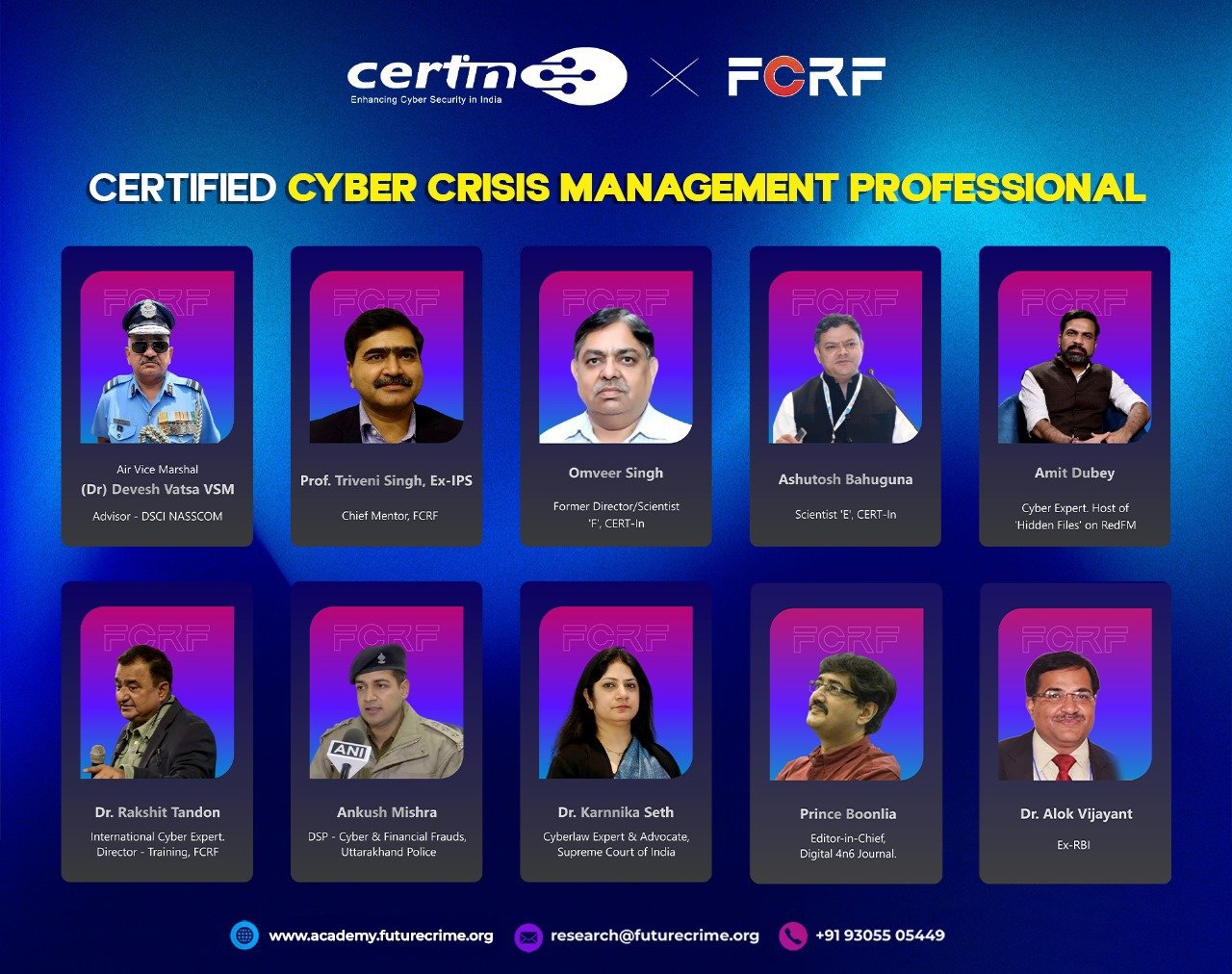
Recognizing the strategic role of DFIR in national cyber defense, the Future Crime Research Foundation (FCRF)—in collaboration with CERT-In—has launched the Certified Cyber Crisis Management Professional (CCMP) program. Beginning July 5, 2025, the 4-week, weekend-only online certification course is designed to bridge the critical talent gap in the DFIR landscape.
Covering 16 intensive modules—including threat intelligence, AI-led forensics, regulatory compliance, and cyber law—the program caters to CISOs, auditors, SOC teams, and even newcomers seeking to enter the cybersecurity domain. The course will be delivered through FCRF Academy’s LMS platform, with hands-on content drawn from RBI, SEBI, IRDAI, and DPDP Act compliance needs. The course is backed by FCRF’s Centre of Excellence in DFIR at Greater Noida.
As cybercrime costs India billions annually—according to estimates since 2017—the CCMP certification is more than an educational program; it’s a national security investment.
DFIR teams are no longer optional in the boardroom conversation on cyber preparedness. They are central to regulatory compliance, digital resilience, and public trust. From finance to pensions, from infrastructure to insurance, the ability to detect and respond to cyber threats in real time determines not just survival, but credibility.
The CCMP initiative marks a significant step in cultivating a trained, accountable, and regulatory-ready force of cyber crisis responders. As digital threats grow more complex and coordinated, the shield provided by DFIR teams could well define the future of cybersecurity in India.
