
Follow us on Google News

Delhi Police have disclosed the arrest of two suspects in a ₹50 lakh cyber fraud in which a hotel company’s finance manager was allegedly tricked into transferring money after receiving WhatsApp messages impersonating his managing director.
The Intelligence Fusion and Strategic Operations (IFSO) unit traced the fraudulent transaction to a bank account connected to the accused and arrested two men in Maharashtra.
Police said the entire ₹50 lakh was subsequently returned to the complainant under court orders. Investigators also prevented an additional attempted transfer of ₹48 lakh after the finance manager verified the instructions with the company’s actual managing director.
Fake WhatsApp Instructions Triggered ₹50 Lakh Transfer
The case began with a complaint from Rajeev Kumar, finance manager at Luxe Opera Hotels & Resorts Pvt Ltd.
According to police, an unidentified fraudster contacted Kumar through WhatsApp while pretending to be the company’s managing director.
The impersonator allegedly used the senior executive’s name and profile photograph to make the account appear genuine.
The complaint also alleged that the genuine contact number was blocked on Kumar’s phone and the fraudulent number was saved under the name “MD SIR”.
Police have not publicly explained how the alleged changes to the phone’s contact settings were carried out.
The fraudster reportedly created a sense of urgency and instructed Kumar to transfer company funds to a specified account.
Believing the instructions had come from his superior, Kumar transferred ₹50 lakh on October 16.
The money went to an account maintained with Bandhan Bank in the name of New Star Sofa Maker.
The transaction appeared to be an ordinary business payment initiated on instructions from senior management.
However, police later determined that the messages were part of an alleged impersonation scheme.
Second ₹48 Lakh Demand Exposed The Fraud
The suspected fraudster allegedly returned with another payment demand on October 21.
This time, Kumar was instructed to transfer ₹48 lakh to an IndusInd Bank account in the name of N S Traders.
Before processing the second transfer, the finance manager independently contacted the company’s actual managing director.
That verification revealed that the instructions were fraudulent.
The second payment was stopped, preventing a further loss of ₹48 lakh.
A complaint was registered with the IFSO unit at Delhi Police’s Special Cell on October 21.
Investigators subsequently began tracing the money already transferred and examining the bank account used to receive it.
The investigation focused on financial records, mobile numbers and electronic devices associated with the beneficiary account.
Police said the original ₹50 lakh was eventually returned to the complainant following directions from the competent court.
Two Suspects Arrested After Bank Account Investigation
Investigators traced the payment to the Bandhan Bank account held in the name of New Star Sofa Maker.
According to the police statement, the account had been opened in the name of Rajjab Ali, who worked as a sofa maker at a shop associated with one of the accused.
The inquiry subsequently led investigators to Ankesh Yadav and Samir Shaikh in Thane, Maharashtra.
Both men were arrested on October 30 after the completion of legal formalities.
Police said the accused were involved in arranging and operating the bank account used to receive the disputed funds.
Investigators also recovered a cheque book associated with the beneficiary account and a linked SIM card.
The two arrested men were produced before a court in Mira-Bhayandar, Thane, where police obtained two days of transit remand.
The investigation is continuing to establish the roles of other individuals who may have participated in the impersonation and movement of funds.
Why Boss Impersonation Scams Are Difficult To Detect
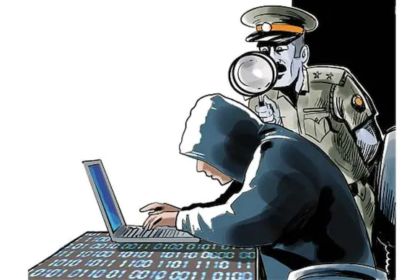
The method used in this case is commonly known as a boss impersonation scam.
Fraudsters pretend to be company directors, senior executives or other trusted officials and instruct employees to make urgent payments.
The deception often relies on familiar profile photographs, names and carefully worded messages.
Unlike some cyberattacks, the fraud may not require criminals to break into a company’s banking system.
Instead, they manipulate the employee authorised to make payments.
In another Delhi case reported earlier in November, a college accountant allegedly transferred ₹80 lakh after receiving messages from someone impersonating a senior official.
That was a separate incident, but it involved a similar attempt to exploit workplace authority and trust.
For businesses, the risk becomes particularly serious when payment instructions are accepted through messaging applications without independent confirmation.
The hotel-company case demonstrates how a single verification call can prevent further losses, even after an initial fraudulent transaction has occurred.
What This Means For You
Employees handling company payments should verify unusual transfer requests through a previously confirmed phone number, even when the WhatsApp message appears to come from a senior executive. Businesses should require separate approval for large or unexpected bank transfers.