

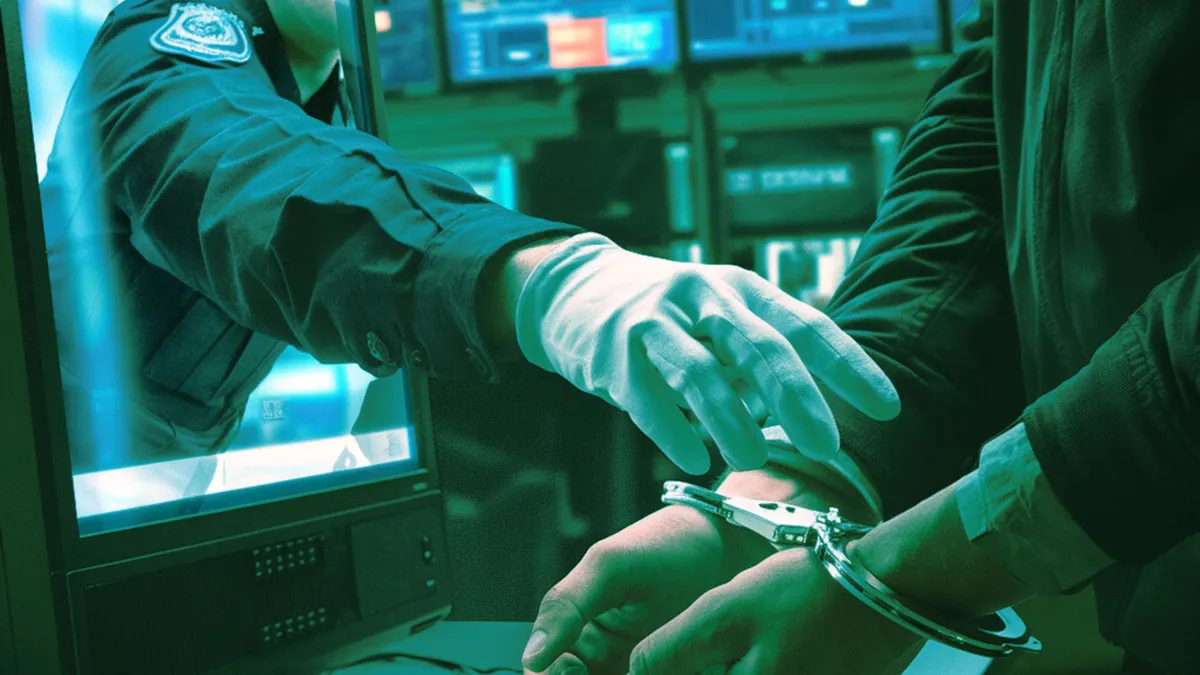

A Delhi Police investigation into a ₹67.30 lakh cyber fraud unexpectedly led officers to another senior citizen who was allegedly still under a “digital arrest” and had already transferred ₹60 lakh to fraudsters.
The Intelligence Fusion and Strategic Operations unit, or IFSO, was tracing money stolen in a digital-arrest case reported on September 20 when investigators identified a suspicious Axis Bank account belonging to a private company in Karnataka. Following transactions connected to that account eventually led them to a woman living alone in Janakpuri, West Delhi.
When police reached her home, investigators said she was severely distressed and still dealing with scammers impersonating law-enforcement officials.
The intervention helped prevent the criminals from reaching her other investments, including mutual funds and shares. Police are also trying to stop or freeze the ₹60 lakh she had already transferred.
Proposal for Conducting Cyber Crisis Drill, Tabletop Exercise (TTEx) & CCMP Readiness Exercise
One fraud investigation exposed another victim
The chain began with an unrelated complaint filed through the National Cybercrime Reporting Portal.
That victim had allegedly lost ₹67,30,300 in a digital-arrest scam. IFSO investigators began following where the money moved after leaving the victim’s account.
They identified an Axis Bank account held in the name of a private limited company based in Karnataka as one of the accounts in the money trail.
Police describe accounts used to receive or move fraud proceeds as mule accounts. They may be controlled directly by criminals, obtained from willing account holders for commission or sometimes opened or misused using other people’s identities.
Investigators then noticed transactions involving a separate South Indian Bank savings account.
Initially, officers did not know whether that account was another mule account or belonged to someone being defrauded.
The transaction pattern suggested the account holder was instead a genuine individual. Police traced her address to Janakpuri and sent a team to check on her.
Fraudsters claimed Aadhaar was linked to money laundering
According to Delhi Police, the senior citizen had received a call from a woman claiming to be from the Central Bureau of Investigation.
The scammers allegedly told her that her Aadhaar details were connected to money laundering and that one of her bank accounts had been used in connection with a blast in Jammu and Kashmir.
They then warned that all her bank accounts would be frozen.
Under pressure, the woman allegedly transferred ₹60 lakh.
By the time IFSO officers reached her, police said she remained under the influence of the scam and was in a highly distressed condition.
Investigators coordinated with Janakpuri police and arranged for a beat constable to reach her residence. She was then helped to file a complaint through cybercrime helpline 1930, while police began efforts to trace and freeze the transferred money.
What ‘digital arrest’ and mule accounts really mean
There is no legal procedure called a “digital arrest” in India.
The term describes a fraud in which criminals impersonate police, CBI, Enforcement Directorate, Customs or other officials and falsely claim the victim is involved in a serious criminal case.
Victims may be ordered to remain on video calls, avoid speaking with relatives and transfer money for supposed “verification”, “security” or investigation purposes.
Mule accounts form the financial side of the operation.
Instead of receiving stolen money directly into one obvious account, fraud networks route it through several bank accounts. The money may then be split, transferred again or withdrawn, making recovery more difficult.
That is why following the money trail quickly can sometimes expose not just the criminal network but other victims still making payments.
Delhi Police increasingly relying on rapid fund tracing
The case also highlights why cybercrime authorities emphasise immediate reporting.
Delhi Police’s IFSO unit has been working on mechanisms to identify fraudulent transactions and improve restoration of cybercrime proceeds. The unit recently said it had significantly reduced pending cases within its money-restoration and grievance-redressal systems.
Speed is critical because money stolen through cyber fraud can move across numerous accounts within minutes.
Once the funds are withdrawn, converted into other assets or transferred through several layers of accounts, recovery becomes considerably harder.
In the Janakpuri case, investigators reached the woman not because she had initially approached them, but because her transaction appeared while they were tracing another victim’s stolen money.
That coincidence may have protected the rest of her savings.
What this means for you: No police, CBI or government agency will place you under “digital arrest” over a phone or video call or ask you to transfer money for verification. If such a call comes, disconnect immediately and report it through 1930 before moving any funds.
Follow for daily updates on cybercrime, corporate fraud, DFIR, hacking, investigations, and digital forensics
