

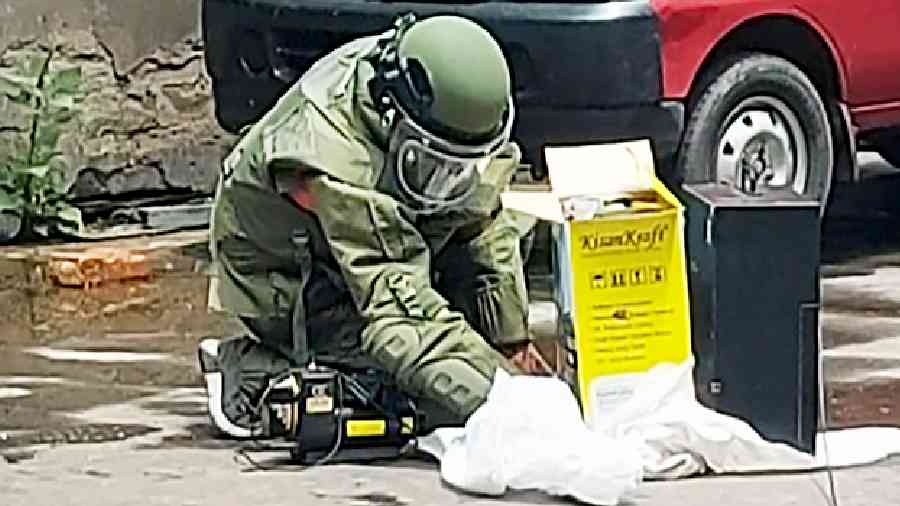
Panic swept across Delhi-NCR on Thursday after several reputed schools received bomb threat emails, prompting large-scale evacuations and intensive search operations. Security agencies swung into action immediately, but no explosives or suspicious objects were found. Preliminary investigations suggest the threats were hoaxes, and the cyber cell has been tasked with tracing the email origin and IP addresses.
In Delhi, at least 21 schools—including CRPF Public School in Dwarka, St Thomas School and DAV Centenary Public School in Paschim Enclave—received the threatening emails. Police, bomb disposal squads, dog units and fire department teams rushed to the campuses. Students and staff were moved to safe locations while classrooms, laboratories, buses and surrounding areas were thoroughly checked. After hours of combing operations, all premises were declared safe.
Similar emails were sent to 18 private schools in Noida and Greater Noida. Police conducted coordinated search operations across nine schools in Noida Zone, four in Central Noida and five in Greater Noida. Bomb disposal and canine teams carried out detailed inspections, but nothing suspicious was recovered. An FIR has been registered and digital evidence is being analysed.
Certified Cyber Crime Investigator Course Launched by Centre for Police Technology
The Central Board of Secondary Education (CBSE) clarified that the threats did not disrupt the ongoing Class 12 board examinations. The optional subjects exam held on Thursday—including Kuchipudi, Kathakali, Manipuri, Odissi and Horticulture—was conducted smoothly. Around 3,100 candidates appeared at centres in India and abroad, and no complaints of disruption were reported.
Security agencies have issued advisories to schools and universities to remain vigilant and report any suspicious emails, calls or activities immediately. Officials said technical analysis is being carried out to identify those behind the threats, and strict action will follow once they are traced.
In recent months, educational institutions have seen a rise in hoax threat messages. Despite most turning out to be false alarms, police are following standard security protocols to ensure student and staff safety.
Investigators are examining email servers, possible VPN usage and digital footprints to track the perpetrators. Suspect accounts are being monitored. Authorities have urged parents not to panic or rely on rumours and to follow only official updates.
School administrations have begun reviewing security measures, increasing surveillance at entry and exit points and planning emergency response drills. Police have assured continued patrolling and monitoring around educational campuses.
Normalcy has since been restored, with classes and examinations resuming as scheduled across all affected institutions.
About the author – Rehan Khan is a law student and legal journalist with a keen interest in cybercrime, digital fraud, and emerging technology laws. He writes on the intersection of law, cybersecurity, and online safety, focusing on developments that impact individuals and institutions in India.
