

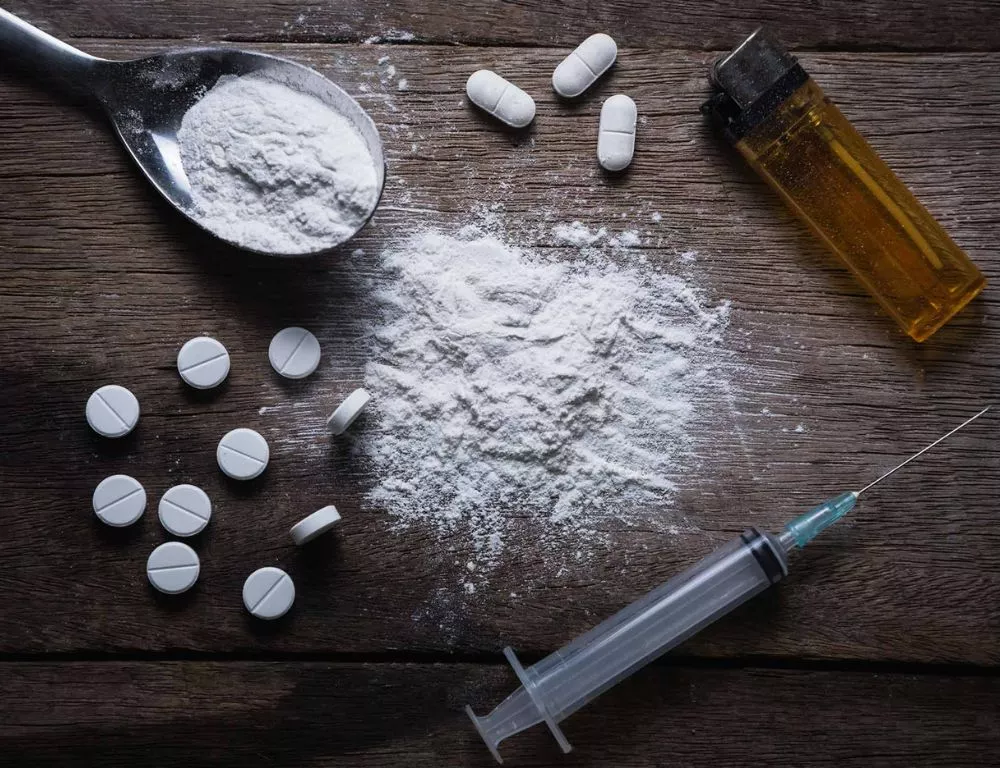
The Crime Branch has busted an organised network involved in trafficking banned pharmaceutical drugs, seizing more than 513 kg of controlled medicines and arresting two alleged suppliers. The international market value of the recovered consignment is estimated at around ₹5 crore. The arrested accused have been identified as Manoj Kumar alias Manu, a resident of Rohtak, and Tauheed Alam alias Ayan from Kishanganj in Bihar. Police said further arrests are likely as the wider supply chain is being mapped.
Certified Cyber Crime Investigator Course Launched by Centre for Police Technology
Drugs Involved and Intelligence Lead
According to investigators, the seized stock includes Tramadol, Nitrazepam, Alprazolam and Zolpidem — all classified as psychotropic substances requiring strict licensing for storage, transport and sale. Officials said the sheer volume of the recovery points to a structured illegal pharmaceutical diversion network operating in the capital.
The operation was carried out on the basis of specific intelligence inputs indicating that banned drugs were being sourced from the Bhagirath Palace market in the Chandni Chowk area. A trap was laid near a dispensary, where one suspect was intercepted while allegedly heading to deliver a consignment of Alprazolam. A search of his bag led to the recovery of 19,200 Alprazolam tablets. He was later identified as Manoj Kumar.
During interrogation, Manoj allegedly disclosed that he had been supplying restricted medicines for nearly three years and sourced the stock from Tauheed Alam. Acting on this lead, a raid was conducted at a rented accommodation in Daryaganj, where Tauheed was apprehended. A substantial quantity of Alprazolam was also recovered from the premises. Subsequent searches at locations pointed out by the accused led to the seizure of the remaining bulk stock, taking the total recovery to over 513 kg.
Supply Chain Probe and Legal Action
Police sources said Manoj had earlier worked at a medical store, where he became familiar with pharmaceutical inventory systems and the mechanics of drug distribution. Investigators believe he used this knowledge to divert regulated medicines into the illegal market and later partnered with Tauheed to establish a steady supply network.
Preliminary findings indicate that the medicines were procured from the Bhagirath Palace wholesale market and supplied to Rohtak and adjoining areas, with plans to route consignments to other states as well. Investigators are now examining the role of licensed wholesalers and distributors to determine how such large quantities were siphoned off without documentation.
A case has been registered under relevant provisions of the NDPS Act and the Drugs and Cosmetics Act. Samples of the seized medicines have been sent for forensic examination to verify their chemical composition, batch numbers and manufacturing sources. Officials said this would help identify upstream suppliers and possible diversion points within the legal pharmaceutical chain.
Enforcement teams are also scrutinising certain shops and storage facilities in the Bhagirath Palace market suspected of acting as fronts for illegal stock movement. Investigators said the possibility of regulated inventory being diverted under the cover of legitimate licences cannot be ruled out.
Police claim the crackdown has dealt a significant blow to an illegal pharmaceutical trafficking network operating across state lines. However, the end-user market, financial trail and potential interstate linkages are still under investigation. More arrests are expected as the probe progresses and the full extent of the supply chain is uncovered.
About the author – Ayesha Aayat is a law student and contributor covering cybercrime, online frauds, and digital safety concerns. Her writing aims to raise awareness about evolving cyber threats and legal responses.
