

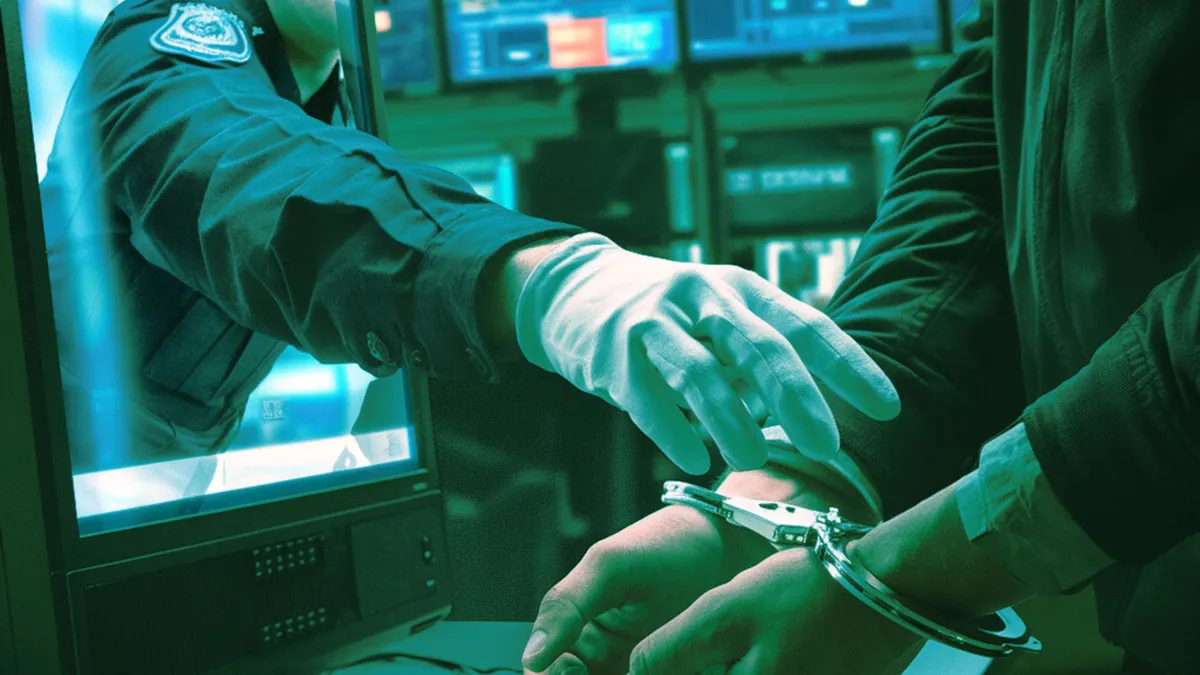

A Dehradun couple has lost ₹13 lakh in a digital arrest scam that unfolded over several hours, with fraudsters impersonating officials from the National Investigation Agency and Anti-Terrorism Squad to convince them they were the subjects of a genuine national security investigation. The case, now with Patel Nagar Police, adds to a growing tally of digital arrest fraud in Uttarakhand, a state where cybercrime losses have climbed sharply in recent years despite repeated police advisories warning that no such thing as a “digital arrest” exists under Indian law.
A Call That Escalated Into a Manufactured Investigation
The ordeal for Jagdish Singh and his wife Usha Rauthan, residents of Geeta Enclave in Mohabbewala, began on July 30 with a call from an unknown number. The caller identified himself as Senior Inspector Rajendra Singh Tripathi and claimed an FIR had already been registered against the couple by the NIA in Pune, instructing them to cooperate immediately.
What followed was a carefully layered escalation designed to sound increasingly serious. The fraudsters told the couple their identity had allegedly been misused to open a bank account in Hubballi, Karnataka, through which a commission had supposedly been received from an individual they falsely linked to a terror financing case, invoking national security concerns to heighten the sense of urgency and legal jeopardy the couple felt.
Forged Documents and a Chain of Fake Officials
As the call progressed, the couple was passed between multiple fraudsters posing as increasingly senior officials, from an ATS officer to someone claiming to be a Deputy Inspector General. During video calls, the accused allegedly displayed forged documents, including a fake Supreme Court arrest warrant and a fabricated property seizure order, props specifically designed to make the threat of arrest feel procedurally real rather than merely spoken.
Under sustained psychological pressure, with fraudsters repeatedly threatening immediate arrest and asset confiscation, the couple was instructed to transfer money for what was described as account verification, with assurances the funds would be returned once the supposed investigation concluded. Believing the threat was genuine, they transferred ₹13 lakh to a current account held in the name of SK Enterprises at Kotak Mahindra Bank in Chandivali, Maharashtra. It was only when the fraudsters continued issuing fresh instructions after the transfer, rather than closing out the matter as promised, that the couple grew suspicious and approached the police.
A Pattern That Has Cost Uttarakhand Hundreds of Crores
The Dehradun case fits within a well-documented pattern that has repeated across Uttarakhand with striking consistency. State police data shows nearly 99,000 cybercrime complaints were registered in Uttarakhand over the past five years, with total losses reaching ₹475 crore, of which only about ₹70 crore has been recovered. Digital arrest scams specifically have featured in some of the state’s largest individual fraud cases, including a Dehradun resident defrauded of ₹3 crore over a 48-hour digital confinement and a separate case involving losses exceeding ₹2 crore, both following broadly the same script of fake CBI or police impersonation, fabricated legal documents and sustained psychological pressure.
Patel Nagar Police have registered a cyber fraud case and are now examining the beneficiary bank account, mobile numbers, digital payment records and call data associated with the incident, with cyber crime specialists assisting in tracing the money trail and identifying those behind the fraudulent account. Officials have also sought transaction details from the concerned bank as part of the investigation.
Cybercrime expert and former IPS officer Prof. Triveni Singh said digital arrest remains a fraudulent tactic increasingly used to extort money from unsuspecting victims, emphasising that no Indian law enforcement or investigative agency conducts arrests through video calls or asks citizens to transfer money to private accounts for verification purposes. He urged the public to remain alert to threatening calls or forged legal documents and to report such incidents immediately to local police or the National Cyber Crime Helpline at 1930, noting that acting quickly remains one of the few reliable ways to improve the odds of freezing stolen funds before they disappear.
Follow for daily updates on cybercrime, corporate fraud, DFIR, hacking, investigations, and digital forensics
