
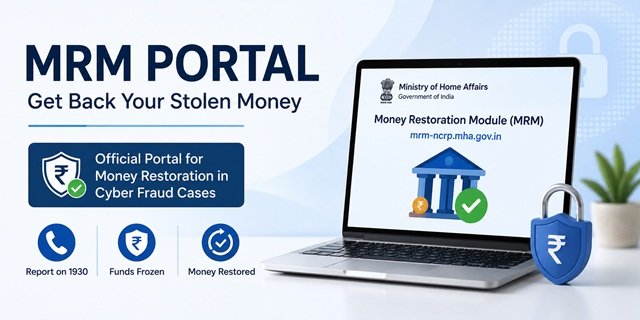
Cyber fraud victims whose stolen money has been traced and frozen in a scammer’s or beneficiary’s bank account can apply online for its restoration through the government’s Money Restoration Module.
- The facility allows eligible victims to submit a request without visiting a bank or government office, although restoration is subject to the applicable legal process.
What is the Money Restoration Module?
The Money Restoration Module, or MRM, was launched earlier this year by the Indian Cybercrime Coordination Centre under the Ministry of Home Affairs. It is designed to help eligible cyber fraud victims seek the return of money that has been frozen or held in a scammer’s or beneficiary’s bank account.
The process can be initiated online, reducing the need for victims to visit a bank or government office to submit a restoration request.
However, use of the portal does not guarantee that a victim will receive the money back. The funds must first be traced and frozen, and only then can a restoration request proceed through the legal process.
What should victims do immediately after a cyber fraud?
Victims should first report the cyber fraud as quickly as possible. A complaint can be made by calling the 1930 cybercrime helpline or through the National Cyber Crime Reporting Portal.
Quick reporting can improve the chances of authorities freezing the money before fraudsters move it elsewhere.
After reporting the fraud, victims need to check whether their money has been traced and frozen. An application for restoration can be made only when an eligible amount has been traced and held in the bank account of the scammer or a beneficiary.
Proposal for Conducting Cyber Crisis Drill, Tabletop Exercise (TTEx) & CCMP Readiness Exercise
How can a victim raise a refund request?
An eligible victim can visit the Money Restoration Module and select the “Raise Refund Request” option.
The applicant must enter the 14-digit NCRP acknowledgement number received while filing the cybercrime complaint and verify it through an OTP.
After logging in, the victim can check the complaint and refund details displayed on the portal. Bank account details must then be provided for the account into which the restored money is to be credited.
What documents are required?
Victims are required to upload a copy of their PAN card while submitting the restoration request. If a relevant court order is available, it can also be uploaded.
Applicants should ensure that the bank details entered on the portal are accurate to avoid delays in processing the request.
How can victims track their restoration request?
Once the form is submitted, the portal generates a 14-digit request ID or Unique Request Number, known as a URN.
Victims should retain this number because it can be used to track the status of their restoration request.
Does filing an online request guarantee the money will be returned?
Submitting a request through the Money Restoration Module does not guarantee recovery. The money must have been traced and frozen before an eligible restoration request can be made.
A victim may also be asked to submit an indemnity bond to the police. The restoration request is then processed by the authorities, banks and other concerned institutions in accordance with the applicable legal procedure.
What should cyber fraud victims keep in mind?
Victims should report cyber fraud immediately through the 1930 helpline or the National Cyber Crime Reporting Portal, as quick reporting can improve the chances of the money being traced and frozen. They should also remember that submitting a restoration request does not guarantee recovery, and should carefully provide correct bank details and required documents to avoid delays.
About the author — Ayesha Aayat writes on cybercrime, digital safety, and emerging online threats. Her work focuses on public awareness, legal clarity, and technology-driven risks.
Follow for daily updates on cybercrime, corporate fraud, DFIR, hacking, investigations, and digital forensics
