

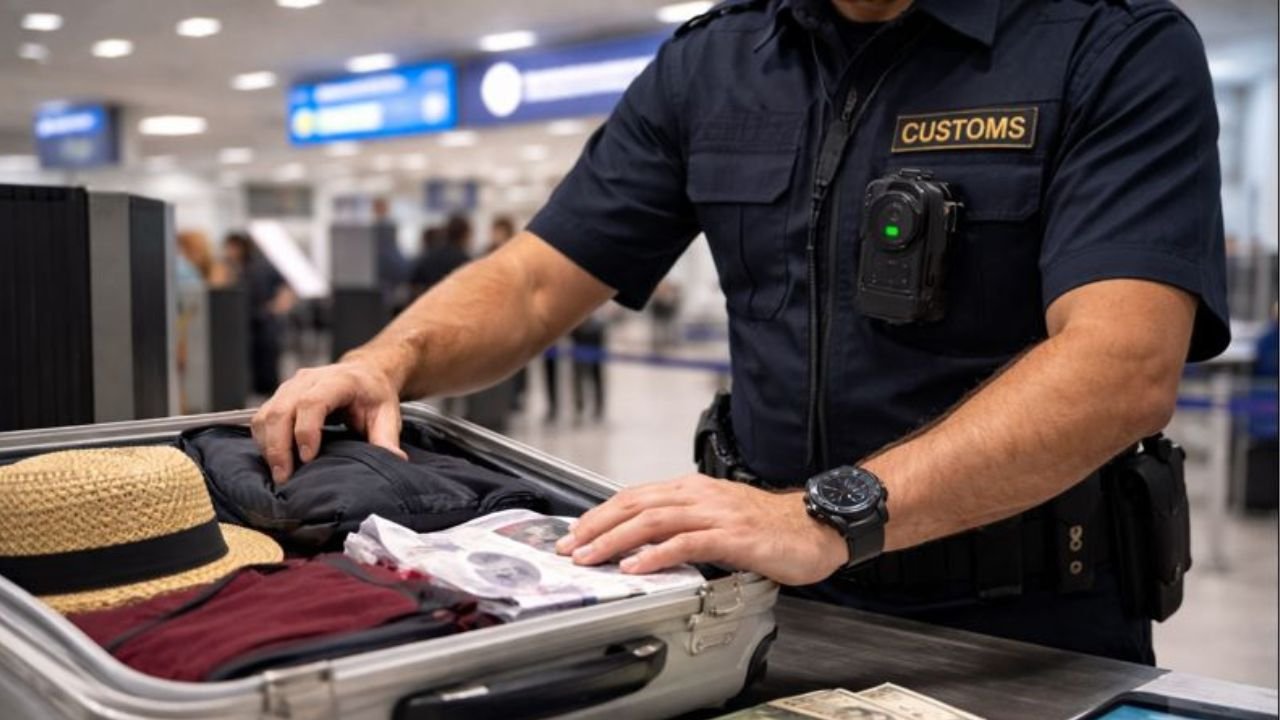

New Delhi | January 3, 2026 | In a major relief for international travellers, the Union government has made it mandatory for customs officers deployed at airport Red Channels to wear body-worn cameras (BWC). The move aims to ensure transparency, fairness, and accountability in passenger interactions and inspection procedures, while reducing unnecessary disputes and complaints.
The directive was issued last month by the Central Board of Indirect Taxes and Customs (CBIC) to all customs field formations. Officials said the measure is intended to improve the overall travel experience for international passengers and aligns with the government’s broader push for “ease of doing business” and citizen-friendly governance.
Why the Red Channel often sees disputes
The Red Channel is meant for passengers carrying dutiable goods, restricted items, or prohibited articles that must be declared under Indian customs regulations. Inspections at the Red Channel are typically detailed, involving baggage checks, questioning, and verification of documents. As a result, the scope for disagreements or disputes between passengers and officials tends to be higher.
Government officials believe that making body cameras mandatory will not only create a digital record of the inspection process but also safeguard the rights of both parties—travellers as well as customs officers.
Not limited to the Red Channel
According to the CBIC guidelines, the use of body-worn cameras will not be restricted to the Red Channel alone. Officers will be required to wear cameras during any form of passenger interaction at airports, including questioning, baggage examination, document verification, and duty-related assignments.
Officials said this would bring greater standardisation across the customs system and reduce the scope for misuse of individual discretion. The move is seen as particularly significant in cases where passengers have previously alleged bias, harassment, or unfair treatment.
Passengers to be informed about recording
The guidelines also clearly state that passengers must be informed in advance that their interaction and inspection process is being recorded. All video footage will be securely stored for a minimum period of 90 days.
However, in cases involving investigations, audits, or judicial proceedings, the recordings may be preserved for a longer duration. This, officials said, would ensure the availability of solid evidence while examining complaints and fixing accountability.
In line with global best practices
According to CBIC, the adoption of body-worn cameras is in line with international best practices already followed by customs and border control agencies in several countries. In the US, Europe, and parts of Asia, such technology is widely viewed as a trust-building tool between enforcement agencies and the public.
In its statement, the board said the initiative aims to “enhance transparency, accountability, and public confidence in customs administration at international airports.”
Benefits for passengers and the system
Officials believe the measure will not only make passenger interactions more smooth and professional, but also protect customs officers from false allegations and undue pressure. Over time, it is expected to lead to a reduction in disputes, faster resolution of complaints, and greater trust in customs procedures.
Experts say the decision reflects the government’s emphasis on technology-driven governance. With international travel volumes rising steadily, the move is being seen as an important step towards making Indian airports more transparent, efficient, and passenger-friendly.
About the author — Suvedita Nath is a science student with a growing interest in cybercrime and digital safety. She writes on online activity, cyber threats, and technology-driven risks. Her work focuses on clarity, accuracy, and public awareness.
