
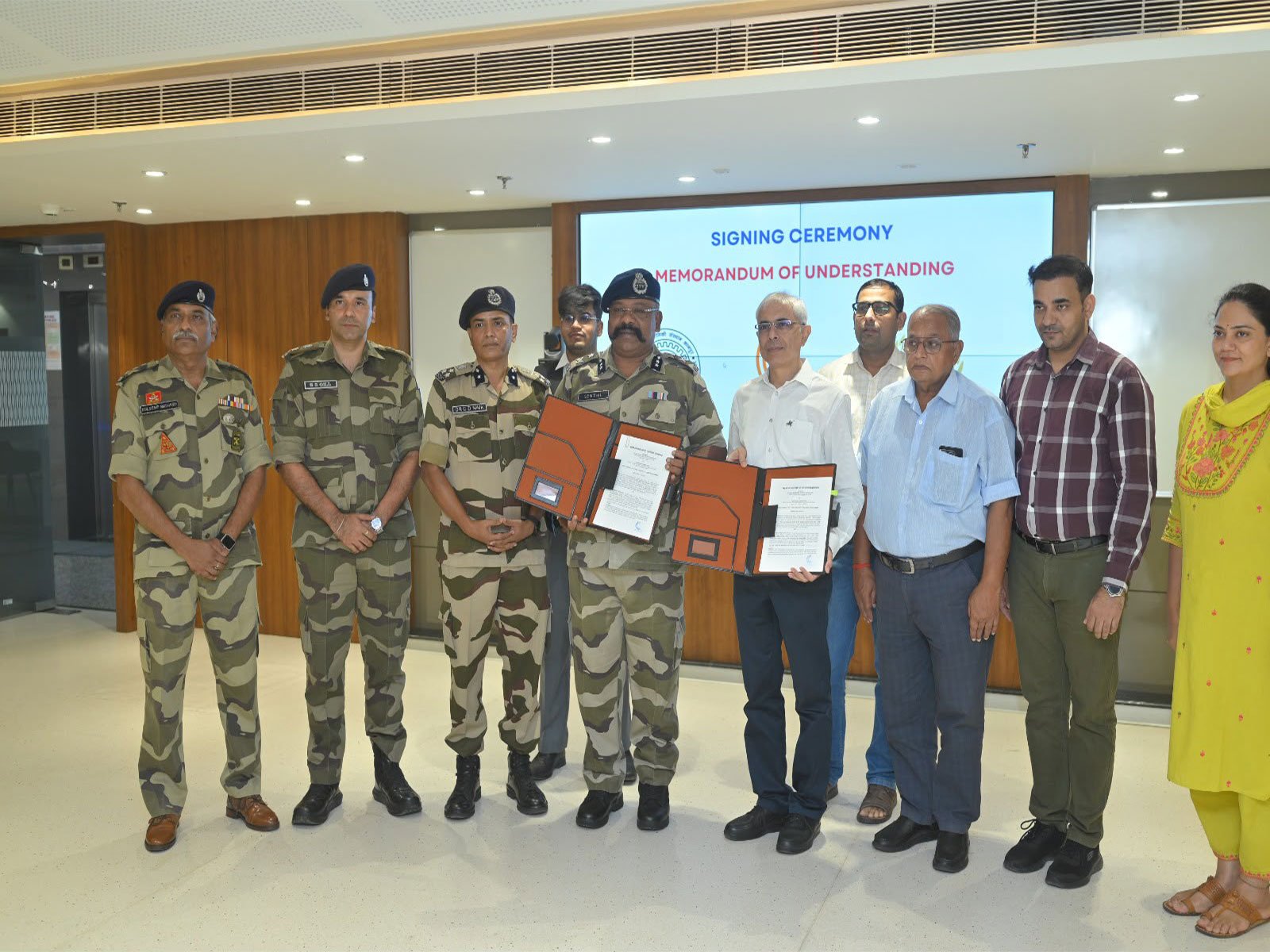
The Central Industrial Security Force has entered into two institutional partnerships with IIT Kanpur to strengthen cybersecurity and counter-drone capabilities for protecting critical and strategic infrastructure.
The agreements include specialised cyber training and the development of a Centre of Excellence for drone and anti-drone technology.
What Have CISF and IIT Kanpur Agreed To?
Two Memoranda of Understanding were signed on September 14. One provides for a six-week Cyber Security Training Programme through C3iHub at IIT Kanpur.
The second establishes a five-year collaboration to develop a Centre of Excellence in drone and anti-drone technology.
The Centre of Excellence will be established at CISF’s Major Police Training and Recruitment Centre in Rajasthan’s Behror.
The initiatives are aimed at developing specialised capabilities to address emerging technology-driven security challenges.
How Will CISF Personnel Be Trained in Cybersecurity?
Under the first agreement, C3iHub will conduct a six-week residential Cyber Security Training Programme over a three-year period. The programme will be conducted on a non-commercial and free-of-training-cost basis.
Each batch will include 40 nominated CISF personnel.
The training will cover Critical Information Infrastructure, sector-specific cyber threats involving aviation and power and nuclear sectors, digital forensics, incident detection and response, disaster recovery and business continuity.
Personnel will also receive training in emerging threats involving artificial intelligence and machine learning, deepfakes, the Internet of Things, cloud and Operational Technology. Multi-sector crisis simulation will also form part of the programme.
Proposal for Conducting Cyber Crisis Drill, Tabletop Exercise (TTEx) & CCMP Readiness Exercise
What Will the New Centre of Excellence Do?
Under the second agreement, CISF and IIT Kanpur will work together for five years to establish and develop a Centre of Excellence at MPRTC Behror.
The centre will focus on specialised training, drone and counter-drone systems, unmanned aerial vehicle operations, drone forensics and the cybersecurity of unmanned systems.
The collaboration is intended to create a dedicated institutional platform for sustained training, research and development in the counter-drone field.
What Technology Will Be Researched?
Joint research will cover areas including swarm drone analysis, radio frequency and micro-Doppler detection, integrated counter-UAS systems and high-altitude operations.
The partnership will also develop simulators, forensic laboratories, training curricula and technical infrastructure.
The aim is to combine specialised manpower, applied research, technical infrastructure and operational capabilities in cybersecurity and drone and anti-drone technology.
Why Is CISF Expanding These Capabilities?
The cybersecurity initiative is part of efforts to build cyber-capable security forces and strengthen dedicated Cyber Commando capabilities in Central Armed Police Forces and state police organisations.
The initiative also follows CISF’s recent agreement with the Drone Federation of India, which focuses on counter-drone standard operating procedures, forensic analysis, red-teaming exercises and engagement with Indian drone technology companies.
Which Institutions Are Part of CISF’s Wider Network?
The two agreements expand CISF’s institutional network with technology and academic organisations.
Its collaborations include IIT Madras in Pravartak, IIT Ropar, IIITDM Kancheepuram, IIT Kanpur and the Drone Federation of India.
The partnerships are intended to develop specialised manpower, applied research, technical infrastructure and operational capabilities for cybersecurity and drone-related security.
How Could the Partnerships Strengthen Critical Infrastructure Security?
The initiatives are intended to support the development of indigenous technological solutions and specialised expertise for protecting critical infrastructure.
The proposed Centre of Excellence at Behror will provide a dedicated platform for continued counter-drone training, research and development, while the cybersecurity programme will train CISF personnel to deal with threats across areas such as aviation, power, nuclear facilities and digital systems.
The420 Takeaway: “Cyber and Drone Threats Are Becoming Part of Critical Infrastructure Security”
The partnerships show that protecting critical infrastructure increasingly requires expertise beyond conventional physical security. Training personnel in digital forensics, cyber incident response, deepfakes, unmanned systems and counter-drone technologies can help build specialised capabilities for dealing with technology-driven threats to sensitive facilities.
About the author — Ayesha Aayat writes on cybercrime, digital safety, and emerging online threats. Her work focuses on public awareness, legal clarity, and technology-driven risks.
Follow for daily updates on cybercrime, corporate fraud, DFIR, hacking, investigations, and digital forensics
