
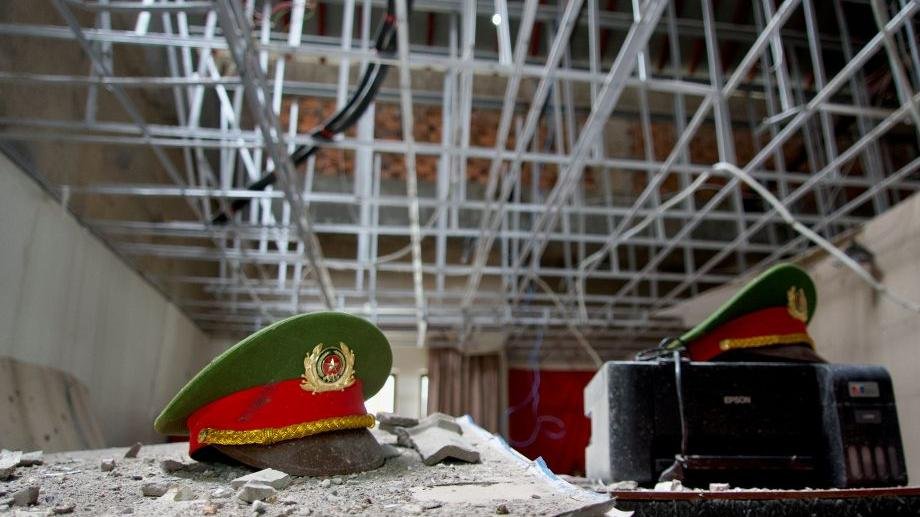

A shocking glimpse into the dark underbelly of global cybercrime has emerged from Cambodia, where a massive scam compound in the border town of O Smach has revealed how online fraud has evolved into a highly organized, multinational “industry.” The compound reportedly housed fake banks, replica police stations, and hundreds of call booths used to target victims across the world.
A Compound Built to Imitate Authority and Trust
The complex was located behind the Royal Hill Casino and was found abandoned following recent military action. Inside, investigators discovered scenes that pointed to a large-scale, systematic operation—fake US dollar notes scattered across floors, walls painted with slogans like “Money Coming From Everywhere,” and rooms designed to mimic institutions from different countries.
Investigations revealed that thousands of individuals, including foreign nationals, were working inside the compound. Many were lured with promises of lucrative jobs but were later forced into cyber fraud operations. Victims who managed to escape described harsh working conditions, including 15–16 hour shifts and severe punishment for failing to meet targets.
FCRF Launches Premier CISO Certification Amid Rising Demand for Cybersecurity Leadership
Thousands Trapped in Forced Cyber Fraud Operations
According to testimonies, workers who failed to generate a “lead”—a potential victim—within a day were subjected to physical punishment. Repeated failure led to harsher penalties. Even basic activities like using the restroom required permission, and every movement was closely monitored and recorded.
One of the most alarming aspects of the compound was the presence of fake police stations representing countries such as Australia, China, and Brazil. These setups were used to intimidate victims. For instance, scammers issued fake legal notices posing as Brazilian police, accusing individuals of money laundering and pressuring them into transferring funds.
Crackdown Intensifies Amid Global Concerns
Further findings suggest that scammers were trained using detailed scripts designed to build emotional connections with victims. In many cases, workers were instructed to pose as wealthy individuals—often women—seeking relationships. Once trust was established, victims were lured into fraudulent investment schemes or persuaded to share sensitive financial information.
The network is also believed to have links to influential business and political figures. Names such as Ly Yong Phat and Lim Heng have surfaced in connection with properties where such operations allegedly took place, though official confirmation remains under investigation.
Experts say this is not an isolated case but part of a broader international cybercrime ecosystem. For years, such scam compounds operated with little scrutiny. However, under mounting global pressure, the government led by Hun Manet has intensified crackdowns on these operations.
In recent months, multiple raids have been conducted, leading to the rescue and repatriation of thousands of foreign workers. In a significant move, alleged scam network figure Chen Zhi was arrested and extradited to China, signaling a tougher stance against high-profile individuals linked to such activities.
Despite these efforts, experts warn that the problem is deeply entrenched. Scam operators can easily relocate and resume operations elsewhere, making enforcement challenging. The situation has been likened to a “whack-a-mole” phenomenon—shutting down one operation only for another to emerge.
