

In a significant move aimed at reducing upfront tax burden and improving cash-flow for individuals, the Union government in Budget 2026 announced a sharp reduction in Tax Collected at Source (TCS) on overseas travel, education and medical remittances made under the Liberalised Remittance Scheme (LRS). The decision is expected to benefit Indian travellers, students and families by lowering immediate deductions at the time of payment.
Under the proposal, TCS on overseas tour packages has been cut to 2%, from the earlier slab-based rates that ranged between 5% and 20%, with the revised rate applicable without any minimum threshold. Similarly, TCS on education and medical remittances routed through LRS has been reduced from 5% to 2%.
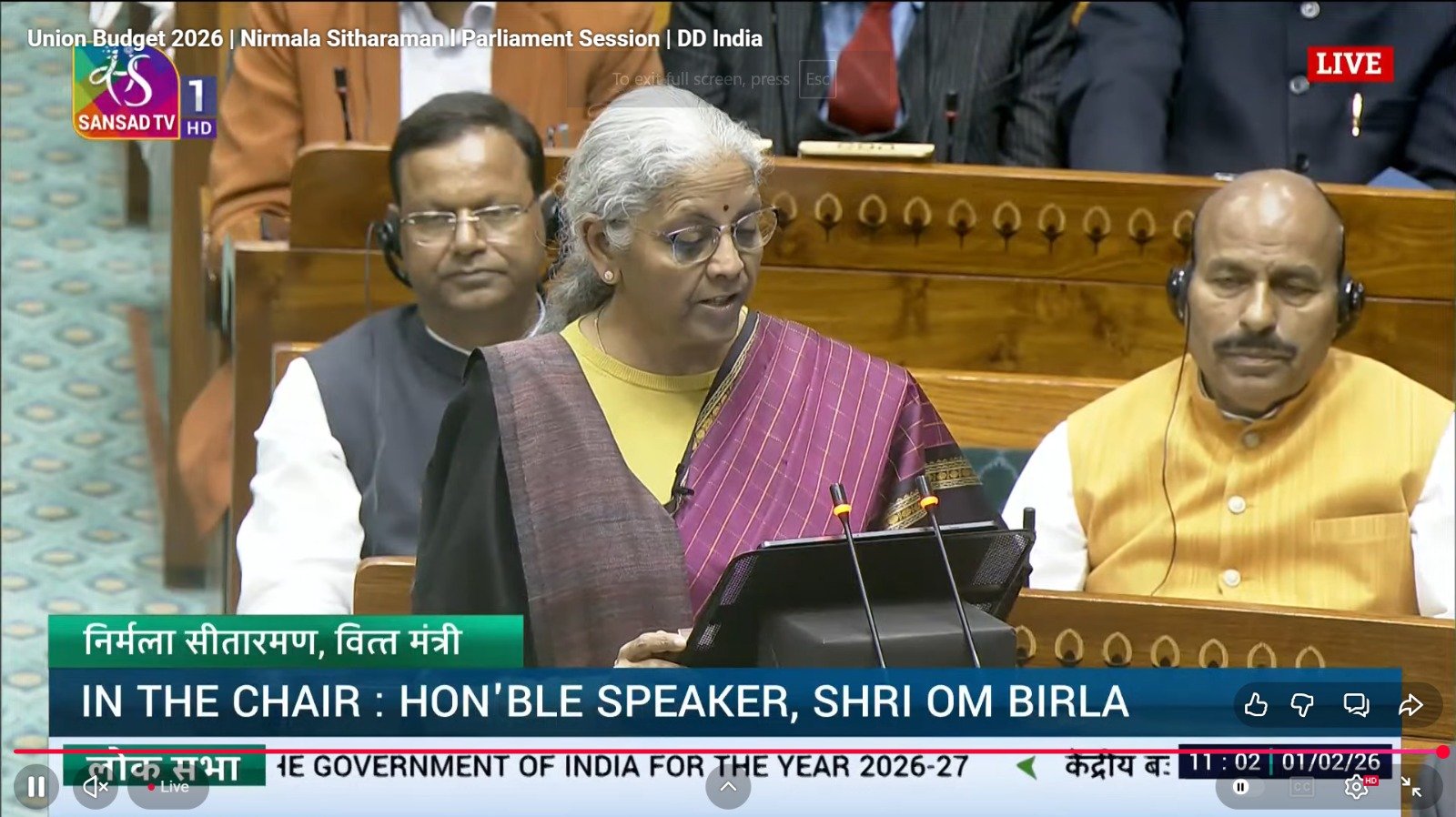
The announcement was made as part of the Union Budget 2026, presented in Parliament by Finance Minister Nirmala Sitharaman.
Certified Cyber Crime Investigator Course Launched by Centre for Police Technology
Lower upfront tax outgo
The reduction directly lowers the amount deducted at the time of making overseas payments, addressing one of the most frequent concerns raised by taxpayers since higher TCS rates were introduced in recent years. Although TCS is adjustable against final income tax liability, the upfront deduction had often resulted in liquidity stress, especially for large-value transactions such as foreign education fees, medical treatment abroad and international travel packages.
Tax professionals say the new uniform rate of 2% strikes a balance between maintaining reporting trails for cross-border transactions and easing the cash-flow burden on individuals.
Relief for travellers and families
For overseas travel, the removal of slab-based rates and threshold limits is expected to simplify compliance and reduce complexity at the booking stage. Travel industry participants believe the move could support outbound tourism demand, which had seen friction due to higher upfront tax deductions on international tour packages.
Families sending money abroad for education or medical treatment are also expected to see immediate benefits, particularly where remittances are large and time-sensitive. The lower TCS rate reduces the need for subsequent refunds or adjustments, which often take time to process.
Compliance without friction
Officials indicated that the objective of the TCS rationalisation is not to dilute compliance, but to make the tax system less intrusive for genuine transactions. Reporting requirements under LRS will continue, ensuring traceability of cross-border remittances while avoiding excessive cash blockage.
The government believes that simpler rules will improve voluntary compliance and reduce grievances related to delayed refunds and reconciliation mismatches.
Broader cross-border tax changes
The TCS cut is part of a broader set of measures in Budget 2026 aimed at streamlining cross-border transactions. The Budget also proposed a review of Foreign Exchange Management Act (FEMA) rules governing non-debt instruments to simplify foreign investment regulations and reduce procedural bottlenecks.
Together, these steps signal an effort to modernise India’s cross-border tax and regulatory framework, particularly as overseas education, travel and global mobility continue to rise among Indian households.
What remains unchanged
While the TCS rate has been reduced, it will continue to be adjustable against final tax liability, and taxpayers will still need to report such remittances in their income tax returns where applicable. Penalties for misreporting or non-disclosure remain in place, preserving safeguards against misuse.
Impact assessment
Tax experts say the measure is revenue-neutral in the long term, as TCS is primarily a collection and reporting mechanism rather than a final tax. Any short-term reduction in collections is expected to be offset by improved compliance, fewer disputes and lower administrative overheads.
For individuals, however, the benefit is immediate and tangible. Lower deductions at source translate into better liquidity, reduced dependence on refunds, and simpler financial planning.
A personal finance-friendly Budget signal
The decision to cut TCS rates comes alongside other Budget 2026 measures focused on easing personal tax compliance rather than altering headline tax slabs. Analysts see this as a continuation of the government’s approach of fine-tuning tax administration to reduce friction for small and middle-income taxpayers.
For millions of Indians travelling abroad, sending children overseas for education, or meeting medical expenses outside the country, the TCS reduction is likely to be one of the most immediately felt personal finance reliefs announced in Budget 2026.
As the revised rates come into effect, attention will now turn to how quickly banks, travel platforms and remittance service providers update their systems to ensure the benefits flow through without delay.
About the author – Rehan Khan is a law student and legal journalist with a keen interest in cybercrime, digital fraud, and emerging technology laws. He writes on the intersection of law, cybersecurity, and online safety, focusing on developments that impact individuals and institutions in India.
