

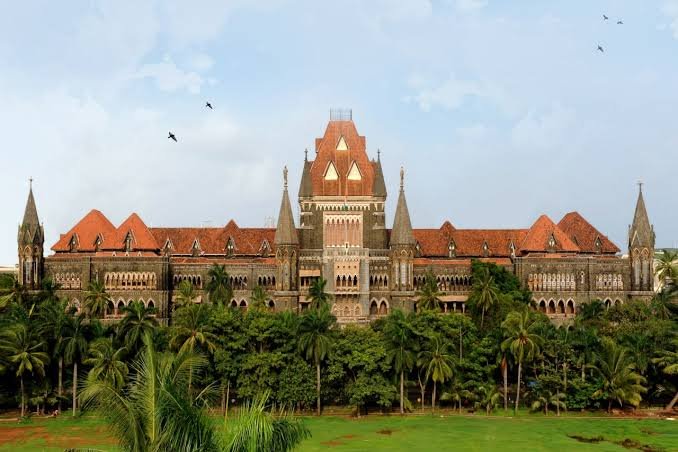

Mumbai — The Bombay High Court has set aside an earlier order rejecting a worker’s compensation claim, ruling that the denial was based on an erroneous interpretation of medical evidence requirements under the Employees’ Compensation Act, 1923.
The court held that a disability certificate issued by a qualified medical practitioner cannot be dismissed solely because the doctor had not personally treated the injured worker. The ruling came in an appeal filed by a worker identified as Mr. Majhi, who had challenged the decision of the Commissioner for Workmen’s Compensation denying his claim.
The judgment was delivered on February 25, 2026, in a case arising from a workplace accident that occurred more than a decade earlier.
A Workplace Accident and a Disputed Claim
According to court records, Mr. Majhi sustained injuries in 2010 after falling at a workplace site in Thane, Maharashtra. At the time, he was working for a company based in Ghatkopar (West), Mumbai.
Following the accident, Majhi was admitted to Lok Hospital in Thane from March 22 to March 29, 2010. After being discharged, he filed a compensation application before the Commissioner for Workmen’s Compensation under the Employees’ Compensation Act.
In the claim, he sought compensation of ₹5,95,584 from both his employer and the insurance company, holding them jointly and severally liable.
During proceedings before the commissioner, evidence from the employer and other parties was recorded. The claim was ultimately dismissed on the ground that the disability certificate relied upon by Majhi had been issued by a doctor who had not personally treated him at the time of the injury.
Algoritha Security Emerges As India’s Leading Corporate Investigation Powerhouse
High Court Examines Interpretation of Medical Evidence
In the appeal, Majhi argued that the commissioner had wrongly rejected his claim based solely on the identity of the doctor who issued the disability certificate.
The High Court examined the relevant provisions of the Employees’ Compensation Act, particularly Section 4(1)(c)(ii) and Explanation II, which address the assessment of loss of earning capacity in relation to workplace injuries.
The court noted that the Act requires the disability certificate to be issued by a “qualified medical practitioner.” Section 2(1)(i) defines such a practitioner as a person registered under a central or state law governing the maintenance of a medical practitioners’ register.
According to the court, the statute does not specify that the doctor issuing the certificate must necessarily be the one who originally treated the injured worker.
The bench observed that a qualified doctor who examines the claimant and reviews medical records may provide an opinion regarding disability or loss of earning capacity. Such medical testimony, the court said, remains subject to cross-examination and evaluation by the adjudicating authority.
Reliance on Earlier Judicial Precedent
While reviewing the matter, the High Court also referred to a similar ruling by the Karnataka High Court in the case of Mukesh Kumar vs. Kulhari Tours and Travels Prof. Mahipal Singh & Anr. (2025 SCC OnLine Kar 808).
In that case, the Karnataka High Court had observed that there is no statutory requirement mandating that the doctor assessing loss of earning capacity must have treated the injured worker. The Bombay High Court stated that the reasoning adopted in the Karnataka decision supported the appellant’s arguments.
The bench concluded that the commissioner’s approach in rejecting the claim on the sole ground that the certificate had been issued by a non-treating doctor was legally unsustainable.
Matter Remanded for Fresh Consideration
Setting aside the earlier order dated June 19, 2012, the High Court remanded the case to the commissioner for a limited purpose: to examine the medical evidence and determine the percentage of disability and the corresponding compensation.
The court clarified that other issues—such as the existence of an employer-employee relationship or whether the accident occurred during the course of employment—would not be reopened, as they had been previously decided.
Majhi has been directed to appear before the commissioner on March 23, 2026, when the date for further proceedings will be fixed. The commissioner has been instructed to dispose of the compensation application on or before June 30, 2026.
