

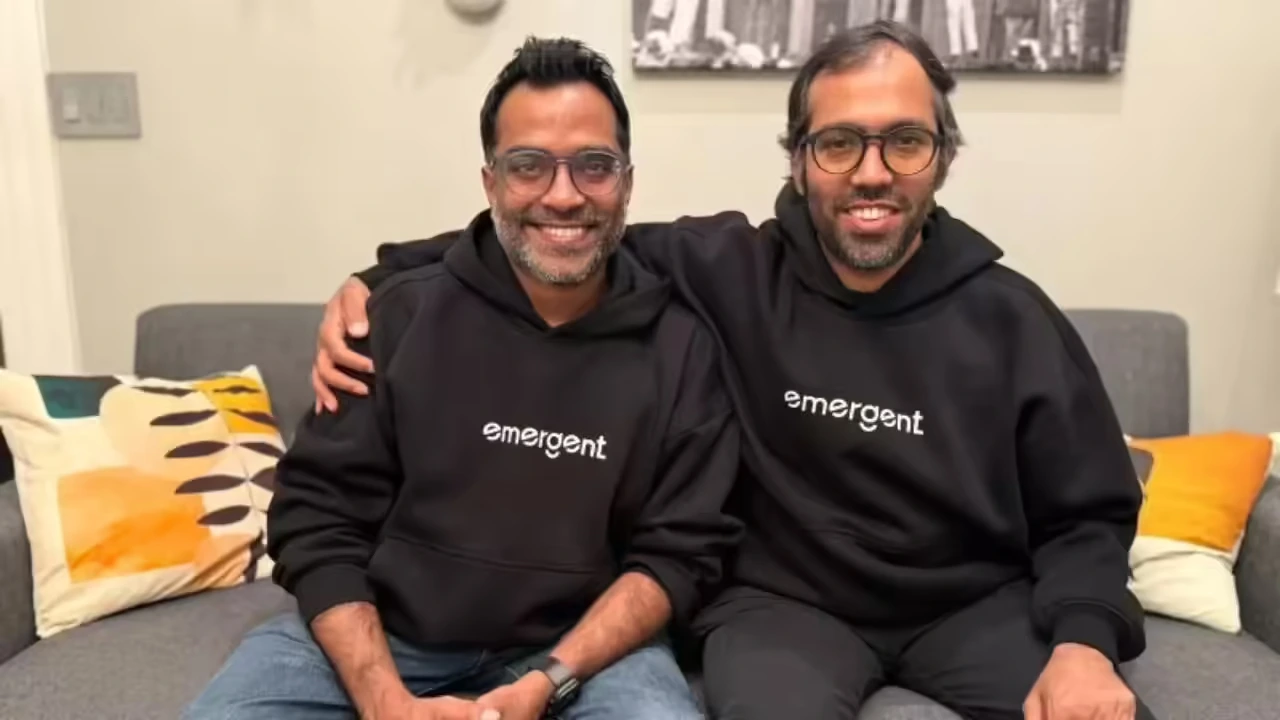
Breaking into the global technology ecosystem from a small district in Bihar is no easy task. Limited resources, weak networks and the absence of big-city infrastructure often act as barriers to ambitious ideas. Yet, defying these constraints, twin brothers Mukund Jha and Madhav Jha have built a platform that challenges one of the most deeply held assumptions in the software world—that coding is essential to build applications.
Certified Cyber Crime Investigator Course Launched by Centre for Police Technology
Their startup, Emergent, is based on a simple but disruptive idea: users should not need to write code to create apps. Instead, they should only have to describe what they want, while artificial intelligence takes care of the rest. This concept has struck a chord globally, finding acceptance among developers, startups and small businesses seeking faster, cheaper ways to build digital products.
The brothers grew up in modest surroundings, where electricity cuts were frequent and internet connectivity unreliable. Despite these limitations, their curiosity for technology remained strong. From an early age, they developed a basic understanding of computers and programming. Over time, a recurring pattern became clear to them—thousands of people had strong business ideas, but lacked the technical skills or financial capacity to hire developers and turn those ideas into reality.
That insight led to a fundamental question: could there be a system where people simply describe their needs and software builds itself? Initially, the idea was dismissed as impractical. Many believed that software development without coding was unrealistic. But this very skepticism became the driving force behind their work.
In 2024, working out of a small room, the brothers launched Emergent AI. The platform is widely described as the world’s first “Agentic Vibe Coding” system. There are no programming languages to learn and no complex interfaces to navigate. Users interact with the system in plain language, writing instructions such as, “I want an app where users can sell second-hand books.” Within minutes, the platform generates a fully functional app, complete with design, database and core features.
This approach has significantly reduced both time and cost in software development. What once took months and required large budgets can now be done in minutes at a fraction of the expense. As a result, Emergent has found users across sectors—from small shop owners and early-stage startups to education platforms and international businesses looking for rapid deployment.
The growth has been striking. In just seven months, Emergent onboarded more than 5 million users and scaled to an annual revenue of ₹400 crore. Such rapid adoption is rare in the startup world and has positioned the company among the fastest-growing no-code platforms globally. The momentum has also attracted significant interest from global investors, resulting in major funding rounds.
However, the significance of Emergent goes beyond financial numbers. The platform challenges the long-standing belief that advanced technology is accessible only to those in major cities or with formal engineering backgrounds. By lowering the entry barrier, it redefines who gets to build software and participate in the digital economy.
The founders’ ambition extends further. They envision a future where any young person in India—whether from a village or a small town—can turn an idea into a working digital product without being limited by technical constraints. In their view, software creation should no longer remain the exclusive domain of trained engineers.
The Emergent story reflects a broader shift in the technology landscape, where ideas and intent matter more than technical syntax. From the heart of Bihar to global tech conversations, the journey of Mukund and Madhav Jha sends a clear message: the future of technology will be shaped not by lines of code, but by the power of ideas and the courage to pursue them.
About the author – Ayesha Aayat is a law student and contributor covering cybercrime, online frauds, and digital safety concerns. Her writing aims to raise awareness about evolving cyber threats and legal responses.
