
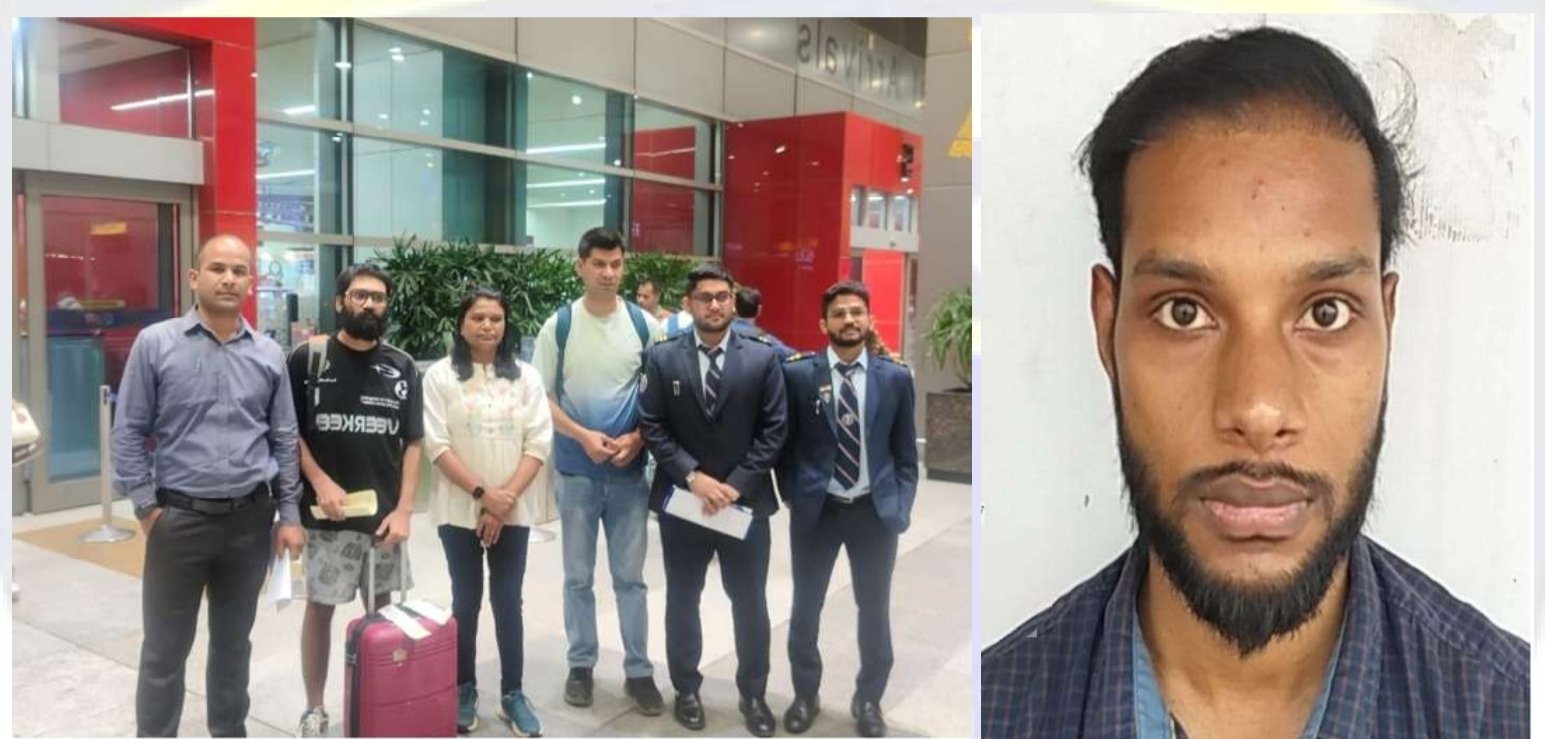

Bhopal — A cybercrime investigation in Madhya Pradesh has exposed what officials describe as a coordinated network of illegal recruitment agents involved in trafficking individuals under the guise of overseas employment. The case, initiated following a complaint filed by a Bhopal resident, has revealed a pattern of deception, cross-border movement, and forced participation in cybercrime operations.
According to police officials, investigators from the Cyber and High-Tech Crime Police Station in Bhopal began probing the matter after receiving a complaint on December 6, 2026. Technical analysis of digital evidence, combined with field inquiries, pointed to a structured operation involving recruitment agents who targeted individuals seeking better employment opportunities abroad.
Authorities said the investigation uncovered elements of fraud, human trafficking, and violations under multiple legal provisions, including sections of the Bharatiya Nyaya Sanhita, the Information Technology Act, and the Immigration Act. A case was registered, and a detailed inquiry was launched.
FCRF Launches Premier CISO Certification Amid Rising Demand for Cybersecurity Leadership
Lured by Opportunity, Trapped in Exploitation
At the center of the case is the testimony of a Bhopal resident who alleged he was approached by an acquaintance working as a recruitment agent. The agent reportedly offered him a job in data entry abroad, promising stable income and a better future.
Police said the victim agreed to the offer and was subsequently guided through an interview process conducted via Telegram. Soon after, he received travel arrangements, including a ticket to Thailand.
Upon arrival, however, the situation took a different turn. Investigators said the individual was transported by associates of the agent toward the Thailand-Myanmar border and then taken across into Myanmar through informal routes.
There, according to the complaint, he was handed over to entities allegedly running cyber scam operations. Officials said victims were confined, coerced into participating in fraudulent digital activities, and subjected to physical abuse. The victim was reportedly forced to work under constant surveillance, with limited freedom of movement.
After a period of confinement, the individual was rescued with the assistance of Myanmar’s army and later repatriated to India via Thailand.
Arrests and Expanding Investigation
The investigation led police teams to Bihar and Uttar Pradesh, where two suspects were identified and apprehended. The accused have been named as Faiz Akram, a resident of Jamui district in Bihar, and Mohit Agrawal, a resident of Meerut in Uttar Pradesh.
Officials said that during questioning, the suspects provided information about additional individuals allegedly involved in the network. Based on these disclosures, further verification revealed that other accused persons were located abroad.
A Look Out Circular (LOC) was issued, and one of the suspects was arrested upon arrival at the New Delhi airport. Police also conducted searches and seized digital devices, including mobile phones and a tablet, along with documents linked to the alleged operation.
Authorities stated that the accused had been involved in recruiting individuals by advertising high-paying overseas jobs, particularly targeting those seeking opportunities in Southeast Asia. The victims were then transported and, in some cases, sold to organizations operating cyber fraud schemes.
Modus Operandi and Law Enforcement Response
Investigators described the operation as a layered system involving recruitment, transportation, and exploitation. Recruitment agents allegedly identified potential victims through social networks and personal contacts, offering them jobs abroad. Once recruited, individuals were moved through transit countries before being taken to locations where cyber fraud operations were conducted.
Police officials said the case highlights the growing intersection between human trafficking and cybercrime, where victims are not only exploited physically but also used as instruments in digital fraud networks.
The investigation, officials added, relied heavily on digital tracing techniques to map communication patterns and financial trails, ultimately leading to the identification of the accused. A police team comprising Inspector Sapna Pathak, Sub-Inspector Arun Kumar Sharma, Sub-Inspector Devendra Jharia, and other personnel played a key role in the operation, authorities said.
Officials emphasized that the case underscores the need for vigilance against fraudulent job offers and the importance of verifying recruitment agencies before engaging with overseas employment opportunities. They also reiterated that complaints related to cybercrime can be reported through official helplines and government portals.
The investigation remains ongoing, with authorities continuing efforts to identify and apprehend additional individuals linked to the network.
