

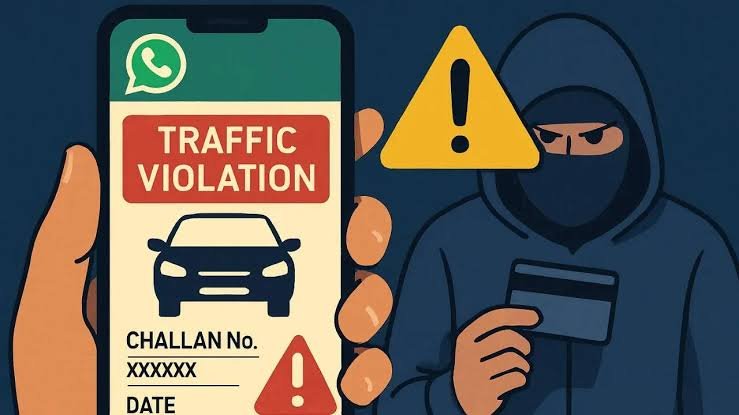
A Bengaluru-based software professional was allegedly cheated of ₹2.32 lakh after cyber fraudsters impersonating traffic police sent him a fake penalty message containing a phishing link, once again highlighting the growing menace of e-challan related scams targeting urban commuters.
The incident occurred on January 26, when the victim received an SMS on his mobile phone stating that a ₹500 fine had been imposed for a traffic violation. The message carried a link that appeared to redirect to an official payment page associated with traffic enforcement authorities.
Believing the message to be genuine, the techie clicked on the link and proceeded to make the payment. However, instead of processing a nominal fine, the fraudulent webpage prompted him to enter his credit card details and CVV number. Moments after submitting the information, a transaction of ₹2.23 lakh was debited from his account and transferred to an unknown recipient.
Certified Cyber Crime Investigator Course Launched by Centre for Police Technology
Police said the victim immediately realised something was wrong when he received transaction alerts far exceeding the fine amount mentioned in the message. He rushed to the Whitefield Cyber Crime Police Station and lodged a complaint. An FIR has been registered, and a detailed investigation is currently underway.
Cyber police officials said preliminary findings indicate that the fraud was carried out using a phishing website designed to closely resemble official traffic payment portals, complete with logos, colour schemes and layouts that mislead unsuspecting users into believing the page is legitimate.
Investigators are now working to trace the bank account into which the money was transferred. Transaction records, server logs and digital footprints linked to the phishing link are being analysed to identify the individuals behind the scam and determine whether it is connected to a larger organised cybercrime network.
Officials said such frauds are increasingly being reported across Bengaluru and other major cities, as cybercriminals exploit public familiarity with digital traffic enforcement systems. With the widespread use of SMS alerts and online challan payments, victims often assume the messages are authentic and fail to verify details before making payments.
Police noted that cyber fraudsters typically send messages mimicking official traffic notices, warning recipients of penalties or legal action if fines are not paid immediately. The urgency created by such messages often leads victims to click links without cross-checking their authenticity.
In light of the incident, authorities have reiterated a series of public safety advisories to prevent similar frauds. Citizens have been urged not to respond to unsolicited SMS messages, links, QR codes or APK files received from unknown numbers, even if they appear to originate from government departments.
Officials stressed that personal and financial information, including credit card details, passwords, OTPs and CVV numbers, should never be shared on links received via SMS or messaging platforms. Users have also been advised to ensure that their smartphones, computers and applications are regularly updated to protect against security vulnerabilities.
For genuine traffic penalty payments, police said citizens should rely only on official platforms. In Karnataka, verified channels include the BTP Astra app, the Karnataka State Police (KSP) app, the official Bengaluru Traffic Police portal, and the Karnataka One website. These platforms allow users to check pending challans securely by entering their vehicle registration numbers, without clicking on third-party links.
Cyber police officials also reminded the public that traffic authorities do not ask for payment through random SMS links, nor do they request sensitive card or banking details for challan payments.
Victims or recipients of suspicious messages have been urged to report incidents immediately through the national cybercrime helpline 1930 or the online cybercrime reporting portal, enabling faster action to block fraudulent accounts and links.
Officials said the latest case underscores how even tech-savvy individuals can fall victim to well-crafted phishing scams and stressed the need for constant vigilance as cybercriminals continue to refine their tactics.
Further investigation into the case is ongoing.
About the author – Rehan Khan is a law student and legal journalist with a keen interest in cybercrime, digital fraud, and emerging technology laws. He writes on the intersection of law, cybersecurity, and online safety, focusing on developments that impact individuals and institutions in India.
