
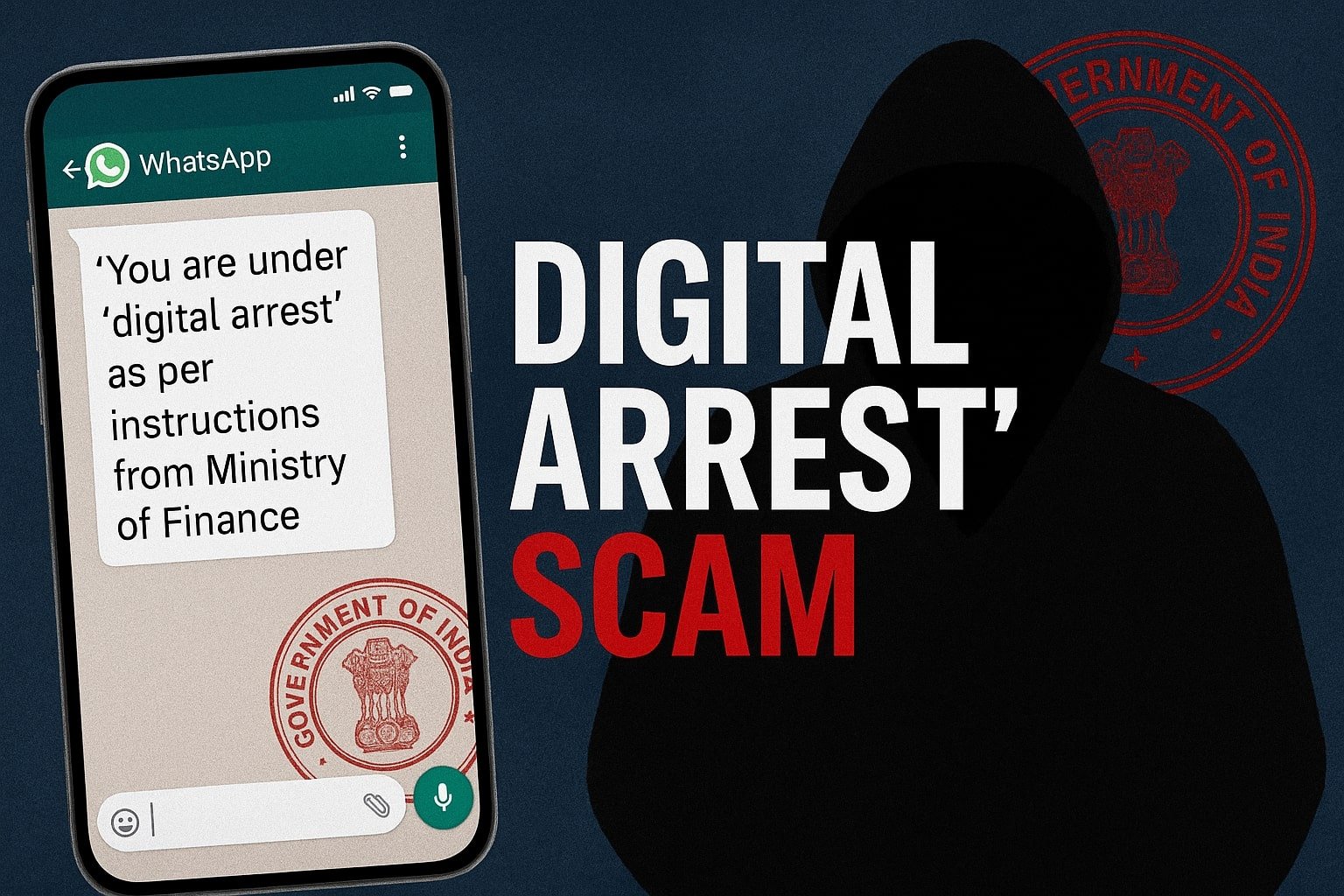

On a June afternoon, the call sounded procedural rather than threatening. The man on the line claimed to be a courier official, alerting a Bengaluru software professional to a seized parcel allegedly linked to her Aadhaar details. Within hours, the conversation escalated. New callers appeared on WhatsApp video, now impersonating officers from the Narcotics Control Bureau and cyber police, presenting what looked like official documents and certificates.
The message was stark: cooperate immediately or face arrest. Over successive calls, the woman was instructed to remain isolated, avoid outside contact and follow directions precisely—conditions the scammers described as a “digital arrest,” a phrase increasingly used to cloak extortion in the language of law enforcement.
Fear as a Weapon
Investigators later said the fraudsters displayed a chilling grasp of psychological leverage. During prolonged video calls, they extracted personal details, learning that the woman was a single mother to a 10-year-old boy. The threat shifted. If she did not comply, they warned, her child could also be implicated.
Under sustained pressure, she liquidated assets that had taken years to build. Her flat in Vignan Nagar was sold below market value. Two residential plots in Malur followed, also at distress prices. To meet escalating demands, she secured a bank loan, routing payments across multiple accounts as instructed. Between June 19 and November 27, police say she transferred ₹2.05 crore through 22 transactions, the largest amounting to ₹70 lakh.
A Pattern Spreading Nationwide
The case fits a broader national trend. Police and cybercrime units across India have reported a surge in “digital arrest” scams, in which fraudsters weaponise leaked personal data and impersonate authority figures to demand instant compliance. Bengaluru alone has logged thousands of cyber-fraud complaints each month this year, contributing to estimated nationwide losses of around ₹15,000 crore annually.
What distinguishes these cases is their sophistication. Calls often begin with innocuous pretexts—courier alerts, bank warnings—before morphing into authoritative threats. Video calls, official-looking insignia and rapid escalation are designed to overwhelm victims’ capacity for verification. Authorities say tech-savvy professionals are not immune; in some cases, their familiarity with digital systems becomes a vulnerability rather than a shield.
When the Illusion Broke
The deception unravelled only when the scammers directed the woman to a police station to obtain a supposed “no-objection certificate.” Officers at the Whitefield CEN police station immediately identified the fraud. An FIR was registered on November 27 under relevant cybercrime provisions. As of the latest reports, no arrests have been made, though investigators are tracing transaction trails and caller origins that may link the case to interstate or cross-border scam hubs.
Police officials say the episode underscores a systemic challenge: the gap between rapid digital adoption and public awareness of evolving fraud tactics. Repeated advisories now urge citizens to treat unsolicited calls claiming official action with scepticism and to verify through the national cyber helpline, 1930, before transferring funds.
For the victim, the financial losses are severe, but the emotional toll lingers longer—a reminder of how easily trust in digital authority can be turned into a tool of coercion, and how costly that trust can become.
