

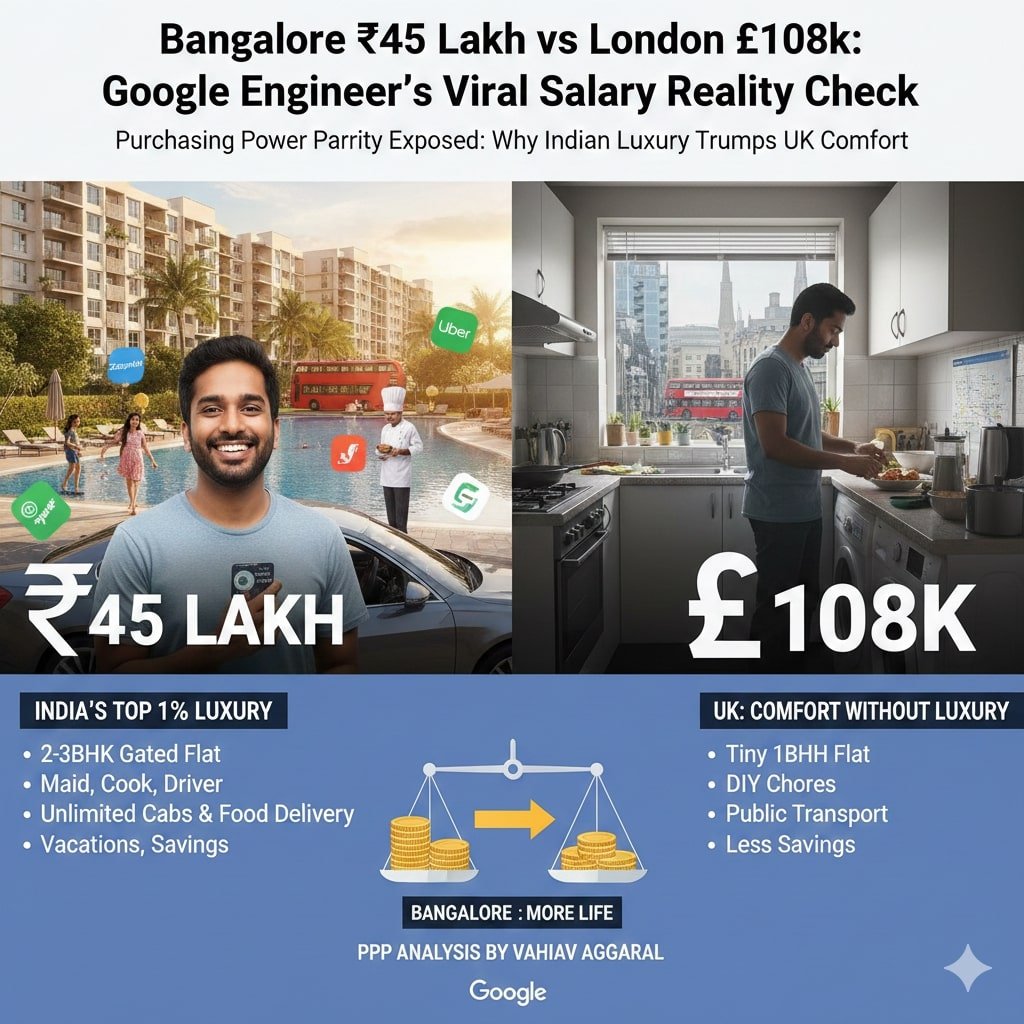
Social media glorifies crore-plus foreign packages, but Google engineer Vaibhav Agarwal’s LinkedIn post proves ₹45 lakh in Bangalore often delivers better real life than London’s £108,000 paycheck. His purchasing power parity (PPP) analysis has gone viral, challenging the “abroad = rich” myth that misleads young professionals.
Final Call: FCRF Opens Last Registration Window for GRC and DPO Certifications
Why Headline Salaries Deceive
Vaibhav Agarwal, Bangalore-based Google software engineer, argues raw numbers without living costs create false perceptions. London’s £108k converts to ₹1.15 crore—impressive on paper. But post-tax reality and expenses reveal why Bangalore’s “modest” ₹45 lakh stretches much further.
The post exposes how LinkedIn flex culture distorts career choices by ignoring purchasing power parity—the true value of money in local contexts.
Bangalore ₹45 Lakh: India’s Top 1% Luxury
₹45 lakh annually means ~₹2.7 lakh monthly take-home. This unlocks elite lifestyle:
Expensive gated society 2-3BHK flats with pools, gyms, security—₹80k-1.2 lakh rent. Full-time cook, maid, driver combo (~₹30k total) frees 20+ hours weekly for family, hobbies. Daily Zomato/Swiggy, Blinkit 10-minute groceries, unlimited Uber/Ola rides. Weekend Coorg trips, yearly international vacations, frequent fine dining—all comfortably affordable.
Such earners rank India’s top 1%, enjoying stress-free lives with substantial savings for investments, parents, kids’ education.
London £108k: Comfort Without Luxury
£108k gross shrinks to £6,100 monthly post-tax (£73k yearly). Zone 2 1BHK rent eats £2,200 (36% income)—tiny flats without amenities. Council tax + utilities add £300-400. Oyster card £150-200 covers Tube/bus only—no daily cabs. Self-cooking mandatory; maids cost £20/hour (unaffordable). Remaining £2,500 covers groceries, insurance, phone—leaving no luxury buffer or big savings.
Life stays comfortable but constrained—public transport commutes, domestic chores, smaller spaces define daily reality.
PPP Breakdown: Bangalore Buys More Life
Purchasing power parity math proves the gap. Bangalore rent takes similar income percentage as London (37% vs 36%), but delivers double space, gated security, parking. ₹30k domestic help purchases maid+cook+driver—impossible in London. ₹20k transport buys unlimited cabs vs London’s monthly Tube pass. Food costs less with app deliveries+cooking help vs UK self-prep.
Bangalore delivers top 1% comfort; London offers upper-middle living with less freedom, time, space.
Viral Debate: Money vs Lifestyle Priorities
Bangalore supporters: “PPP wins! 45L = London luxury + family support system.”
London advocates: “Global exposure, clean air, education, work culture > salary alone.”
Agarwal clarifies no universal right answer—priorities matter. But ignoring PPP misleads career decisions chasing headline numbers.
About the author – Rehan Khan is a law student and legal journalist with a keen interest in cybercrime, digital fraud, and emerging technology laws. He writes on the intersection of law, cybersecurity, and online safety, focusing on developments that impact individuals and institutions in India.
