
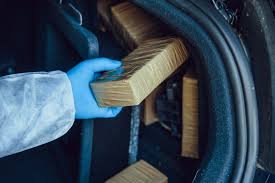
International drug trafficking networks have significantly evolved their methods of concealing cocaine. Moving beyond traditional techniques, smugglers are no longer just hiding drugs inside shipments—they are turning the packaging itself into a carrier. According to investigators, cocaine is being chemically altered and embedded into materials such as cardboard boxes, plastic, glue, and even charcoal, making it extremely difficult to detect.
Packaging itself becomes the carrier, posing new challenges
Investigations reveal that traffickers have moved past the conventional “hide and transport” model. Earlier, cocaine was concealed inside fruits, machinery, or cargo containers. Now, the packaging material itself is either made from or infused with cocaine compounds.
For instance, instead of hiding cocaine inside banana boxes, the cardboard used to make those boxes is now mixed with cocaine-based substances. This makes it nearly impossible for scanners to identify the drug as a separate entity.
FutureCrime Summit 2026 Calls for Speakers From Government, Industry and Academia
Chemical modification at the core of the strategy
Experts say the entire operation relies on chemical modification. Cocaine is processed through specific chemical techniques that alter its original form, allowing it to blend in with ordinary materials.
Once the shipment reaches its destination, a reverse chemical process is used to extract and restore the drug into its pure form. This method has created a major challenge for enforcement agencies worldwide.
Traditional scanning systems losing effectiveness
Conventional detection systems at airports and ports—such as X-ray scanners—are designed to identify hidden objects within packages. However, when the package itself contains the drug, these systems become far less effective.
As a result, large consignments are often able to pass through checkpoints undetected, only to be processed later in different countries.
Complex global networks and supply chains
This advanced technique is being used by organized international crime syndicates operating across continents, particularly from Latin America to Europe and beyond. Different groups handle separate stages of the operation—chemical processing, logistics, and final extraction.
This division of roles has made the trafficking network more sophisticated and significantly harder to trace.
Need for a shift in enforcement strategy
Experts believe that tackling this emerging threat will require a shift beyond traditional inspection methods. Authorities will need to rely more on chemical analysis, intelligence sharing, and advanced forensic technologies.
Increased monitoring across the supply chain and deeper inspection of suspicious shipments are also being recommended.
A new era of ‘digital and chemical crime’
This evolving method highlights how criminal networks are increasingly leveraging science and technology to stay ahead. While cybercrime continues to rise, chemically engineered drug trafficking is emerging as a parallel threat.
Global cooperation, technological upgrades, and stricter surveillance are now seen as essential to counter this new and complex form of smuggling.
