

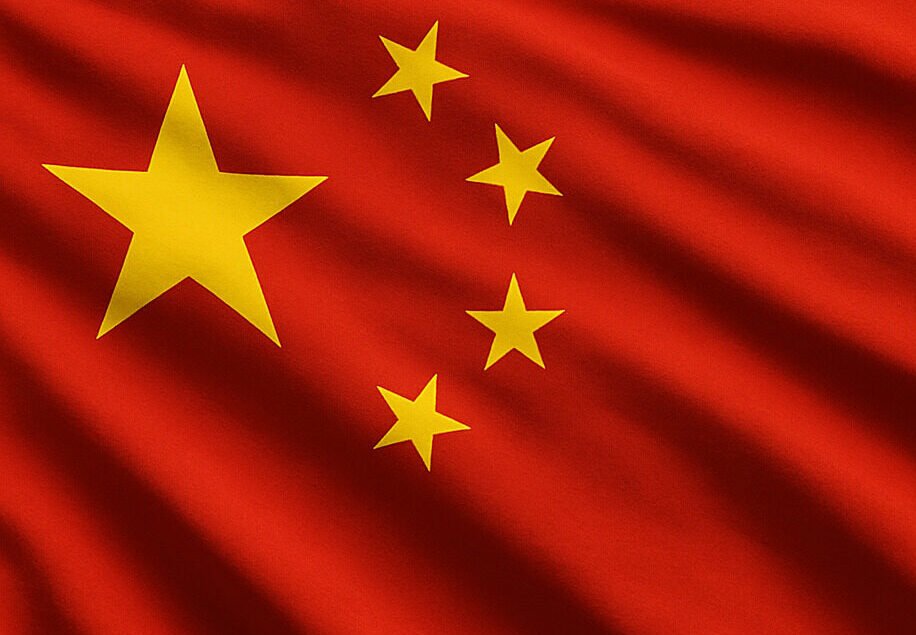

New Delhi: The October meeting between U.S. President Donald Trump and Chinese President Xi Jinping has stirred unease across Asian capitals. Trump’s repeated references to a “G2” framework — a world led jointly by Washington and Beijing — have triggered anxiety in countries like Japan, India and South Korea, which fear a loss of strategic independence under such an arrangement.
Japan’s former foreign policy adviser Tomohiko Taniguchi called the idea of a G2 order “nightmarish,” warning that it would effectively pull Tokyo into China’s orbit. Indian officials share similar apprehensions, fearing that regional power equations could tilt decisively in Beijing’s favour.
Yet Singapore’s Foreign Minister Vivian Balakrishnan takes a more measured view. Speaking at a recent forum, he described the U.S.-China dynamic as a “tactical pause” rather than a strategic alignment, noting that mutual distrust between the two superpowers remains deep and enduring.
Still, the larger question persists: Is the world moving not toward a “G2” but a “G1” order — one dominated solely by China? And if so, what would that mean for Asia’s future?
Asia Power Index Flags America’s Decline
The Lowy Institute’s Asia Power Index 2025 has delivered a sobering assessment — the United States has recorded its weakest ever score in Asia. The report describes Trump-era policies as “a net negative for U.S. power in Asia,” suggesting that the long-term erosion of American influence may already be underway. One former NATO official even described Washington’s trajectory as “soft power suicide.”
China’s Technological Ascent
China today stands not merely as a manufacturing powerhouse but as a symbol of relentless innovation. From electric vehicles (EVs) and pharmaceuticals to artificial intelligence and defence technology, Beijing’s lead is widening at a pace few can match.
Consider Xiaomi — once a smartphone maker, now a symbol of Chinese agility. In response to U.S. tariffs in 2021, CEO Lei Jun vowed to transform the company. Within three years, Xiaomi launched its own EV, the SU7, which recently clocked 359.7 km/h on Germany’s Nürburgring racetrack, outperforming established European names like Porsche and Tesla.
Ironically, European carmakers now seek access to Chinese technology — a dramatic reversal from the days when they accused Beijing of intellectual property theft.
Energy and Environment: China Sets the Pace
While the U.S. clings to its “Drill, Baby, Drill” energy philosophy, China has raced ahead in renewables. It dominates the global supply chain for solar panels, wind turbines, batteries, and EVs, all crucial to the next industrial revolution.
Energy analyst Jarand Rystad observes: “China now leads in every fast-growing industrial segment that defines the future.”
Beyond industry, Beijing has also made environmental progress. Over the past two decades, it has reforested 425,000 square kilometres — roughly the size of Japan. Once infamous for smog-choked skies, Beijing now reports dramatically cleaner air, even as global focus shifts to the toxic haze over Delhi and northern India.
Expanding Military and Strategic Power
China’s military capabilities are advancing at remarkable speed. Its latest aircraft carrier, Fujian, launched in November, features an electromagnetic aircraft launch system (EMALS) — a technology previously exclusive to the U.S. Navy’s most advanced carriers.
Recent reports from the India-Pakistan conflict suggest that Chinese-made PL-15 air-to-air missiles, used by the Pakistan Air Force, outperformed India’s French-made Rafale jets. Defence analysts now believe the People’s Liberation Army (PLA) could be the first to deploy humanoid robots on the battlefield.
Economic Challenges — But Structural Strength Remains
China’s economy faces headwinds — a property crisis, internal competition, and slowing demand. Yet experts view these as cyclical, not systemic, challenges. Beijing’s command over supply chains, logistics, and industrial design remains unrivalled.
As one Western executive remarked, “China has become the fitness centre of global manufacturing.” Its technological capacity, planning discipline, and cost efficiencies make it nearly unassailable.
Asia’s Strategic Dilemma
What most worries Asian policymakers is not the immediate economic rivalry but Beijing’s growing assertiveness. Australia learned it the hard way when China restricted wine and lobster imports after Canberra called for a Covid-19 origins probe. South Korea faced retaliation for hosting a U.S. missile defence system.
India, newly ranked as a “major power” in the Lowy Index, saw tensions resurface when an Indian woman transiting through Shanghai was allegedly harassed for listing Arunachal Pradesh — a state China claims — as her birthplace.
Indonesia and Malaysia, too, are feeling the heat. Jakarta remains wary of Beijing’s maritime claims in the Natuna Islands, while Malaysian businesses quietly complain about the dumping of Chinese goods hurting local industries.
Conclusion
A “G2” world might still leave room for balance, ensuring the U.S. retains a foothold in Asia’s strategic calculus. But a “G1” world — one centred entirely on China — could upend that balance. It would test the political autonomy, economic sovereignty, and security confidence of every Asian nation.
“G1” is no longer an abstract concept — it is an approaching reality. And that, more than anything, is Asia’s greatest concern.
