

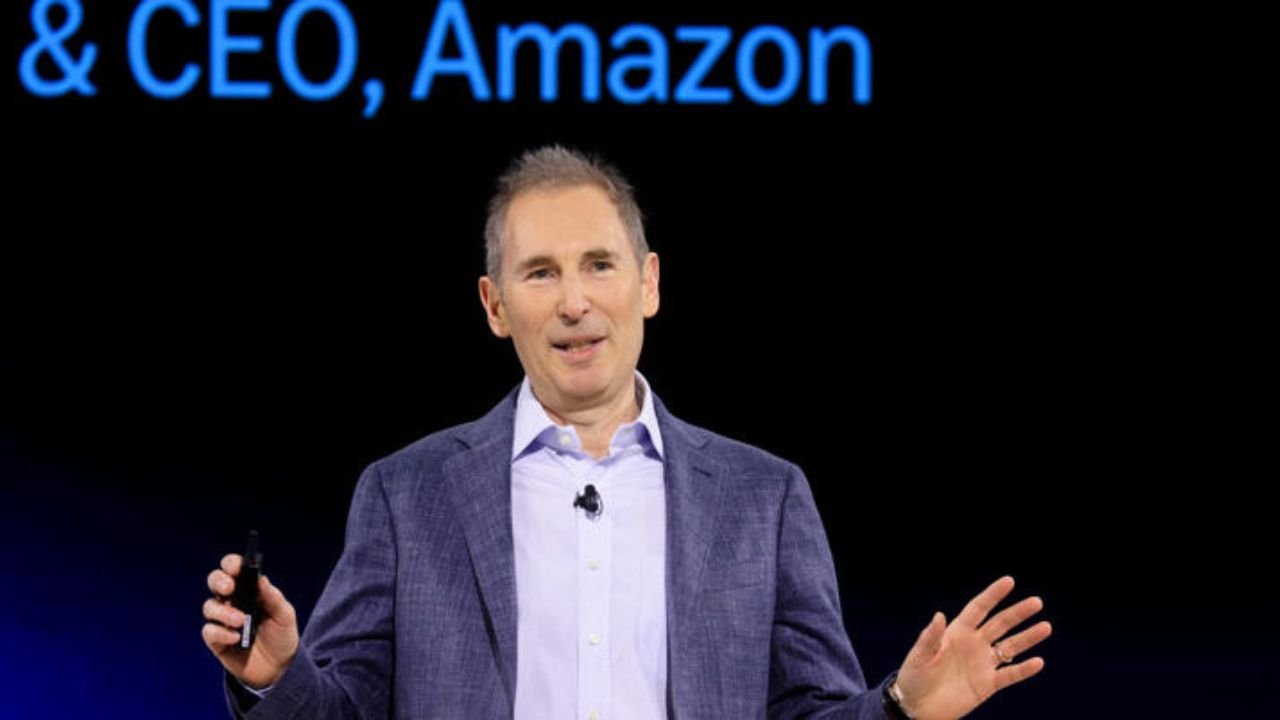

New Delhi: The world’s largest e-commerce platforms may soon face their stiffest competition not from rival retailers, but from artificial intelligence itself.
The CEO of Amazon, Andy Jassy, has warned that so-called horizontal AI agents pose the most serious long-term threat to the company’s retail dominance — naming platforms such as OpenAI’s ChatGPT, Google Gemini, Microsoft Copilot, Perplexity, and Claude.
Certified Cyber Crime Investigator Course Launched by Centre for Police Technology
Speaking during Amazon’s latest earnings call, Jassy said these AI platforms currently lack deep knowledge of users’ shopping histories and often make errors in pricing or product details. Yet industry watchers believe they are rapidly becoming consumers’ preferred “front door to commerce,” reshaping how products are discovered and purchased online.
Amazon, meanwhile, is aggressively pushing its own AI shopping assistant, Rufus. The company says Rufus crossed nearly 300 million users by 2025, with customers using the tool completing purchases about 60% more often than traditional shoppers.
Competition across the sector is intensifying just as quickly.
Retail giant Walmart has partnered with OpenAI to enable direct shopping inside ChatGPT. Fashion brand Ralph Lauren has rolled out an AI stylist called “Ask Ralph,” while Perplexity has launched in-app checkout in collaboration with payments firm PayPal.
Experts say this marks a shift from experimentation to full-scale “agentic commerce” — where AI systems actively influence buying decisions, recommend products and even complete transactions on users’ behalf.
Amazon argues that retailer-owned AI agents still hold three key advantages: access to customer shopping histories, accurate product data, and tightly integrated delivery networks. However, analysts counter that horizontal AI platforms excel at neutral comparisons, allowing users to view offerings from multiple retailers at once without being tied to a single marketplace.
Amid growing tension, Amazon recently blocked 47 AI crawlers from accessing its website and initiated legal action against Perplexity, alleging violations of its site usage policies. Critics say the move reflects deeper concerns around Amazon’s lucrative advertising business.
According to industry estimates, Amazon’s ad revenue reached nearly $56 billion in 2024, making it one of the company’s most profitable segments. If consumers increasingly begin product searches through ChatGPT-like platforms instead of Amazon’s own app or website, the Sponsored Listings model could come under direct pressure.
At the same time, new technical standards for AI-driven shopping are taking shape. Shopify and Google have introduced a Universal Commerce Protocol, while OpenAI has teamed up with Stripe to roll out an Agentic Commerce Protocol — signalling a race to define how autonomous shopping agents will transact across platforms.
Industry specialists believe brands and retailers will soon be forced to operate across multiple AI ecosystems simultaneously. The message is increasingly clear: the future of shopping may no longer begin with a website or mobile app, but with an AI assistant.
For now, Amazon is pursuing a dual strategy — strengthening its own AI capabilities while erecting barriers against external agents. Whether this defensive playbook holds in the long run remains uncertain.
What is clear is that AI agents are no longer on the sidelines of e-commerce. They are rapidly becoming central players — and could soon redefine how consumers discover, compare and buy products online.
