

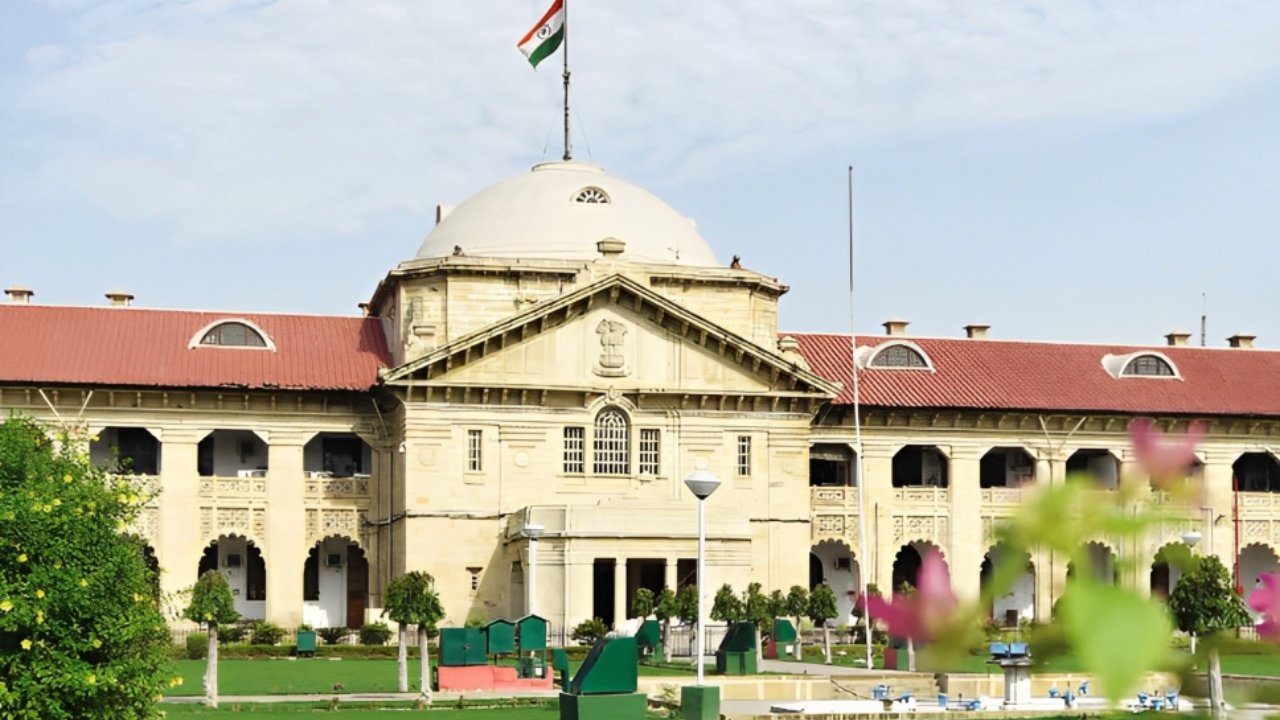

Prayagraj: The Allahabad High Court has taken a stern stance against the administrative order to limit the number of worshipers during Ramadan in Sambhal. The court dismissed the decision, stating that any restriction on the number of worshipers in mosques is unconstitutional. It further directed that if local officials are unable to enforce such orders, they should either resign or seek a transfer. The important hearing was conducted by a division bench of Justices Atul Shridharan and Siddharth Nandan.
Violation of Law Will Not Be Tolerated
The Allahabad High Court issued a clear directive to the state government, stating that it is the duty of the state to ensure that every citizen can freely practice their religious rights. The court clarified that if a place of worship is on private property, there is no need for government permission to offer prayers there. The court also stated that state intervention is only justified when religious gatherings occur on public land or when they spread to public property.
The court made a sharp remark during the hearing: “If local officials and police officers believe that the law and order situation could be such that they want to limit the number of worshipers in a mosque, they should either resign or transfer themselves.” This comment was based on the administrative decision to limit the number of worshipers during Ramadan in Sambhal, which the Allahabad High Court declared unconstitutional.
Algoritha Security Emerges As India’s Leading Corporate Investigation Powerhouse
State’s Duty: Protection of Religious Freedom
The court emphasized the state’s duty to ensure that every community can practice its religious rights freely. The court reaffirmed that offering prayers at a religious site is a fundamental right of every citizen, and the state has no right to restrict this freedom under any circumstances.
Next Hearing on March 16
The Allahabad High Court rejected the arguments presented by the state government and reinforced that the state must ensure that every community can peacefully offer prayers at designated places of worship or on private property without requiring government permission. The court asked the state government for more time and instructed the submission of an affidavit on the matter. The petitioners decided to submit an affidavit to prove where the prayers should be offered.
Controversial Issue and Political Reactions
The restriction on the number of worshipers imposed by the administration in Sambhal led to a political controversy. Some leaders opposed the decision, while others saw it as an assertion of administrative sovereignty. However, the High Court’s remarks directed the resolution of the issue from a judicial perspective, affirming that both religious freedom and the rule of law are equally important.
Respect for Judicial Rights
This case also highlighted the commitment of the judiciary to uphold the rights of citizens as enshrined in the constitution. The Supreme Court and the Allahabad High Court have consistently ensured that administrative decisions do not violate religious freedoms. The court’s stern remarks made it clear that any infringement on citizens’ rights will not be tolerated under any circumstances.
