
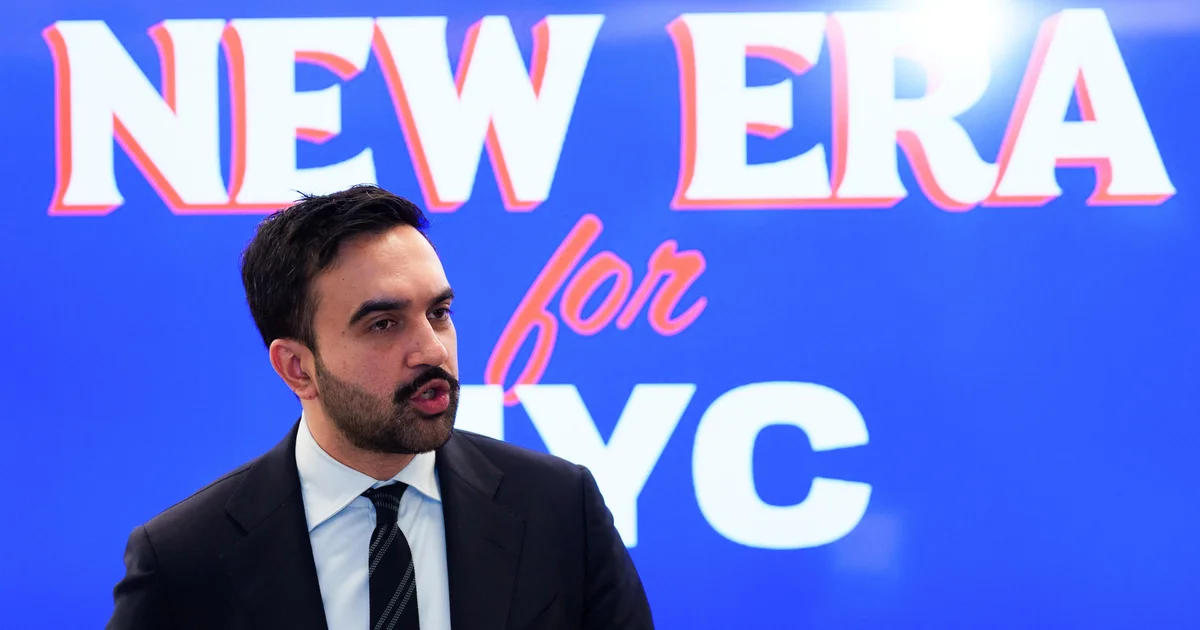

When Zohran Mamdani, New York City’s mayor-elect, announced his choice of Ramzi Kassem as the city’s next chief counsel, the message was both immediate and unmistakable. The role—New York City’s top legal post—places Kassem at the center of litigation, policy interpretation, and legal strategy for the nation’s largest municipal government.
Mamdani framed the appointment as a break from convention. In a public statement, he welcomed Kassem as part of a “new era,” citing his background in civil rights law, immigration advocacy, and government service. For supporters, the pick signaled a City Hall prepared to challenge entrenched power structures. For critics, it raised sharp questions about judgment, optics, and political risk.
A Career Built on Contentious Defenses
Kassem’s legal career has long been defined by cases others avoided. He previously served as lead counsel for Ahmed al-Darbi, who pleaded guilty before a U.S. military commission in a terrorism conspiracy linked to al-Qaeda. The case involved the 2002 attack on the French oil tanker MV Limburg off Yemen’s coast—an incident that killed one civilian and injured several others.
To Kassem and his defenders, the work was an assertion of due process, not ideology. They argue that legal representation, even for those accused of the most serious crimes, is foundational to the rule of law. Kassem has repeatedly framed his Guantánamo advocacy as an effort to end prolonged detention without resolution, rather than a defense of the underlying acts.
His résumé also includes service as a senior policy adviser on immigration during the Biden administration and leadership roles at the City University of New York School of Law, where he co-founded and co-directed a clinic focused on law-enforcement accountability and immigrant defense.
Immigration, Protest, and the Politics of Law
More recently, Kassem drew attention in 2025 when he represented a Columbia University student detained by federal immigration authorities amid campus protests over the war in Gaza. The case—still moving through the courts—placed Kassem at the intersection of immigration enforcement, campus activism, and accusations of antisemitism, further cementing his reputation as a lawyer comfortable operating in politically volatile terrain.
Mamdani has defended the choice by arguing that New York’s legal leadership should reflect the city’s diversity and its history of protest, dissent, and reform. In his view, Kassem’s career demonstrates an understanding of how law is experienced not just in courtrooms, but in shelters, detention centers, and immigrant neighborhoods.
What the Appointment Signals for New York
As chief counsel, Kassem will oversee litigation affecting housing, policing, immigration cooperation, and civil rights—areas where New York City is frequently at odds with state and federal authorities. His appointment suggests a City Hall more willing to litigate aggressively and to frame municipal governance as a form of rights-based advocacy.
Whether that approach strengthens the city’s legal posture or exposes it to fresh controversy remains an open question. What is clear is that Mamdani’s first major legal appointment is less about quiet administration than about defining values. In elevating a lawyer whose career has been shaped by some of the most divisive legal battles of the past two decades, the mayor-elect appears intent on making the city’s law department not just a shield, but a statement.
