

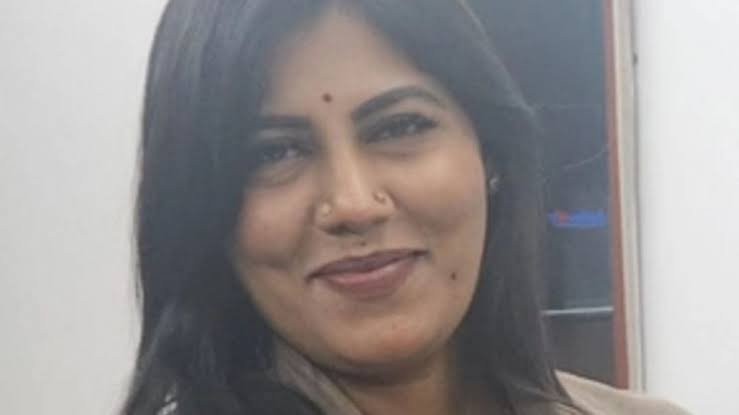

The case against Aishwarya Gowda, 32, has unfolded through a series of complaints from individuals across professions, each alleging financial deception under the promise of high returns. Among them is Vanitha Aithal, a jewellery store owner, who has accused Gowda of taking gold and money worth over ₹8 crore.
Other complainants include two doctors running a plastic surgery centre, a maternity doctor, and a businessman’s family in Mandya. Investigators say these accounts form part of a broader pattern in which Gowda allegedly gained trust before securing large sums of money or assets.
Authorities have also alleged that Gowda used police contacts to access call record details of her alleged victims. The cases were transferred to the Criminal Investigation Department (CID) in 2025, consolidating multiple complaints under a single investigative framework.
FCRF Launches Premier CISO Certification Amid Rising Demand for Cybersecurity Leadership
Money Trail and Political Links
The Enforcement Directorate (ED) entered the case last year, arresting Gowda on April 24 on charges related to money laundering. Officials said the agency attached properties worth ₹3.98 crore as part of its investigation into proceeds allegedly generated through cheating.
According to the ED, Gowda had financial dealings with political figures, including a loan of ₹24 crore from Congress MLA Vinay Kulkarni. Investigators allege that the money was not returned, and that subsequent interactions involved attempts to influence a witness in a separate murder case linked to the MLA.
The agency has also pointed to a ₹60 crore transaction involving Congress leader Tibbegowda, further complicating the financial trail under scrutiny. These alleged links have expanded the scope of the investigation beyond individual fraud complaints to include potential intersections with political networks.
A Carefully Constructed Persona
Investigators have described a methodical approach in which Gowda allegedly posed as a wealthy real estate dealer to gain access to affluent individuals, including doctors, businessmen and politicians.
According to officials, she maintained the appearance of affluence by operating out of a suite in a luxury hotel in north Bengaluru, accompanied by bodyguards and a fleet of high-end vehicles. This portrayal, authorities say, was central to building credibility among potential victims.
In some instances, Gowda is also alleged to have presented herself as the sister of Karnataka Congress leader D. K. Suresh and Deputy Chief Minister D. K. Shivakumar, a claim investigators believe helped her establish proximity to influential circles.
Legal Battle and Delayed Investigation
The legal proceedings have been marked by a series of interim protections and judicial interventions. The Karnataka High Court granted Gowda protection from arrest early in the investigation, even as petitions seeking to quash FIRs were later withdrawn in April 2025.
A magistrate court subsequently questioned the relevance of the High Court’s interim protection in bail proceedings, prompting further clarification from the High Court in February this year. The court noted that its earlier order restraining coercive action had no direct bearing on the magistrate’s decision-making process.
Despite a sessions court rejecting anticipatory bail pleas filed by Gowda and her husband, K. N. Harish, the interim protection from arrest remains in place due to earlier High Court orders. A single-judge bench has directed the sessions court to expedite the disposal of pending bail applications.
Investigators have argued that the ongoing protection has significantly hindered progress. The CID has told the court that custodial interrogation is necessary to move toward filing a chargesheet, stating that the investigation cannot advance effectively without it.
Meanwhile, prosecutors have pointed to delays in court proceedings, arguing that they have caused “irreparable injury and hardship” to the alleged victims, many of whom are still awaiting resolution in a case that spans multiple jurisdictions and years.
