
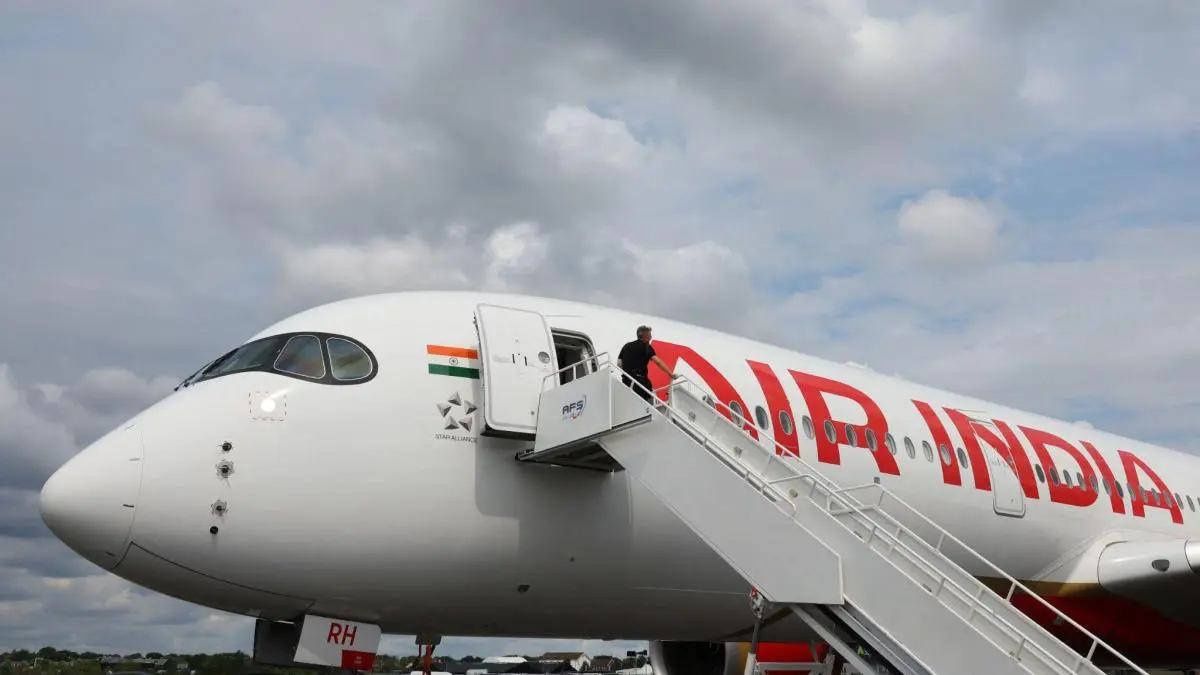
A global aviation safety alert has shaken airlines across continents after Airbus ordered an urgent recall and safety upgrade for nearly 6,000 aircraft from its popular A320 family — the world’s most widely used commercial passenger jets.
The precautionary action follows technical findings that cosmic radiation — high-energy particles from space — can disrupt the aircraft’s Elevator Aileron Computer (ELAC), leading to dangerous altitude miscalculations mid-flight.
India has 338 affected planes, operated mainly by IndiGo, Air India, Vistara and other carriers. 270 have already been upgraded, while the remaining are currently undergoing corrective procedures. DGCA has made it clear:
“No A320-family aircraft will carry passengers until fully updated and certified airworthy.”
What triggered the alarm?
A serious mid-air incident in the US turned out to be the breakthrough.
In October, a JetBlue Airbus A320 suddenly pitched downward while cruising between the US and Mexico. The system began reading false altitude data, forcing pilots into an emergency landing. At least 15 passengers were injured.
Investigators later found that cosmic radiation interference may have caused ELAC modules to temporarily malfunction — an extremely rare but high-risk vulnerability.
A senior aviation analyst described the discovery as:
“The kind of flaw that does not reveal itself until a close call.”
Which aircraft are impacted?
Airbus confirmed that the issue spans the entire A320 range:
- A318
- A319
- A320
- A321
These jets operate thousands of daily flights, including most low-cost and short-haul international traffic worldwide.
Impact Summary
Region Aircraft Affected Status:
- India 338 270 updated, 68 pending
Worldwide ~6,000 Rapid compliance actions underway
The upgrade takes up to 3 hours, after which aircraft can resume normal flying.
900 older aircraft face stricter restrictions
Airbus has placed additional hardware replacement requirements on about 900 older jets, especially those delivered before advanced radiation-shielded avionics were integrated.
Until replacement is complete, these aircraft are only allowed to fly without passengers, commonly referred to as “ferry flights.”
European, US and UK regulators have already issued emergency airworthiness directives to operators.
Airbus responds: ‘Safety is our highest priority’
In an official statement, Airbus said:
“Temporary flight delays and cancellations cannot be ruled out, but safeguarding the highest level of safety comes first.”
The manufacturer explained that fly-by-wire aircraft rely heavily on electronic signals for flight control — making external cosmic forces an unpredictable but real variable.
‘This could have led to disaster if left unaddressed’ — Expert caution
Aviation safety expert Capt. Harsh Vardhan warned:
“ELAC governs the aircraft’s leveling and stability. A runaway failure could cause abrupt descent — with catastrophic consequences. Thankfully, the system recovered itself and regulators acted swiftly.”
Should passengers worry?
Regulators insist there is no threat to safety during ongoing upgrades:
- Airline response was immediate
- The glitch was detected before a tragedy occurred
- Flying remains the safest mode of transport in the world
- Passengers may experience minor disruption, mainly due to maintenance scheduling.
What’s next?
DGCA has instructed airlines to provide:
- Digital compliance proof for each upgraded aircraft
- Real-time health monitoring reports before every flight
- Additional pilot training for handling ELAC recovery modes
Airbus aims to complete all global safety actions by mid-December.
Why cosmic radiation matters
Scientists note that as aircraft cruise at 35,000 ft, they are exposed to:
- Solar storms
- High-energy neutrons
- Charged particles from deep space
Even a single stray particle can flip a computer bit — a phenomenon known as Single-Event Upset (SEU).
Commercial avionics are shielded heavily — but this incident highlights rare, edge-case vulnerabilities.
The airline industry confronted a hidden threat from space
Rapid regulatory coordination prevented a potential aviation tragedy
The incident underscores the need for continuous monitoring of digital-flight systems
This recall will likely serve as a case study in proactive safety, demonstrating how detection + transparency + rapid response can save lives.
