
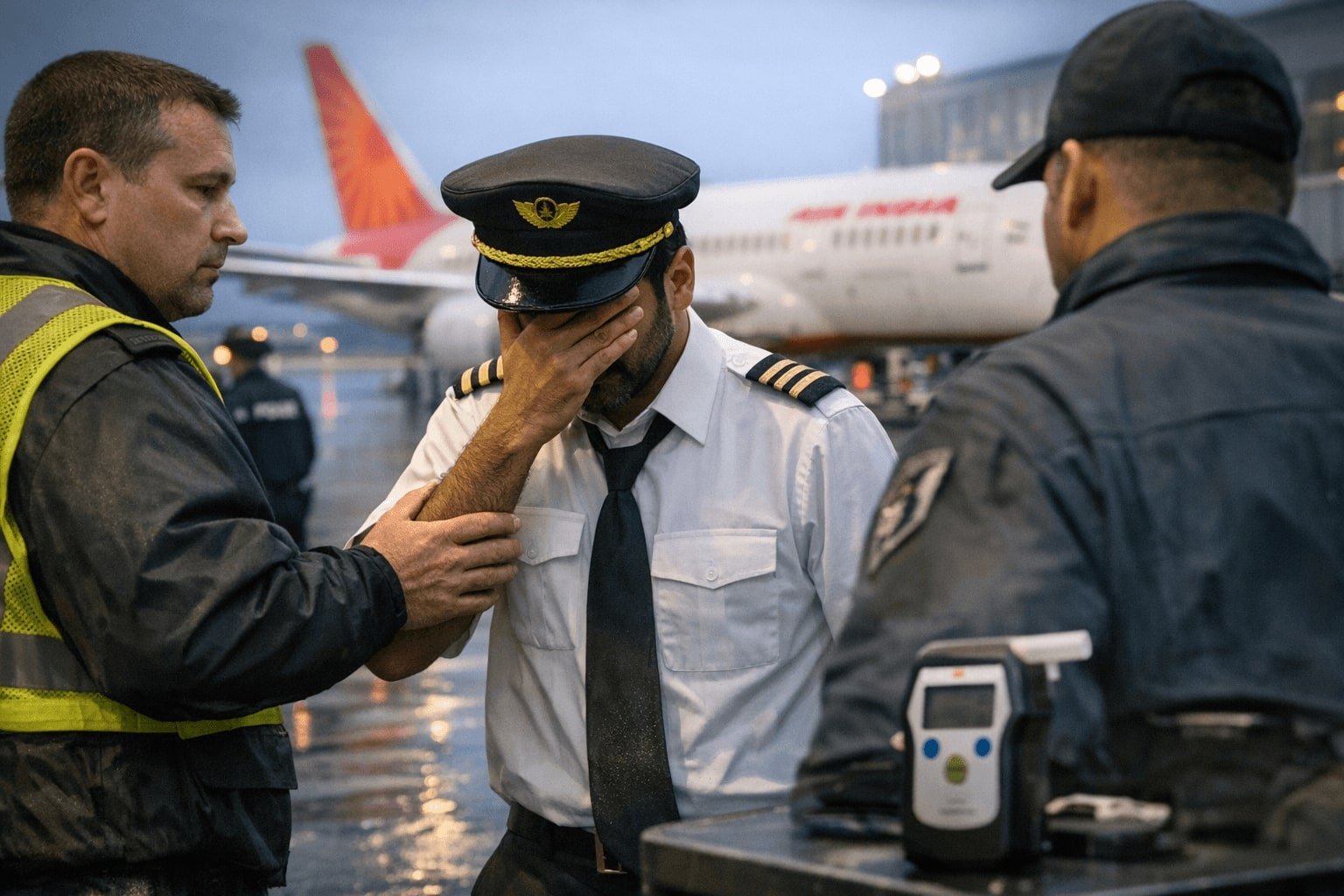

New Delhi | January 3, 2026: Air India is facing a serious regulatory challenge in Canada after the arrest of one of its pilots in Vancouver triggered warnings from the country’s transport regulator. Transport Canada has cautioned the airline that its flight authorisations could be suspended or cancelled if strict compliance with aviation alcohol-consumption rules is not ensured. Canadian authorities have described the incident as a “serious matter,” making it clear that further action will depend on the outcome of the investigation and the airline’s adherence to regulations.
In a statement issued on Friday, January 2, Transport Canada said the incident occurred on December 23 at Vancouver International Airport, when an Air India pilot came under scrutiny before reporting for duty. The regulator said it is in touch with Air India as well as Indian aviation authorities to ensure “appropriate follow-up actions” are taken.
Arrest before duty, flight delayed for hours
According to sources familiar with the matter, the pilot was preparing to operate Air India’s scheduled flight from Vancouver to Delhi when a report of concern related to alcohol consumption led to his detention. As a result, the flight was delayed for several hours. After necessary procedures were completed and alternative arrangements made, the aircraft later departed safely, officials said.
Canada’s federal police force, the Royal Canadian Mounted Police (RCMP), confirmed that the arrest followed a “report of concern involving a crew member.” The RCMP said the investigation is ongoing and that no further details would be released at this stage.
Zero tolerance under aviation rules
Transport Canada reiterated that Canadian aviation regulations strictly prohibit pilots or crew members from performing duties within 12 hours of consuming alcohol, or from operating an aircraft while under its influence. Airlines are legally required to ensure that only ‘fit-to-fly’ crew members are assigned to duty.
The regulator warned that any violation of these rules could trigger action under the Aeronautics Act, including the suspension or cancellation of Canadian Aviation Documents. In addition, airlines may face judicial proceedings and other penalties, depending on the severity of non-compliance.
Coordination with India’s DGCA
Transport Canada also clarified that primary regulatory oversight of Air India lies with India’s aviation watchdog, the Directorate General of Civil Aviation (DGCA). The Canadian authority indicated that it will work in coordination with the DGCA to ensure a full investigation is conducted and that corrective measures are implemented where necessary.
Air India has not issued an immediate public response to the incident. However, aviation experts note that such cases—especially on international routes—can pose reputational and operational risks for airlines operating under multiple regulatory jurisdictions.
Potential impact on Canada–India routes
Industry experts warn that if regulatory lapses are established during the investigation, the consequences may extend beyond a single flight or individual pilot. Air India’s operations on Canada–India routes, including slot allocations and future operating permissions, could come under closer scrutiny.
Aviation analysts say the episode underscores the global industry’s zero-tolerance approach to safety and crew fitness, where even isolated incidents can have far-reaching implications. In an era of heightened regulatory oversight, strict compliance with international safety norms is non-negotiable—particularly when passenger safety and cross-border aviation rules are involved.
In the coming days, the focus will be on how Air India conducts its internal inquiry and what compliance measures it adopts. These steps will likely determine whether the episode remains a one-off regulatory setback or evolves into a broader challenge for the airline’s international operations.
