
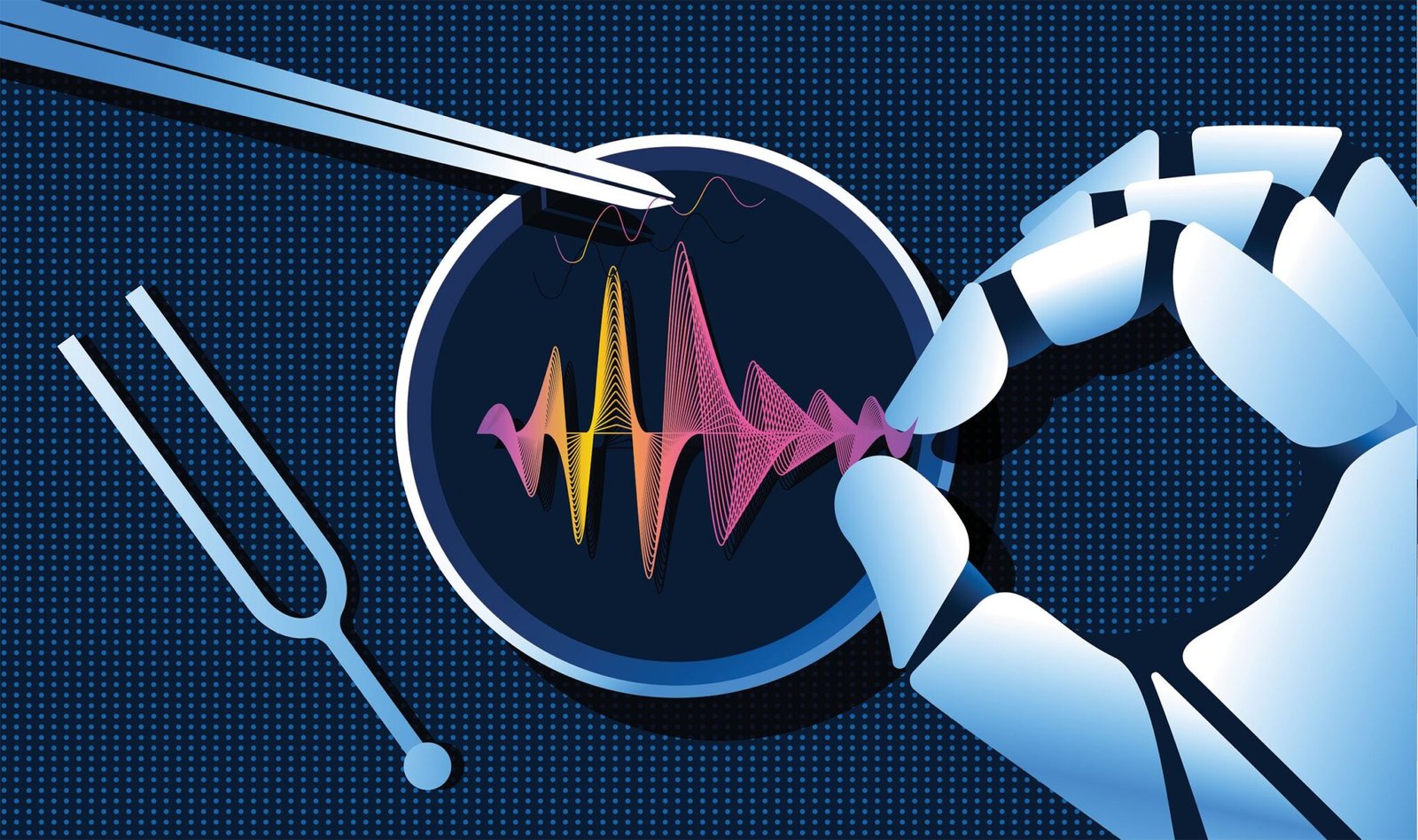

A woman answers a call from her “bank.” The voice is calm, courteous, and eerily familiar. It knows her name, her postcode, her recent transactions. Moments later, her savings are gone. The call was never human — it was an artificial intelligence trained on thousands of hours of speech. As AI-generated voices become indistinguishable from real ones, the foundation of digital trust itself is beginning to fracture.
The Age of Perfect Imitation
Until recently, voice impersonation was an art that demanded effort — mimicry, recording, or manipulation. Now, with the rise of generative AI models, imitation has become instant. Systems that once promised efficiency in customer service or accessibility tools have evolved into powerful instruments of deception.
According to cybersecurity researchers, AI-powered impersonation scams have surged by 148 percent over the past year. Fraudsters now deploy cloned voices that sound exactly like bank employees, relatives, or government officials, even reproducing pauses, accents, and emotional tone. The familiar markers that once guided intuition — a hesitation, a change in cadence — are disappearing.
Experts warn that in this new environment, vigilance is no longer enough.
“We’re asking individuals to outsmart machines that are designed to sound trustworthy,” said a senior researcher at McAfee. “That’s an impossible demand.”
The Human Weak Link
For decades, security advice has leaned on a simple principle: be careful. Banks and telecom operators urged users to hang up if a call felt suspicious. But in the age of AI, suspicion is no longer a reliable compass.
A growing number of victims describe hearing voices that mirror loved ones or familiar institutions with unsettling precision. The FBI Internet Crime Report found that U.S. seniors lost nearly $5 billion in 2024, much of it to scams exploiting fear and urgency. Now, the same scams are being turbocharged by AI — and the emotional manipulation feels almost indistinguishable from genuine concern.
One woman, who requested anonymity, recalled the call that emptied her savings. “He sounded exactly like the manager from my local branch,” she said. “He even remembered our last conversation about my home loan.” Only later did she learn that the “manager” was an algorithm, trained on leaked audio samples.
Beyond Vigilance: The Need for Infrastructure
The problem, experts argue, is structural, not behavioral.
“Telling people to be more cautious is like telling drivers to inspect every bridge before crossing it,” said one digital identity specialist. “What we need is infrastructure that ensures the bridge is safe.”
That infrastructure already exists — in part. Blockchain and decentralized identity (DiD) systems can verify the authenticity of digital interactions at their source. Just as web browsers display a padlock icon to confirm a site’s security, future phones and communication platforms could show a verified credential proving a caller’s identity before the conversation begins.
Under the hood, such systems rely on cryptographic signatures rather than human intuition. When a verified institution — say, a bank or telecom provider — places a call, the device could check its digital certificate in real time. A green indicator might confirm legitimacy; a red warning might flag an “unverified AI agent.”
A Future of Conditional Trust
Without this kind of authentication layer, digital communication risks collapsing under the weight of its own illusions. Deloitte’s 2025 Global Predictions Report projects that half of enterprises will use AI agents by 2027, and yet detecting AI-generated speech will only become harder.
The issue, experts say, isn’t AI’s capacity to deceive — it’s the system’s failure to verify. Just as the internet could not scale without HTTPS to certify secure websites, the next phase of the digital age may depend on embedding proof of trust into every interaction.
In the end, the question is no longer whether we can tell if a voice is human. It’s whether we can afford a world where it doesn’t matter — because the truth, like the voice on the other end of the line, may sound real but be nothing more than code.
