


The global technology industry has spent years worrying about semiconductor shortages, supply chains and geopolitical tensions surrounding chip manufacturing. But a recent market shock in South Korea is raising a different and potentially more consequential question: what if the greatest vulnerability in the artificial intelligence revolution is not computing power or manufacturing capacity, but energy?
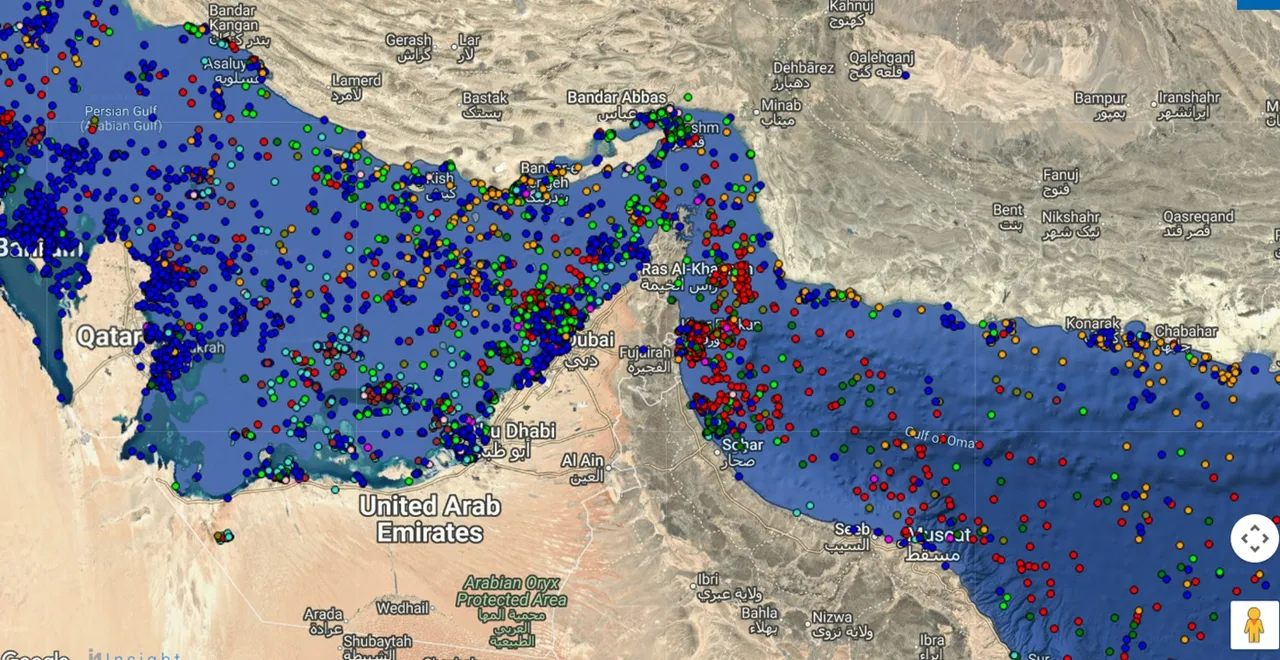
The warning emerged after a sharp drop in South Korea’s stock market that wiped out hundreds of billions of dollars in value within two days, rattling semiconductor companies central to the global AI ecosystem. At first glance, the selloff appeared tied to rising tensions in the Middle East and fears over oil shipments through the Strait of Hormuz, the narrow passage through which a large share of the world’s energy supply flows.
Yet for analysts watching the AI industry closely, the episode revealed something deeper: a fragile chain linking energy markets, semiconductor production and the infrastructure powering the next generation of artificial intelligence.
10 Days to Go: FCRF’s Certified Fraud Investigator Program Draws Industry Interest
A Market Shock in the Center of the AI Supply Chain
South Korea’s benchmark KOSPI index fell roughly 15 percent within 48 hours, erasing nearly $270 billion in market value. Trading was halted by circuit breakers for the first time in more than a year and a half, a signal of the market’s sudden volatility.
The decline was led by semiconductor giants Samsung Electronics and SK Hynix, whose shares fell approximately 10 percent and 12 percent, respectively.
The immediate catalyst appeared to be rising oil prices, which climbed above $80 per barrel amid escalating geopolitical tensions in the Middle East. Investors worried about disruptions to shipping routes through the Strait of Hormuz, a narrow maritime corridor connecting the Persian Gulf to global energy markets.
Because a significant portion of global oil exports travels through that waterway, any disruption can send shockwaves through energy markets.
But the deeper significance of the selloff lies not only in energy prices—it lies in the industries that depend on them.
The Hidden Backbone of Artificial Intelligence
The rapid expansion of artificial intelligence relies heavily on specialized hardware. Systems that train and operate advanced AI models require powerful processors such as NVIDIA’s Blackwell GPUs, H100 accelerators, and custom chips developed by companies including Google.
Yet those processors cannot operate effectively without a critical companion: high-speed memory.
That memory is overwhelmingly produced in South Korea.
Together, Samsung and SK Hynix control roughly two-thirds of global DRAM production and nearly 80 percent of revenue from high-bandwidth memory (HBM), the specialized memory used in AI data centers.
HBM is essential because it feeds enormous volumes of data into GPUs at the speed required for modern machine learning workloads. Without it, AI chips cannot function efficiently.
As one market analyst described it, HBM has become the oxygen of the global AI infrastructure buildout.
This concentration means that a significant portion of the world’s AI capacity now depends on manufacturing facilities clustered within a single country.
Energy: The Quiet Constraint Behind Chip Manufacturing
Semiconductor fabrication plants—often referred to as fabs—are among the most energy-intensive industrial facilities in the world. They operate continuously and require vast amounts of electricity to maintain highly controlled environments where chips can be produced at nanometer scale.
South Korea’s semiconductor industry therefore depends not only on advanced manufacturing technology but also on a stable energy supply.
That is where another vulnerability appears.
South Korea imports roughly 97 percent of the energy it consumes, much of it in the form of oil and liquefied natural gas from the Middle East. A substantial share of those shipments passes through the Strait of Hormuz, which at its narrowest point measures only about 21 miles across.
If tensions in the region were to disrupt shipping through the strait—even temporarily—energy costs could surge dramatically.
For an economy whose semiconductor factories must run around the clock, rising energy prices could quickly translate into higher production costs or reduced output.
And unlike some industrial commodities, memory chips cannot easily be stockpiled.
A Supply Chain With Little Margin for Error
Industry inventories suggest that the semiconductor ecosystem may have limited capacity to absorb prolonged disruptions.
Analysts estimate that global DRAM inventories cover roughly two to three weeks of supply, while NAND flash inventories extend only three to four weeks.
In other words, the global technology industry operates with relatively little buffer.
If energy disruptions were to slow chip production for an extended period, the effects could ripple across sectors—from cloud computing providers and AI startups to smartphone manufacturers and data center operators.
Financial markets may already be adjusting to this reality.
While semiconductor stocks declined sharply during the recent market turbulence, defense-related companies in South Korea moved in the opposite direction. Shares of Hanwha Aerospace climbed roughly 20 percent, and LIG Nex1, a defense technology firm, rose nearly 30 percent.
The shift suggests that investors are beginning to reassess geopolitical risks embedded within the technology supply chain.
The Global Ripple Effect
The implications extend far beyond South Korea.
Across Asia—including countries such as India—economies remain heavily dependent on Middle Eastern energy imports. Higher oil and gas prices can raise inflation, weaken currencies and increase the cost of operating the massive data centers required to train and run AI systems.
Those costs ultimately affect the pace and scale of AI infrastructure expansion worldwide.
The episode has therefore drawn attention to an overlooked reality of the AI economy: behind the algorithms and processors lies a network of physical infrastructure dependent on energy, logistics and geopolitical stability.
In that sense, the recent market shock in South Korea may represent more than a temporary financial tremor.
It may be an early signal that the future of artificial intelligence will be shaped not only by breakthroughs in computing—but also by the stability of the energy routes that power the factories making it possible.
