
Follow us on Google News

Artificial intelligence chatbots are increasingly being used to plan outdoor trips, recommend hiking routes and advise travellers on what equipment to carry. But inaccurate directions and confident answers can create serious risks when people rely on them in remote areas where a wrong turn can become a life-threatening mistake.
Several incidents in the United States and Canada have brought the problem into focus. Hikers have used chatbots such as Google’s Gemini and Anthropic’s Claude while planning mountain trips, only to encounter dangerous conditions, incorrect route information or inadequate preparation.
The cases do not establish that artificial intelligence is causing a general rise in hiking accidents. They do, however, show how unreliable advice can become dangerous when users treat a chatbot as an expert guide rather than a tool whose answers need independent verification.
Hikers Rescued After Relying On AI-Generated Advice
One incident involved three inexperienced hikers who became stranded on Mount Shasta in Northern California. The group had relied heavily on Google’s Gemini while planning their climb, including for information about the route and what food and water to carry.
The hikers underestimated the difficulty of the journey and did not carry sufficient supplies. They reached the summit at around 7 pm, well beyond the recommended turnaround time, and began descending in darkness.
They eventually moved away from their intended route and became stranded in difficult terrain. One of the hikers injured his knee, and the group had to seek help from emergency services before being brought down with assistance from rescue teams.
The incident was not caused by chatbot advice alone. The group’s limited experience, poor preparation and decision to continue climbing beyond the recommended time also contributed to the emergency. However, the hikers later acknowledged that they had relied too heavily on AI instead of applying their own judgement.
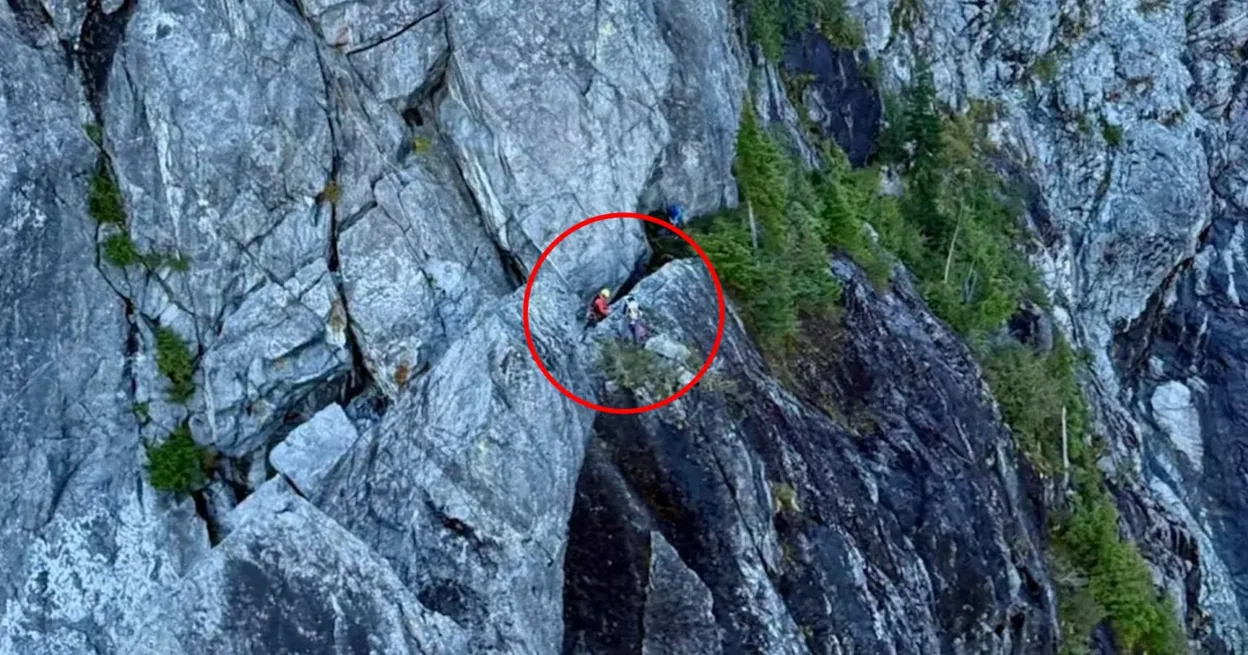
Another case involved a 16-year-old in British Columbia, Canada, who reached a dangerous ledge on Crown Mountain after using Anthropic’s Claude while planning his hike. A helicopter rescue team had to extract him from the steep terrain.
The teenager had also consulted Google Maps and the AllTrails hiking application. This makes it difficult to attribute the incident to one tool alone, but it highlights the risks of combining digital route guidance without checking whether the suggested path is safe or suitable for a person’s experience.
Incorrect Maps And Camping Advice Raise Further Concerns
The risks are not limited to hikers becoming lost during difficult climbs. Officials in the Mount Shasta area have also described cases involving incorrect AI-generated maps and advice that contradicted clearly displayed restrictions.
In one instance, a visitor set up a tent near a sign prohibiting camping and reportedly argued that an AI chatbot had told her the location was permitted. In another, a man showed rangers an AI-generated map that placed prominent geographical features on the wrong side of a mountain.
Such errors can be difficult for inexperienced users to identify. A map may look detailed and convincing while containing inaccurate landmarks, routes or geographical relationships.
This is particularly dangerous in remote areas. Unlike an incorrect restaurant recommendation or a wrong answer about a tourist attraction, a navigation error in mountainous terrain can expose people to steep drops, unstable ground, extreme weather and a lack of water or shelter.
Why Confident AI Answers Can Become Dangerous
Chatbots generate responses using patterns learned from large collections of information. They can produce useful explanations and suggestions, but they do not necessarily verify that every detail is current or accurate.
Information about hiking routes can change because of weather, landslides, seasonal closures, trail damage and local restrictions. A chatbot may draw on older online discussions, videos or other material that does not reflect conditions on the ground.
The danger is amplified by the way these systems communicate. Their answers can sound authoritative even when the information is incomplete or fabricated.
Researchers studying human interaction with AI have raised concerns about a behaviour described as cognitive surrender. It refers to situations in which people become so dependent on a system’s responses that they stop questioning its advice or checking it against their own knowledge.
In an unfamiliar environment, this can become especially serious. A hiker who cannot independently assess a route may struggle to recognise when an AI-generated direction is taking them into unsafe terrain.
There is also no clear evidence yet that the growing use of chatbots has increased the overall number of wilderness rescues. Search-and-rescue figures cited in recent reporting show that Wyoming recorded 312 calls so far in 2026, compared with 466 during all of 2025 and 377 in 2024. The 2026 figure covers only part of the year, and the numbers do not establish whether AI has affected rescue activity.
What This Means For You
AI chatbots can help travellers research destinations, organise packing lists and understand general outdoor requirements. But they should not be treated as authoritative sources for live trail conditions, route safety, weather warnings or local camping rules.
Before a hike, travellers should check current maps and advisories published by the relevant forest department, park authority or trail organisation. They should also consult local guides or park rangers when planning unfamiliar or technically difficult routes.
Carrying a physical map, compass, sufficient food and water, suitable clothing and emergency equipment remains important, even when a smartphone is available. Hikers should also set a clear turnaround time and be prepared to abandon a trip if conditions become unsafe.
The broader lesson is that AI can help people prepare for an outdoor journey, but it cannot assess every real-world condition or take responsibility for decisions on a mountain. When an inaccurate answer can put someone’s life at risk, independent verification is not optional.