
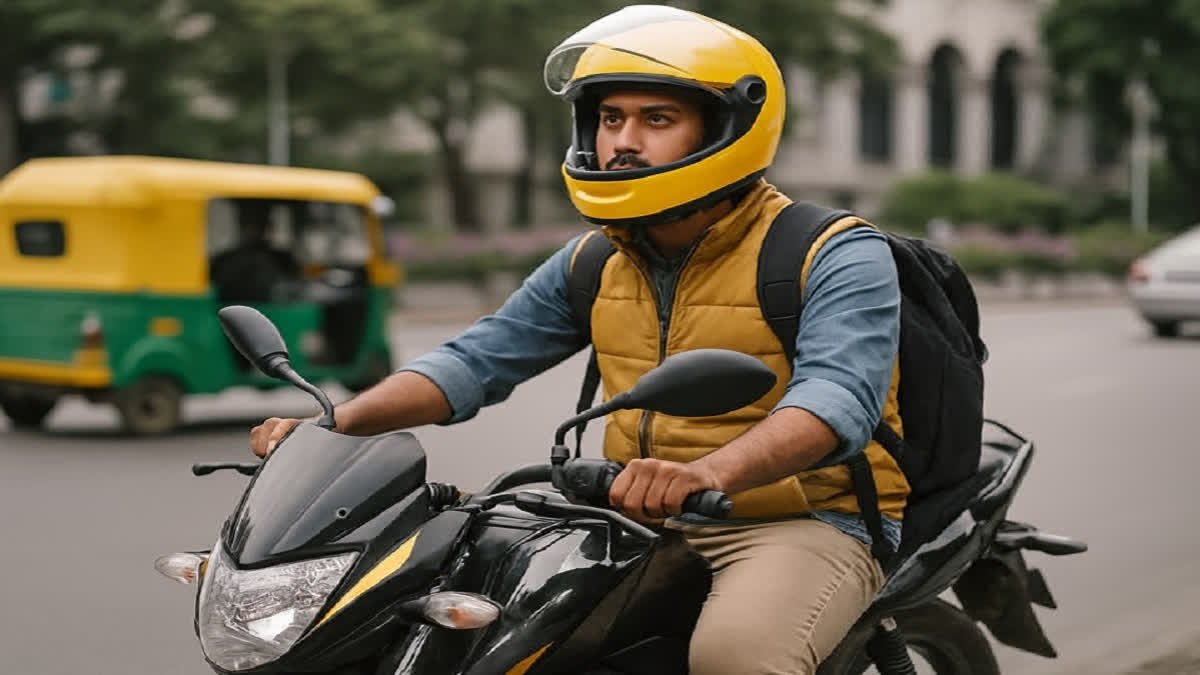
The Bike Bot investment scheme promised monthly income from motorcycle taxis, but investigators found little evidence of operations.
How Did Bike Bot Attract Investors?
Bike Bot offered individuals an opportunity to invest in motorcycles that the company would operate as taxis. Investors were promised regular payments without having to manage vehicles, hire drivers or find customers.
The scheme required an investment of approximately ₹62,100 for one motorcycle. Some plans promised monthly payments of ₹9,765, while another arrangement offered ₹4,590 as rental income and ₹5,175 towards an EMI component. Investors could choose packages involving one, three, five or seven motorcycles. Additional incentives included rental bonuses and commissions for introducing new investors.
The company presented itself as a technology-driven transport business addressing last-mile connectivity. Its business model appeared attractive because investors were offered income from a physical asset without participating in daily operations.
FCRF Launches CP-FRM to Build India’s Next Generation of Fraud Risk Professionals
Why Did the Business Model Fail?
According to the Enforcement Directorate (ED), Bike Bot established franchises across several cities, creating the impression of a substantial transport network. However, the agency found that motorcycle taxis were barely operating in those locations. The company reportedly had offices in Noida, Greater Noida, Aligarh, Ghaziabad, Saharanpur, Muzaffarnagar, Delhi and Jaipur. Police also mentioned approximately 10,000 petrol motorcycles and some electric vehicles.
The central problem was the gap between promised payments and actual transport revenue. Investigators found that money collected from new investors was allegedly used to pay earlier investors. The ED described an arrangement resembling a Ponzi scheme, in which payments depended on continued investment rather than earnings from taxi services.
How Large Was the Alleged Fraud?
Complaints increased in 2019 as investors stopped receiving promised payments. The number of affected investors and the financial scale remain subject to differing investigative estimates.
Figures mentioned during the investigation included approximately 2.25 lakh investors and ₹1,500 crore. The Central Bureau of Investigation subsequently cited at least ₹15,000 crore as the alleged amount in its FIR, although the basis for that figure was unclear. The ED initiated a money laundering investigation based on FIRs registered in Gautam Buddha Nagar, while the CBI took over the broader investigation. In October 2021, the ED provisionally attached assets worth ₹112.36 crore, following earlier attachments worth ₹103.73 crore. Another attachment worth ₹4.72 crore was announced in May 2024.
What Does the Investigation Reveal?
The investigation highlighted how an apparently practical business proposal could conceal serious financial weaknesses. Bike Bot also introduced e-bike plans in November 2018 after citing registration and operational difficulties with petrol motorcycles. The new plans reportedly required substantially higher subscriptions.
The company continued collecting investments until early 2019, even as complaints emerged over unpaid returns. Investigators examined whether the promised income could realistically be supported by operating motorcycles.
The420 Insight: The Bike Bot case illustrates the risks of investment schemes promising fixed returns from physical assets without demonstrating sufficient operating revenue. The ED’s findings suggest that investor payments depended on fresh deposits rather than a functioning motorcycle taxi business.
Follow for daily updates on cybercrime, corporate fraud, DFIR, hacking, investigations, and digital forensics
