

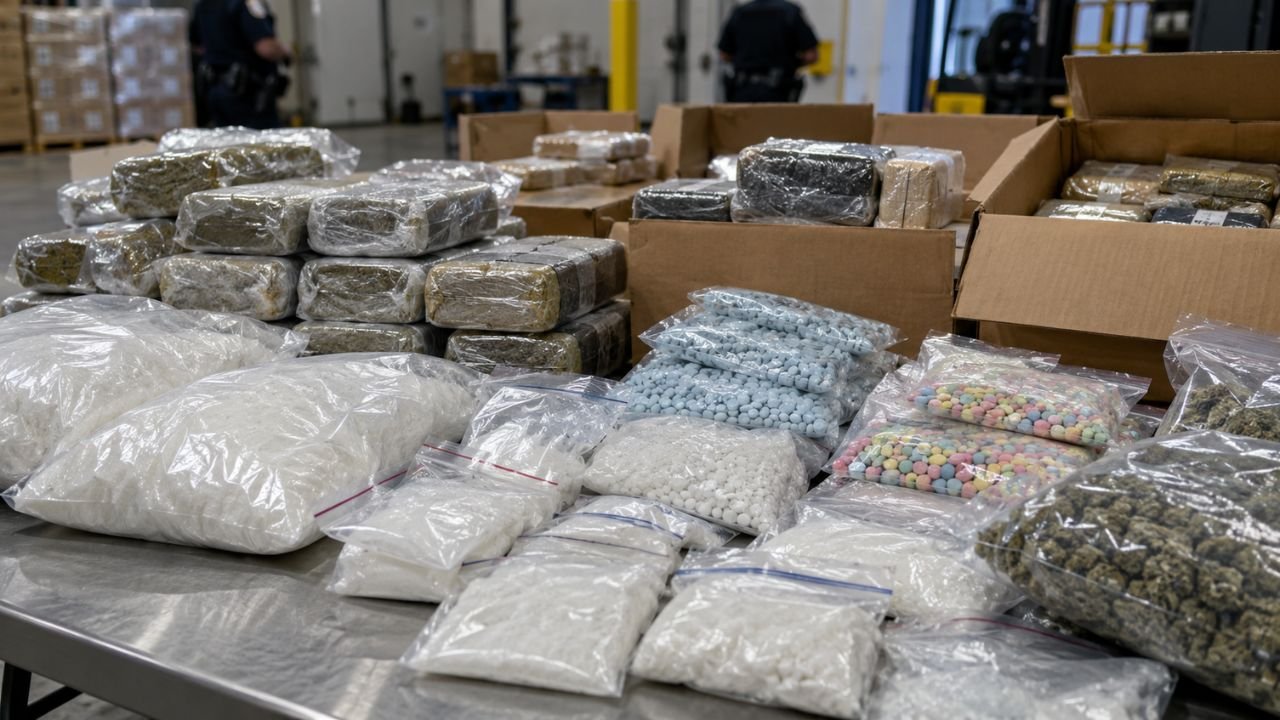

Aizawl. Mizoram is emerging as a major corridor for drug trafficking from Myanmar, with a large part of the 510-kilometre-long border providing routes through forests and border villages. Traffickers are allegedly bringing heroin and methamphetamine into India from Myanmar through these routes. More than ₹846 crore worth of drugs has been seized in the state over the past eight months, while 930 people have been arrested. Among those arrested are 111 foreign nationals. Investigations have indicated that cross-border networks are not limited to transporting drug consignments into India, but operate through multiple layers covering procurement, transportation, storage, distribution and movement of illicit funds.
In its latest action, the Enforcement Directorate (ED) attached assets worth ₹4.8 crore linked to 22 bank accounts associated with Myanmar-based alleged kingpin Thangchintuang alias Chintuang. According to the investigation, the network allegedly controlled the entire chain, from procurement and cross-border transportation of drugs to storage, distribution in different parts of the country and payments through hawala channels. The agency examined bank accounts and financial transactions to trace the flow of money allegedly generated through the drug trade.
FCRF Launches CP-FRM to Build India’s Next Generation of Fraud Risk Professionals
Two-way supply chain
An important aspect that emerged during the investigation was that the trafficking route allegedly operated in both directions. The movement was not limited to drugs coming from Myanmar into India. Precursor chemicals used in drug manufacturing were also allegedly transported from India to Myanmar through Mizoram. In particular, consignments of pseudoephedrine tablets and caffeine anhydrous were allegedly sent from Gujarat through Mizoram and across the border.
According to investigating agencies, these chemicals were allegedly used in illicit laboratories in Myanmar to manufacture drugs. The finished narcotics were then allegedly brought back into India through Mizoram. The network therefore appeared to operate as a two-way supply chain, with raw materials for drug manufacturing moving out of India and finished narcotics coming into the country from Myanmar.
Previous investigations have also uncovered alleged links involving the supply of precursor chemicals worth crores of rupees and hawala transactions. Investigating agencies are examining these transactions as part of the financial structure of the cross-border drug network. The arrangement allegedly provided traffickers with access to both the raw materials required to manufacture narcotics and routes for moving finished drugs.
Money routed through mule accounts and front companies
The network allegedly used multiple layers of bank accounts to conceal and move proceeds from the drug trade. Several accounts were opened in the names of different individuals and alleged front companies. Funds deposited into these accounts were allegedly transferred rapidly to other accounts, making it more difficult to identify their actual source and ultimate beneficiaries.
Investigators found transactions exceeding ₹50 crore in the bank accounts of some alleged operators. Several mule accounts were allegedly used to circulate funds through multiple accounts. Payments were also allegedly routed through hawala networks, creating an alternative financial channel involving cash and banking transactions for the cross-border drug trade.
During the investigation, Chintuang also provided details of several Indian bank accounts. The agency analysed financial transactions associated with these accounts and followed the money trail. Based on this analysis, assets and funds allegedly linked to the drug trade were identified, leading to the attachment of assets worth ₹4.8 crore.
Investigation extends from border routes to money trail
The developments in Mizoram indicate that the challenge posed by drug trafficking extends beyond intercepting narcotics at the border. Investigating agencies are also required to trace connections between local trafficking routes, cross-border networks, precursor chemical supplies and hawala transactions.
The seizure of drugs worth more than ₹846 crore and the arrest of 930 people over eight months highlight the scale of the alleged trafficking network. The arrest of 111 foreign nationals also points to cross-border links under investigation. Agencies are now examining connections among seized narcotics, arrested accused, bank accounts and cross-border financial transactions to establish the wider structure of the alleged network and trace its financial operations.
Follow for daily updates on cybercrime, corporate fraud, DFIR, hacking, investigations, and digital forensics
