

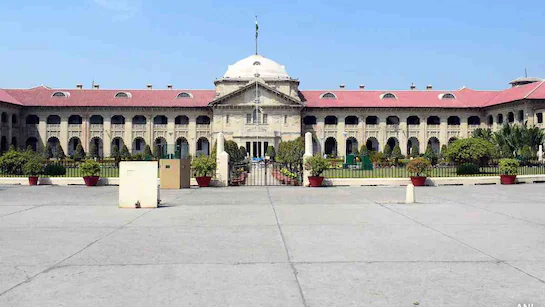
The Allahabad High Court has taken a strict view of police custody and the functioning of CCTV cameras installed at police stations. The court has made it clear that if CCTV footage from a police station is unavailable or cameras have been kept switched off, and the police fail to produce credible documentary or other evidence showing that a person was released after questioning, the court may accept the allegation of illegal detention. In such cases, the responsibility lies with the police to maintain a proper record of their actions.
The order was passed by a division bench comprising Justice Atul Sridharan and Justice Divesh Chandra Samant while hearing a habeas corpus petition filed by Deoria resident Mahendra Gaur and three others. The petitioners alleged that police at Gauri Bazar police station kept them in illegal custody for several days without registering an FIR, showing an arrest or producing them before a magistrate.
FCRF Launches CP-FRM to Build India’s Next Generation of Fraud Risk Professionals
Why Was CCTV Footage Unavailable?
During the hearing, the High Court sought the CCTV records of the police station for the relevant period. Several days of footage were found to be unavailable. The then station house officer stated that the cameras were malfunctioning and had been sent for repair, but there was no mention of the alleged technical failure in the General Diary. The police also failed to produce any technical report regarding the malfunction.
The court observed that CCTV cameras at police stations are intended to ensure transparency in police functioning and protect the rights of people taken into custody.
The cameras are therefore required to remain operational continuously. The court also referred to the directions issued by the Supreme Court in the Paramvir Singh Saini case regarding CCTV surveillance at police stations.
What Must Police Record When CCTV Fails?
The High Court said that if CCTV cameras stop functioning because of a technical problem, the police must immediately make a corresponding entry in the official record. During the period when the cameras remain non-functional, details of every person entering or leaving the police station, along with the relevant time, should be recorded in the General Diary.
Similarly, whenever a person is released from custody, the police must maintain reliable evidence of the release. Records such as the signature of family members or video recording of the release should also be preserved.
What Did the Court Order in This Case?
The court accepted the petitioners’ allegations of illegal detention in the present case and directed the state government to pay compensation to the affected citizens. A total compensation of ₹65,000 was ordered.
The court further directed that, after an inquiry, the amount should be recovered from the salaries of the police personnel found responsible. It also ordered that the court’s displeasure be recorded in the service records of the concerned personnel.
What Happened to the Station House Officer?
During the proceedings, the then station house officer appeared personally before the court and apologised for the alleged lapse on his part. However, the court observed that the facts emerging from the case indicated misuse of executive authority and violation of the petitioners’ rights.
The court consequently directed that its displeasure be recorded in the service record of the concerned station house officer. The judgment also made it clear that police records relating to custody and CCTV surveillance cannot be treated as a mere formality.
Where police fail to produce reliable records establishing the circumstances of detention and release, the court may examine the petitioner’s claim in light of the available circumstances.
The420 Takeaway
CCTV cameras at police stations are an accountability safeguard, not merely a recording system. If cameras fail, police must create a clear documentary trail of who entered, who left and when a detained person was released. Missing footage combined with missing official records can seriously weaken the police version before a court.
Follow for daily updates on cybercrime, corporate fraud, DFIR, hacking, investigations, and digital forensics
