

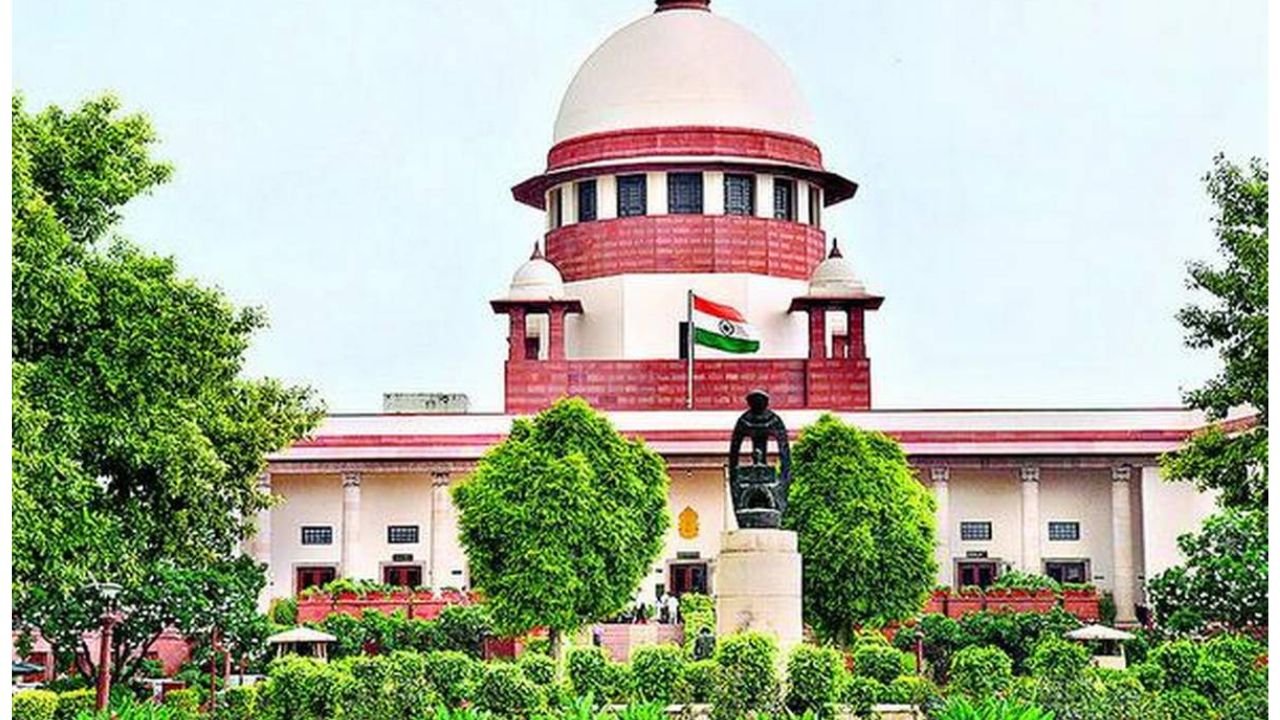

New Delhi. The Supreme Court has refused to halt the ongoing money laundering trial against former Jharkhand mines secretary IAS Pooja Singhal. The court also declined to quash the trial court’s order taking cognisance of the case. However, the bench kept open the issue of prosecution sanction, observing that the question involves both legal and factual aspects and can be examined along with other evidence at the appropriate stage of the proceedings.
During the hearing before a three-judge bench, senior counsel appearing for Pooja Singhal argued that the required prior sanction under Section 197 of the Code of Criminal Procedure (CrPC) had not been obtained before proceedings were initiated against her as a public servant. The defence maintained that the allegations related to actions connected with her official position and duties, making the question of statutory sanction significant to the case.
Proposal for Conducting Cyber Crisis Drill, Tabletop Exercise (TTEx) & CCMP Readiness Exercise
Section 197 of the CrPC requires prior sanction in certain cases before a court can take cognisance of an alleged offence by a public servant who cannot be removed from office without government approval. The provision applies where the alleged offence is said to have been committed while the public servant was acting, or purporting to act, in the discharge of official duties.
Pooja Singhal’s counsel also argued that she was not an accused in the underlying corruption case from which the money laundering investigation originated. The defence further submitted that the activities forming the basis of the money laundering allegations were connected with her official capacity. On this ground, the absence of prosecution sanction was challenged before the court.
The investigating agency opposed the argument. It told the court that when the objection regarding the absence of sanction was raised, it had relied on provisions of the Bharatiya Nagarik Suraksha Sanhita (BNSS), the new criminal procedure law, relating to what was described as “deemed sanction”. The agency also pointed out that the trial court had taken cognisance of the offence much earlier.
During the hearing, the Supreme Court also referred to the recovery made in connection with the case. The bench noted that more than ₹19 crore had been recovered from premises linked to Pooja Singhal. Despite this, the court declined at this stage to stay the trial or set aside the trial court’s order taking cognisance of the case.
The top court observed that the question of prosecution sanction is not limited to an interpretation of law and also involves factual considerations. The court said it would have to be determined whether the officer was actually discharging her official functions at the time when the alleged offence took place.
The bench therefore kept the issue of sanction open. It said the question could be adjudicated along with other evidence at the appropriate stage of the proceedings. The court has not, at this stage, given a final ruling on whether prosecution sanction was mandatory in Pooja Singhal’s case. The issue may be examined further on the basis of facts and evidence that emerge during the proceedings.
The case dates back to 2022, when Pooja Singhal was serving as secretary of the Jharkhand mines department. The investigating agency arrested her on May 11, 2022, in connection with a probe into an alleged scam involving around ₹18 crore in the implementation of the Mahatma Gandhi National Rural Employment Guarantee Act (MGNREGA).
Searches were conducted at premises linked to Pooja Singhal during the investigation. The case subsequently became part of a money laundering investigation. The agency pursued allegations involving suspected financial transactions and recoveries, while Singhal’s defence raised legal questions concerning prosecution sanction and whether the alleged actions fell within the scope of her official duties.
Following the Supreme Court’s latest order, there is no stay on the proceedings before the lower court. The money laundering trial against IAS Pooja Singhal will therefore continue, while the issue concerning prosecution sanction remains open for consideration at the appropriate stage of the judicial proceedings.
Follow for daily updates on cybercrime, corporate fraud, DFIR, hacking, investigations, and digital forensics
