

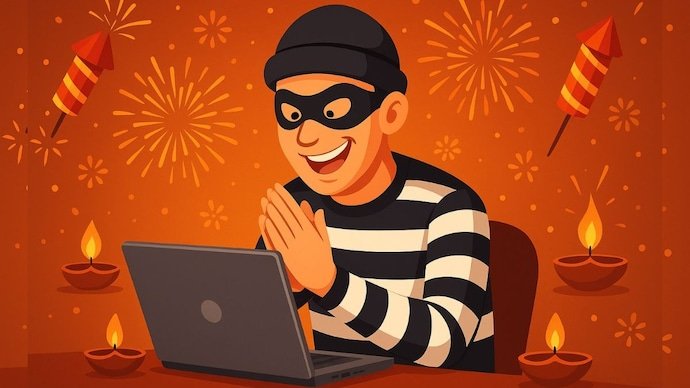
As India prepares for the peak festive shopping season, cybercrime units and cybersecurity experts are issuing a urgent warning: the intersection of massive festival discounts and advanced generative artificial intelligence tools has created a prime environment for digital fraud.
From cloned shopping portals and bogus Navratri event passes to fake WhatsApp deals and charity QR codes, fraudsters are deploying sophisticated techniques to exploit festive enthusiasm.
The scale of digital threat activity across India remains exceptionally high. Official CERT-In data reveals that cybersecurity incidents rose sharply from 2,01,43,60 in 2024 to 29,44,248 in 2025.
The financial impact on consumers is equally staggering—in 2025 alone, residents in Delhi lost approximately ₹2,100 crore to online fraud, while Karnataka reported losses exceeding ₹2,000 crore.
Industry research shows that 69% of surveyed festive shoppers encountered online scams, with 37% of scam victims experiencing direct financial loss.
Proposal for Conducting Cyber Crisis Drill, Tabletop Exercise (TTEx) & CCMP Readiness Exercise
How AI Has Upgraded Fake Websites and Event Posters
Traditional online scams used to be recognizable by poor typography, broken web page layouts, and misaligned logos. Generative AI tools have completely rewritten that rulebook.
Attackers can now use AI image generators, layout scraping software, and text tools to instantly manufacture polished event posters, copy corporate branding, and clone established e-commerce landing pages within minutes.
By duplicating logos, fonts, product photography, and dropdown menus, scammers set up counterfeit shopping and ticketing portals that look indistinguishable from genuine sites.
These fake domains entice buyers with steep discounts, artificial countdown timers, and claims of extremely limited stock, pressuring shoppers into making rapid, unverified payments.
How Are Fraudsters Selling Fake Passes for Festive Events?
The surge in generative design tools has significantly impacted live festive events, garba nights, and concerts. Bad actors create convincing promotional graphics and landing pages advertising exclusive pass access or last-minute stall openings for vendors.
Physical and digital ticketing fraud has already demonstrated its lucrative nature for cybercriminals. In a major enforcement case, police dismantled an operation involving fake Navratri season passes, arresting four individuals—including a web designer—and seizing over 1,000 counterfeit passes, 1,000 hologram stickers, and printing equipment valued at ₹35.10 lakh. Over 1,000 victims had purchased the fake passes at ₹3,000 each, resulting in a loss exceeding ₹30 lakh.
Why Are WhatsApp Offers, Counterfeit Products, and QR Donations Dangerous?
Fraudsters frequently exploit social trust during the holidays by distributing deceptive deals through WhatsApp messaging groups. Because these offers are forwarded by acquaintances, family members, or colleagues, recipients often assume the embedded links are safe.
Fake Charity QR Codes: Exploiting festive goodwill through unverified payment QR codes claiming to represent religious organizations or charitable trusts.
Counterfeit High-Value Goods: Delivering fake gold, electronics, or festive sweets instead of authentic products. Buyers purchasing gold are urged to use BIS-registered jewellers and verify the six-digit HUID via the BIS CARE app.
Expiry-Based Cashback Traps: Sending urgent SMS or email alerts claiming that credit card reward points are about to expire, redirecting users to fake forms designed to harvest CVVs and OTPs.
Essential Verification Steps for Festive Buyers
Security analysts emphasize that visual appeal is no longer a guarantee of authenticity. To guard against AI-generated scams and fake portals, consumers should implement key security checks before completing purchases:
- Inspect Domain Names & Contact Info: Look closely at the website address rather than relying solely on page graphics. Ensure the seller lists a valid GSTIN, physical business address, working phone number, and clear return policies.
- Avoid Personal UPI Transfers: Legitimate checkout systems will never request direct money transfers to personal individual UPI IDs or demand OTP disclosures outside secure bank gateways.
- Verify Official Channels: Cross-check forwarded WhatsApp links or discount codes directly on the official retailer or bank app rather than clicking unsolicited URLs.
- Purchase Passes via Official Partners: Buy festival, Navratri, and concert passes exclusively through verified event partners rather than secondary resellers on social media.
How Can You Protect Yourself from Festive Event Ticketing Scams?
To avoid falling victim to ticket fraud, always purchase passes directly from official organizers or verified ticketing partners rather than unverified resellers on social media or messaging platforms.
Always double-check promotional graphics for unusual contact details or personal payment handles, and never transfer money to individual UPI IDs for booking fees.
If an event or pass offer seems suspicious, independently contact the venue or check their official website to verify ticket availability before making any payments.
The420 Insight
As generative AI makes digital fraud faster and visually seamless, consumer awareness remains the strongest frontline defense. If you fall victim to financial fraud, act immediately by calling the national cybercrime helpline at 1930 and registering a formal complaint on the official National Cyber Crime Reporting Portal.
About the author — Ayesha Aayat writes on cybercrime, digital safety, and emerging online threats. Her work focuses on public awareness, legal clarity, and technology-driven risks.
Follow for daily updates on cybercrime, corporate fraud, DFIR, hacking, investigations, and digital forensics
