
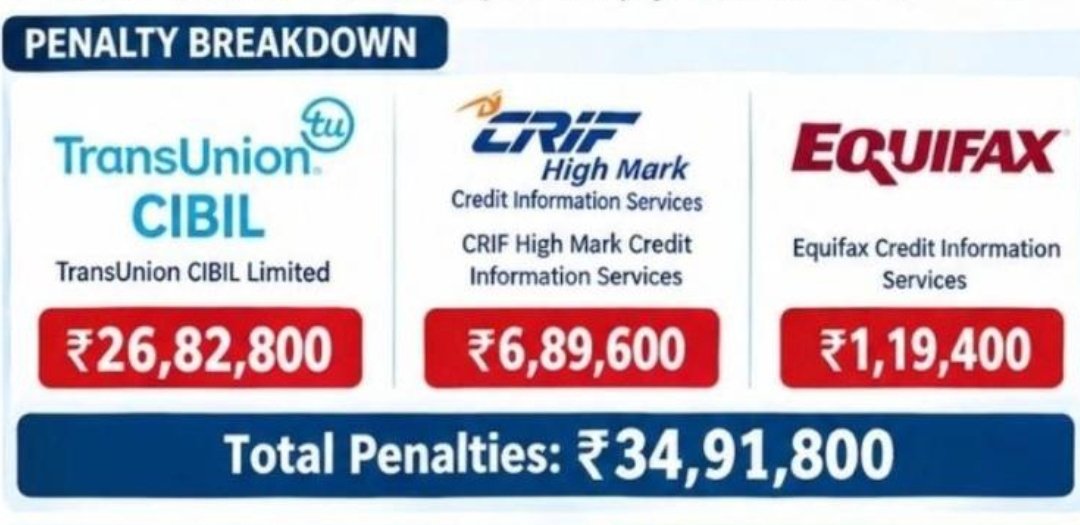

The Reserve Bank of India has imposed a combined monetary penalty of Rs 34.91 lakh on three major credit information companies for non-compliance with statutory norms governing consumer dispute resolution and compensation. The enforcement actions were handed down to TransUnion CIBIL, CRIF High Mark Credit Information Services, and Equifax Credit Information Services after the banking regulator observed extensive failures in disbursing mandatory compensation to eligible consumers within prescribed timelines.
Penalties Levied Over Unpaid Consumer Compensation
According to formal orders issued by the banking regulator, TransUnion CIBIL faces the largest fine at Rs 26,82,800. The central bank also levied penalties of Rs 6,89,600 on CRIF High Mark and Rs 1,19,400 on Equifax. Experian, which operates as the fourth major registered credit information company in the country, was not named as part of this enforcement exercise.
The regulatory penalties stem directly from lapses in adhering to dispute resolution frameworks designed to protect loan applicants. Under standing guidelines, when a borrower identifies discrepancies in a credit report and lodges a formal grievance, both the credit bureau and the reporting credit institution are obligated to resolve the matter within a set timeframe. If the dispute remains unresolved past the statutory 30-day window, the affected consumer becomes entitled to direct monetary compensation for the delay. An official review revealed that the three bureaus failed to credit compensation amounts to eligible complainants even after the mandated resolution periods had lapsed.
Credit Report Errors Create Severe Financial Roadblocks
The regulatory intervention comes amid heightened concerns regarding the far-reaching impact of inaccurate credit data on individual financial standing. Data discrepancies can directly impair an individual’s ability to secure fresh credit lines, as automated lending systems rely heavily on historical reporting accuracy.
Common report inaccuracies include incorrect outstanding loan balances, active entries for debts that borrowers have fully settled, erroneous personal identity details, and fabricated records of borrowings never incurred by the customer. Such inaccuracies frequently lead to summary rejections of fresh applications for personal loans, home mortgages, and credit cards. In light of these systemic risks, regulatory authorities advise consumers to routinely review credit statements, preserve dispute registration records, and systematically monitor resolution dates to establish when statutory timelines are breached.
Strict Regulatory Oversight on Redressal Mechanisms
When a dispute exceeds the stipulated 30-day resolution timeline, affected consumers retain the right to pursue formal compensation. Maintaining documentation, including dispute reference numbers, filing acknowledgments, and communication trails with lenders, remains vital for borrowers seeking compensation under existing rules.
The latest enforcement measure serves as a clear warning to credit bureaus regarding adherence to grievance redressal standards. The Reserve Bank of India reiterated that timelines for rectifying credit errors, along with the subsequent obligation to compensate consumers for operational delays, remain under active regulatory supervision to ensure that individual consumer interests are consistently safeguarded across the credit assessment ecosystem.
Follow for daily updates on cybercrime, corporate fraud, DFIR, hacking, investigations, and digital forensics
