
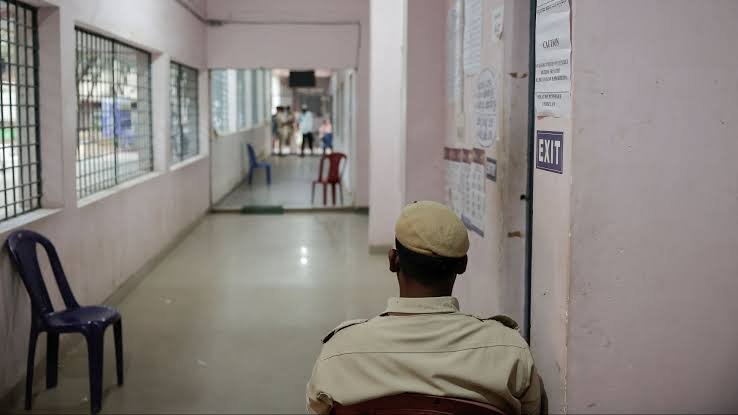

Karnataka Police has introduced a new system requiring cybercrime cases registered at local police stations to be immediately transferred to specialised district or city cybercrime units for investigation.
Local police stations will continue to receive complaints and register FIRs, but once the case is formally recorded, jurisdiction over the investigation must quickly shift to the concerned cybercrime police station.
The move is aimed particularly at financial cyber fraud, where even a short delay can allow stolen money to move through several bank accounts before police can trace or freeze it.
Proposal for Conducting Cyber Crisis Drill, Tabletop Exercise (TTEx) & CCMP Readiness Exercise
Local police will still register the FIR
The new arrangement does not stop victims from approaching their nearest police station.
Complaints involving cybercrime or offences under the Information Technology Act can still be received and FIRs registered at jurisdictional police stations.
The difference comes immediately afterwards.
Under the September 11 directive issued by the Director General and Inspector General of Police, such cases must be transferred without delay to the relevant district or city cybercrime police station.
The specialised unit is then expected to begin investigation as soon as the case reaches it.
This is important because victims are often unsure whether they need to travel to a dedicated cyber police station before an FIR can even be registered.
Under the new arrangement, the first police station remains an entry point, while the technical investigation shifts quickly to officers trained specifically for cyber offences.
First few hours can decide whether money is recovered
The biggest reason for speeding up transfers is the way cyber-fraud money moves.
Once a victim transfers funds, criminals may immediately push the money through several mule accounts.
Some of it may be withdrawn in cash, converted into cryptocurrency or routed through payment platforms before investigators can intervene.
The longer the delay, the harder it becomes to freeze the original amount.
Cybercrime teams are expected to coordinate with banks and payment service providers to trace suspicious transactions and request freezes where possible.
They may also need telecom companies, social-media platforms and online services to preserve records before data is deleted or accounts disappear.
This makes the early hours of an investigation unusually important.
Digital evidence can disappear just as quickly
Cybercrime investigations depend heavily on electronic evidence.
That may include phone numbers, IP logs, email records, chat histories, transaction identifiers, device data and account information from online platforms.
Unlike a physical document, some of this evidence may change or vanish quickly.
Accounts can be deleted, SIM cards discarded and cloud-based records altered.
Specialised cybercrime units are therefore expected to preserve and analyse digital evidence soon after taking over the case.
They may also conduct forensic examination of mobile phones, computers and other devices where necessary.
The objective is to prevent situations where a case reaches technical investigators only after the most useful evidence has already gone cold.
Banks, telecom firms and platforms will become central to investigation
The directive also places greater emphasis on coordination.
A modern cyber-fraud case rarely stays within one police jurisdiction.
The victim may be in Bengaluru, the beneficiary account in another state, the SIM card registered elsewhere and the platform hosting the communication outside India.
Investigators therefore need information from multiple private companies and government systems.
Banks can help trace the movement of money.
Telecom companies can provide subscriber and call-related records.
Social-media and messaging platforms may hold account data and communication logs.
Payment companies can help reconstruct the transaction path.
Moving the case quickly to a specialised unit is intended to bring those requests under investigators already familiar with such procedures.
District SPs and police commissioners told to supervise transfers
The system will also require closer supervision by senior officers.
District Superintendents of Police and city Police Commissioners have been directed to ensure that cybercrime cases are transferred promptly and investigated properly.
Cybercrime police stations are expected to maintain records of cases received from local stations.
That could help senior officers identify delays between FIR registration and transfer.
It may also make it easier to monitor whether specialised units are becoming overloaded as cybercrime volumes continue to rise.
That capacity issue will be important.
Transferring every relevant FIR immediately to specialised units can improve technical quality only if those units have enough investigators, forensic support and access to banks and digital platforms.
Karnataka is trying to reduce the gap between complaint and investigation
The directive addresses a recurring problem in cybercrime policing.
Victims may report a fraud quickly, but administrative movement of the case between police stations can consume valuable time before technical action begins.
The new system attempts to separate those two functions.
Local police provide immediate access for the public and register the offence.
Cybercrime units then take over the part of the case requiring transaction tracing, digital forensics and technical coordination.
That could be particularly useful outside major cities, where the nearest local police station may be far easier for a victim to reach than a specialised cybercrime unit.
But the effectiveness of the system will ultimately depend on how quickly cases actually move after registration.
What this means for you
If you suffer a cyber fraud in Karnataka, you should not wait to find a specialised cyber police station before reporting it. Approach the nearest police station, call 1930 immediately in financial fraud cases and report the incident on the national cybercrime portal as quickly as possible.
The420 Insight
The important change is not where an FIR is registered, but how quickly technical investigators get control of the case. In cyber financial fraud, the difference between a frozen account and vanished money can sometimes be measured in hours, not days.
Follow for daily updates on cybercrime, corporate fraud, DFIR, hacking, investigations, and digital forensics
