
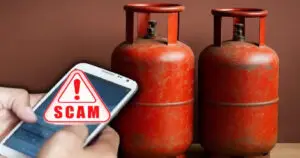
Agra Police have warned residents about a cyber fraud in which criminals impersonate gas bill officials and threaten consumers with immediate disconnection to pressure them into making payments.
Police said people should not download APK files sent by unknown callers and should report cyber fraud immediately through helpline 1930.
How Does the Gas Bill Scam Begin?
Fraudsters contact consumers by phone and claim that their gas bill is pending or has not been updated. They then warn that the gas connection will be disconnected if the payment issue is not resolved immediately.
The threat is designed to create urgency and push the consumer into following the caller’s instructions without properly checking whether the communication is genuine.
How Do Fraudsters Trap Consumers?
Police said the criminals may send a link or APK file and ask the consumer to download it as part of the supposed bill-payment or update process.
Once a victim follows the instructions, the fraudsters may gain access to information that can be misused to carry out unauthorised transactions.
Police have specifically warned consumers not to download APK files received from unknown numbers.
Proposal for Conducting Cyber Crisis Drill, Tabletop Exercise (TTEx) & CCMP Readiness Exercise
What Should Consumers Do Before Paying?
Consumers should verify any claim about an unpaid gas bill through official channels instead of trusting an unknown caller.
Police advised people not to click suspicious links or follow payment instructions received from unidentified numbers. Any demand accompanied by a threat of immediate disconnection should be independently checked before money is transferred.
Also Read: https://the420.in/ghaziabad-gas-bill-apk-cyber-fraud-png-consumers/
What Happened in the First Case?
In one case, a retired education department employee received a call claiming that his gas bill was pending and his connection would be disconnected.
The victim followed the caller’s instructions. A total of ₹6,14,458 was subsequently withdrawn from his account through 10 transactions.
What Happened in the Second Case?
In another case, a retired professor received a similar call concerning a gas bill. The caller allegedly sent a link and asked him to follow instructions.
The victim later found that ₹5,37,781 had been withdrawn from his bank account through multiple transactions.
The two cases together involved losses of more than ₹11.52 lakh.
Both incidents followed a similar pattern in which callers allegedly used the fear of gas connection disconnection to convince victims to follow their instructions.
Agra Police advised residents to remain cautious about unknown calls, suspicious links and APK files.
How Should Cyber Fraud Be Reported?
Anyone who becomes a victim of cyber fraud should immediately contact the cybercrime helpline at 1930.
Quick reporting can help authorities begin action after a fraudulent transaction is detected.
The420 Safety Tip: Don’t Let a Disconnection Threat Rush You
A caller threatening to disconnect an essential service can create pressure to act immediately. Verify pending bills through official channels, never install an APK sent by an unknown caller, and report suspected cyber fraud promptly on 1930.
About the author — Ayesha Aayat writes on cybercrime, digital safety, and emerging online threats. Her work focuses on public awareness, legal clarity, and technology-driven risks.
Follow for daily updates on cybercrime, corporate fraud, DFIR, hacking, investigations, and digital forensics
