

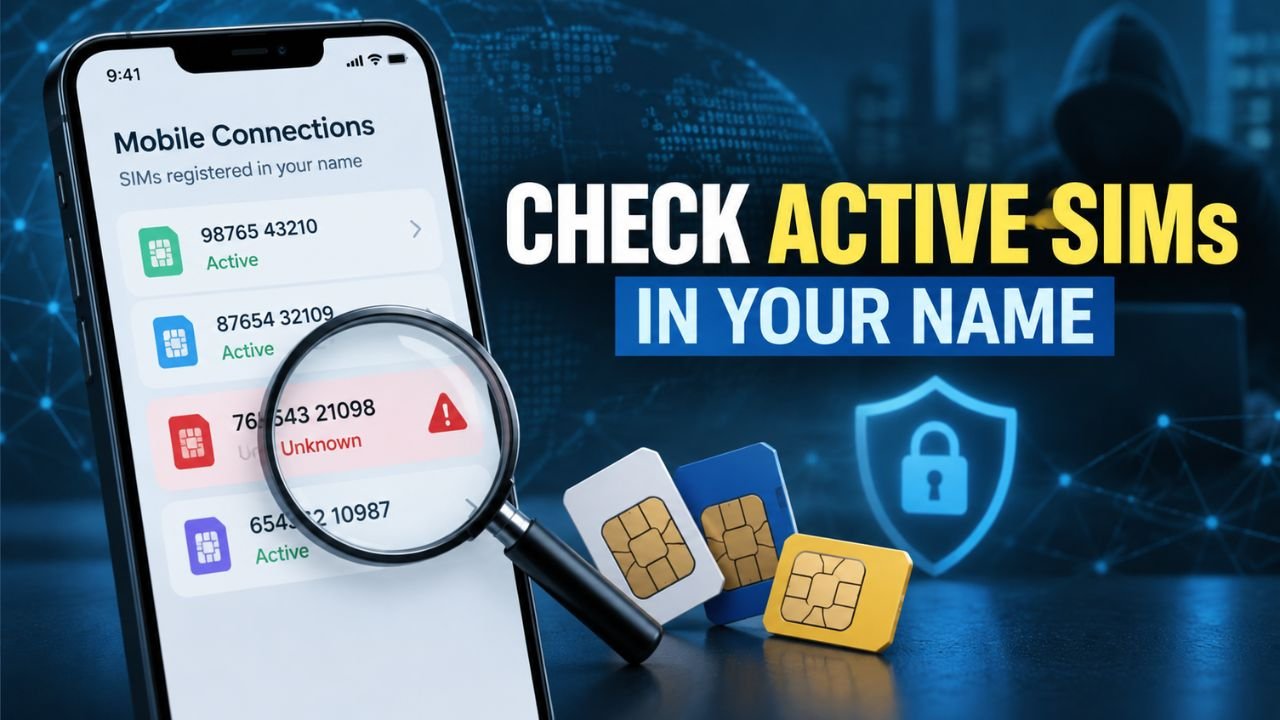

New Delhi. A mobile number is no longer limited to making calls. It has become an important tool for identity verification and access to bank accounts, digital payments, social media profiles, government services and several online accounts. If a mobile connection is active in your name that you never obtained, it could create serious problems later. An unauthorised SIM issued using misused identity documents can be used by cybercriminals for calls, messages, social media activities and financial fraud.
To address such risks, the Department of Telecommunications has made the Telecom Analytics for Fraud Management and Consumer Protection (TAFCOP) facility available through the Sanchar Saathi portal. It allows mobile users to check how many connections have been issued in their name. If a number appears on the list that the user never obtained or does not recognise, necessary action can be initiated through the portal.
Proposal for Conducting Cyber Crisis Drill, Tabletop Exercise (TTEx) & CCMP Readiness Exercise
According to Department of Telecommunications rules, an individual can generally have a maximum of nine mobile connections registered in their name. This makes it important to periodically check the mobile numbers issued against your identity. Particular attention should be given to old SIM cards, connections that have not been used for a long time, or numbers that were once given to another person for use.
Identity Documents Can Be Misused
Identity and address documents are used while issuing mobile connections. Aadhaar is among the widely used documents for identity and address verification. Digital Know Your Customer (KYC) and electronic KYC systems have made the SIM issuance process faster and more convenient, but the risk of misuse remains if identity-related information falls into the wrong hands.
If someone uses another person’s documents to obtain a SIM, the actual document holder may remain unaware of the connection for a long period. The number, meanwhile, could be controlled and used by someone else. If such a SIM is used for fraudulent calls, messages, social media activities, financial scams or other suspicious operations, the genuine document holder may also face unnecessary questioning or scrutiny during an investigation.
Renowned cyber crime expert and former IPS officer Prof. Triveni Singh said that mobile-number-linked identity has now become an important part of digital security. According to him, people should not limit their security checks to bank accounts and digital payment services. They should also regularly monitor mobile connections registered in their name. If an unfamiliar number is found, it is better to report it immediately through the appropriate telecom mechanism rather than ignore it.
How to Check SIMs Issued in Your Name
First, visit the Sanchar Saathi portal and select the TAFCOP facility for checking mobile connections issued in your name. You will then be required to enter your 10-digit mobile number. After completing the security verification, your identity will be verified using a one-time password (OTP) received on the registered mobile number.
Once verification is completed, a list of mobile connections linked to your name will appear on the screen. Check every number carefully and verify whether all of them were obtained by you. If all the listed numbers are recognised, there is no apparent issue with the record. However, if an unfamiliar number appears, it should not be ignored.
If an unauthorised connection is found, users can report it through Sanchar Saathi and initiate the required action. This can help start the process of removing or deactivating a mobile connection that has been registered in their name without their knowledge.
Keep an Eye on Old and Unused Numbers
Many people stop using an old SIM after changing their mobile number but do not verify whether the previous connection has been completely disconnected from their name. Similarly, a number once given to a family member, friend or acquaintance for use may create complications later. Checking the complete list of connections issued in your name can help identify such numbers and ensure that the records are accurate.
The government has introduced several safeguards in the mobile connection issuance process, including digital KYC and electronic KYC. Regulatory controls are also in place for customers holding large numbers of mobile connections. In addition, a prescribed waiting period applies before a disconnected mobile number can be reissued to another customer.
Ignoring an Unknown SIM Could Prove Costly
Mobile numbers frequently become an important starting point in cybercrime investigations. Fraud networks may use numbers obtained under different identities to contact victims, send messages or operate online accounts. If an unauthorised number is registered in your name, investigators may need to examine the connection between the activities conducted through that number and the identity documents used to obtain it.
For this reason, regularly checking active mobile connections should become part of basic digital security. The TAFCOP facility on Sanchar Saathi gives consumers an opportunity to find out which mobile numbers have been issued in their name. Identifying and reporting an unknown number at an early stage can help reduce the risk of potential misuse.
In today’s digital environment, monitoring mobile connections is almost as important as keeping track of bank accounts and digital payment services. A few minutes spent checking the numbers registered in your name can help ensure that no mobile connection linked to your identity is being used by someone else.
https://www.linkedin.com/company/policetechnology
