

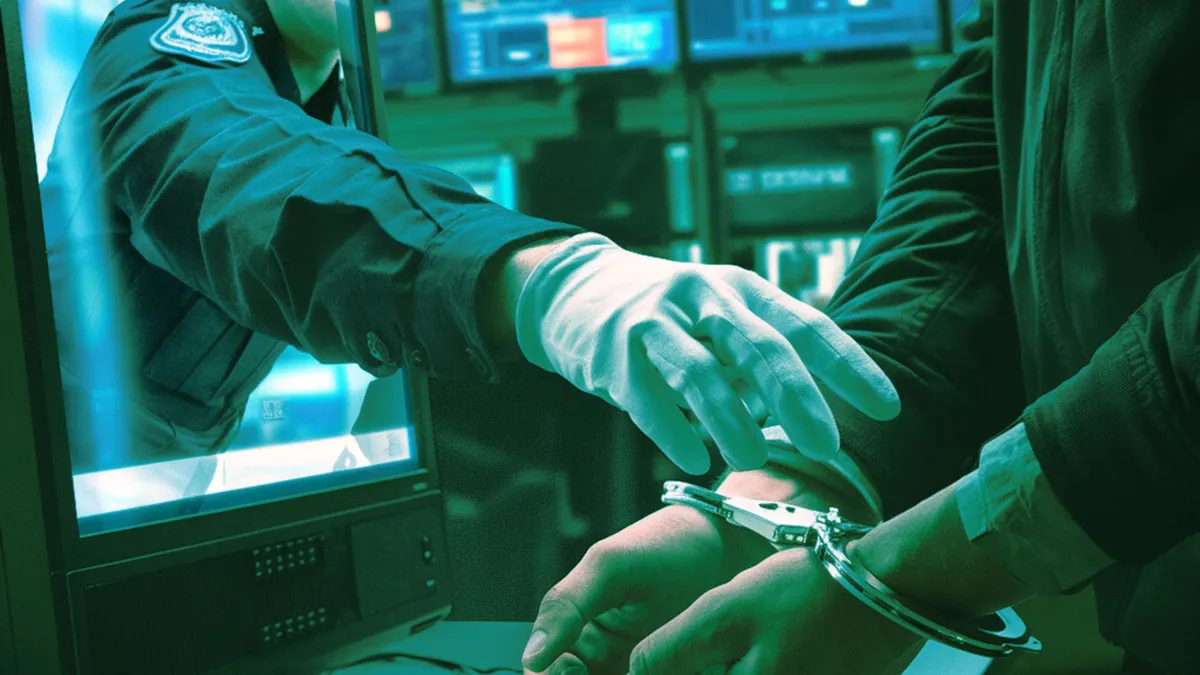

Cyber fraudsters allegedly used the 2025 Red Fort blast case to frighten a retired Indian Railways employee in Dwarka into transferring ₹30 lakh.
The accused allegedly posed as officials from the Anti-Terrorism Squad (ATS), National Investigation Agency (NIA) and Reserve Bank of India (RBI). Through phone calls and WhatsApp video calls, they allegedly told the victim that his name had surfaced in a terror funding and money laundering investigation.
The Crime Branch’s AGS team has arrested Sunil Singla, a resident of Fatehabad, Haryana, in connection with the case. Police allege that Singla is linked to an interstate cyber fraud syndicate involved in digital arrest scams, impersonation and extortion.
Algoritha Security Launches ‘Make in India’ Cyber Lab for Educational Institutions
How the Fake Investigation Allegedly Unfolded
The case was registered on December 9, 2025, after the retired railway employee approached the police.
According to his complaint, the fraudsters claimed that he was connected to the investigation into the November 10, 2025 blast near the Red Fort. The blast had killed 15 people, according to the complaint.
The callers allegedly created an immediate fear of arrest. They then kept the victim on prolonged video calls and instructed him not to speak to anyone else.
Police allege that the questioning-style calls were designed to make the victim believe that he was under a genuine government investigation. The fraudsters allegedly maintained this pressure while continuing to demand information and compliance.
They also allegedly sent forged documents to make the operation look official. These included purported confidentiality agreements, RBI confirmation letters and legal bonds.
Victim’s Bank Accounts and Fixed Deposits Targeted
Once the victim was convinced that he was facing official action, the fraudsters allegedly sought details of his financial holdings.
Police said the accused obtained information about his bank accounts, fixed deposits and other assets. He was then allegedly pressured into liquidating his funds and transferring the money to accounts controlled by the syndicate.
The victim ultimately transferred ₹30 lakh, according to the investigation.
Police later traced ₹15 lakh of the cheated amount to a bank account operated in the name of Shri Balaji Tractor. Investigators allege that Singla was operating this account.
The account has also emerged as an important lead in the investigation. Police found that it was allegedly linked to seven other cyber fraud cases.
Investigators are now trying to determine whether Singla merely provided an account for receiving the money or played a wider role in transferring funds for the alleged syndicate.
Why ‘Digital Arrest’ Scams Work
A digital arrest scam is built around fear rather than a real arrest. Fraudsters impersonate police officers, investigators, regulators or other government officials and falsely tell victims that they are involved in a serious crime.
The victim is then kept on video calls, threatened with arrest or prosecution and pressured into following instructions. Forged documents, official-looking identities and fake case details are often used to make the deception appear credible.
The Dwarka case follows a pattern seen in other digital arrest scams, where criminals have invoked serious terror incidents to frighten victims. Police investigations in other cases have also examined the use of references to the Pulwama and Pahalgam attacks to create a sense of urgency and fear.
Cybercrime expert and former IPS officer Prof. Triveni Singh has cautioned that genuine government agencies do not investigate people by keeping them isolated on video calls for extended periods or forcing them to transfer money.
The key warning is simple: an official investigation does not require a person to prove their innocence by transferring their savings to another bank account.
Police are now examining the arrested accused’s financial transactions, bank accounts and links to other cases. Investigators are also trying to identify other members of the alleged syndicate and trace the remaining money.
The case also shows why mule bank accounts remain important to cybercrime investigations. An account receiving fraud proceeds can provide investigators with a financial trail leading from the victim to intermediaries and, potentially, the wider network behind the scam.
For victims, however, the most important window remains the period immediately after a fraudulent transfer. Reporting the transaction to the bank and calling the national cybercrime helpline 1930 as quickly as possible can give authorities a better chance of freezing funds before they are moved again.
What this means for you: No police officer, NIA official, RBI official or other government agency can legally conduct a “digital arrest” through a video call and demand that you transfer money to prove your innocence. If someone makes such a threat, end the call, verify the claim through an official channel and report any financial loss immediately on 1930.
