

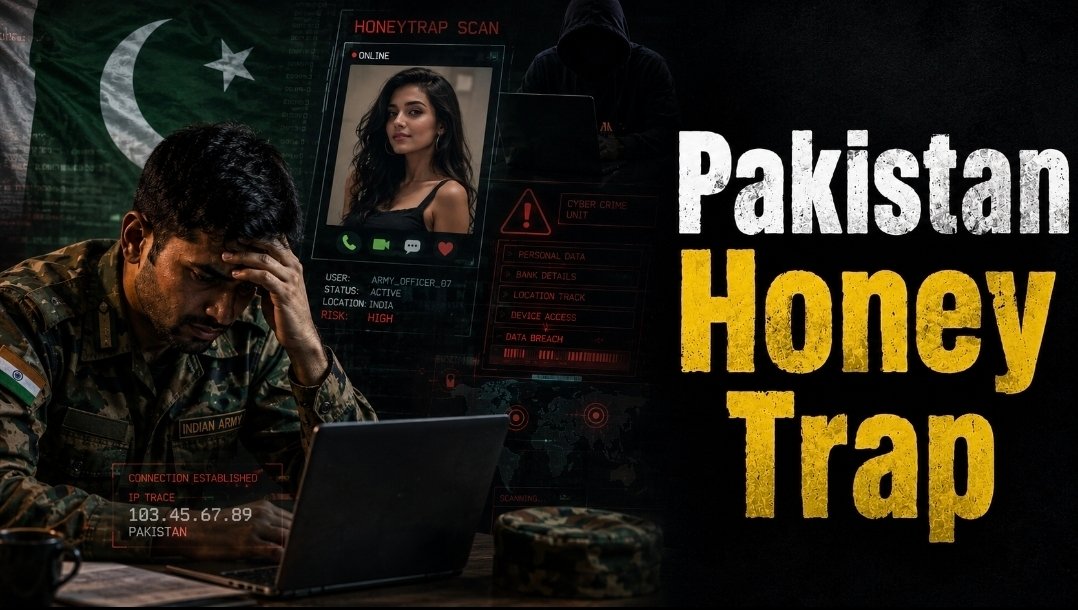
Pakistan-linked honey-trapping networks are allegedly targeting young Agniveers posted at sensitive locations, prompting central intelligence and law enforcement agencies to examine social-media interactions, digital accounts and financial transactions linked to a number of personnel.
Several Agniveers have been identified for scrutiny after interacting with social-media accounts now under investigation. Agencies are examining the nature and duration of the conversations, what information may have been exchanged and how the personnel came into contact with the suspected profiles.
The inquiry is also assessing whether any restricted or sensitive information was deliberately shared. Officials are expected to examine each case separately before deciding on further action.
Fake Profiles Used to Build Trust
The suspected modus operandi involves fake female profiles on social-media platforms. The people operating these accounts allegedly initiate contact with young personnel and gradually build familiarity through sustained conversations. Once trust is established, targets may be encouraged to share photographs, personal details or information connected to their work. In some cases, the conversations allegedly shift towards questions about deployment areas, locations, movements and surrounding areas.
Investigators are examining whether apparently routine or personal questions were part of a wider attempt to collect information about sensitive military locations. A number of the Agniveers under scrutiny were deployed in cities across the northern region, including at sensitive locations. Their postings and duties are being examined to determine whether operational or restricted information could have been compromised.
Algoritha Security Launches ‘Make in India’ Cyber Lab for Educational Institutions
Agencies Examine Digital and Financial Trails
Central intelligence agencies have intensified efforts to track digital accounts suspected of being linked to honey-trapping networks. Social-media profiles, communication patterns and financial transactions are being analysed to identify possible connections between the accounts approaching defence personnel and handlers operating from outside the country.
Investigators are also examining whether financial inducements played a role. Monetary transfers have reportedly been traced in some cases, although the amount, purpose and circumstances of the transactions differed from case to case. The financial trail is being examined alongside digital communications to determine whether any payments were linked to alleged information-gathering activity.
A list of cases has already been prepared and individual cases are being assessed on the basis of available digital evidence, communication records and financial transactions. The inquiry is also seeking to establish whether the personnel were merely approached by suspicious accounts or knowingly participated in sharing sensitive information.
Young Personnel Under Closer Scrutiny
The cases have drawn greater attention because the personnel involved are young recruits who may be particularly active on social-media platforms. Agencies are therefore examining both direct communication with suspicious profiles and the wider digital footprints of those concerned.
According to the suspected pattern, fake identities, attractive profile photographs and prolonged conversations are used to create an emotional or personal connection before requests for information begin. Agencies are attempting to determine whether multiple suspicious profiles are connected to the same network and whether similar approaches have been made to other personnel posted at sensitive locations.
The investigation reflects the growing counter-intelligence challenge posed by social-media platforms, where identities can be concealed and relationships can be developed without physical contact. For defence personnel, seemingly private online conversations can become a security concern if operational or restricted information is disclosed.
