

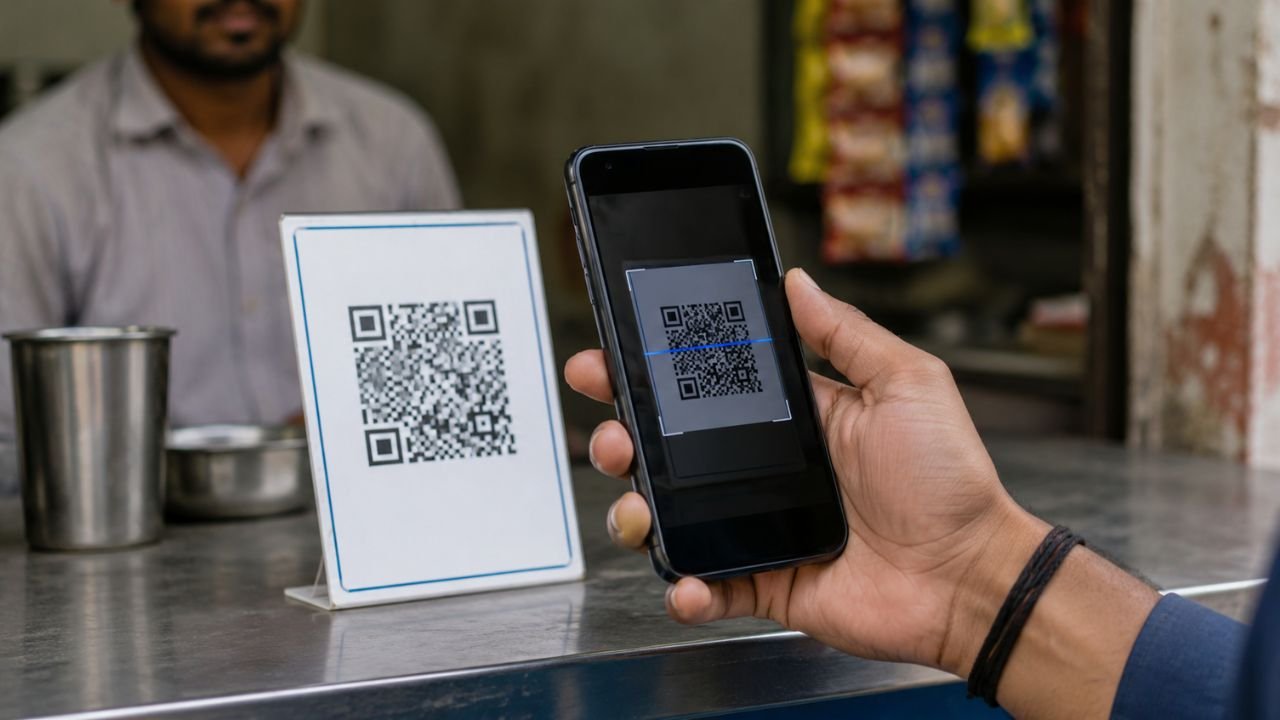

Buxar: Bihar’s Buxar cyber police have uncovered a cyber fraud network allegedly linked to transactions worth around ₹20 lakh. A youth has been arrested in the case, while two minors have been detained. According to police, the accused were connected with Telegram and other social media groups through which they received details of bank accounts used to route money obtained through cyber fraud. Shopkeepers’ QR codes were allegedly used to receive the money in their accounts before the accused collected the cash and deposited it into bank accounts specified by members of the network. The accused allegedly earned a commission of around 20% for facilitating the transactions.
The case came to light after a cyber cafe operator alerted police about a suspicious transaction of around ₹80,000 linked to his establishment. According to police, the operator informed them on Wednesday that the amount had been traced to his cafe and that the suspected person was likely to return the following day. Acting on the information, the cyber police began monitoring the location.
Algoritha Security Launches ‘Make in India’ Cyber Lab for Educational Institutions
The following day, police arrested Chandan Kumar, a resident of Itarhi village. Based on information obtained during his questioning, two minor boys were subsequently detained. Police recovered two mobile phones from Chandan. From the minors, investigators seized a laptop, two mobile phones and ₹39,010 in cash. A bank passbook, SIM chip and two ATM cards were also recovered during the operation.
Telegram groups provided details of bank accounts
The preliminary investigation revealed that the accused were members of several Telegram groups. Through these groups, they allegedly received details of bank accounts designated to receive money obtained through cyber fraud. The accused would then approach local shopkeepers and obtain QR codes linked to their bank accounts.
According to investigators, fraudulently obtained money was routed into the bank accounts connected to these QR codes. Once the money reached the shopkeepers’ accounts, the accused allegedly collected the amount in cash. The cash was then deposited into bank accounts whose details had been provided through the Telegram groups.
The arrangement allegedly enabled the accused to move fraud proceeds through multiple financial channels rather than transferring the money directly to accounts controlled by them. Police are now investigating how many shopkeepers’ QR codes were used and how much money passed through their accounts.
20% commission for facilitating transactions
According to the preliminary investigation, the accused received a commission of around 20% for facilitating the movement of cyber fraud proceeds. Their alleged role was primarily to route and transfer money generated through fraud rather than directly deceive victims.
The mobile phones and laptop recovered during the operation are now being examined for evidence of Telegram groups, chats, bank account details and financial transactions. Police are also examining the recovered passbook and ATM cards to establish the flow of suspicious funds and identify other accounts linked to the network.
Investigators are questioning the arrested youth and the two detained minors to identify other members of the alleged network. The probe is focused on tracing the source of the fraud proceeds, identifying the bank accounts used in the transactions and determining how the QR codes of shopkeepers were brought into the operation.
Police are also examining the digital evidence to establish links between the accused and other members of the network. Investigators suspect that further details about the operation and the flow of the ₹20 lakh in suspected transactions could emerge after the forensic examination of the seized devices and banking records.
Follow for daily updates on cybercrime, corporate fraud, DFIR, hacking, investigations, and digital forensics
