

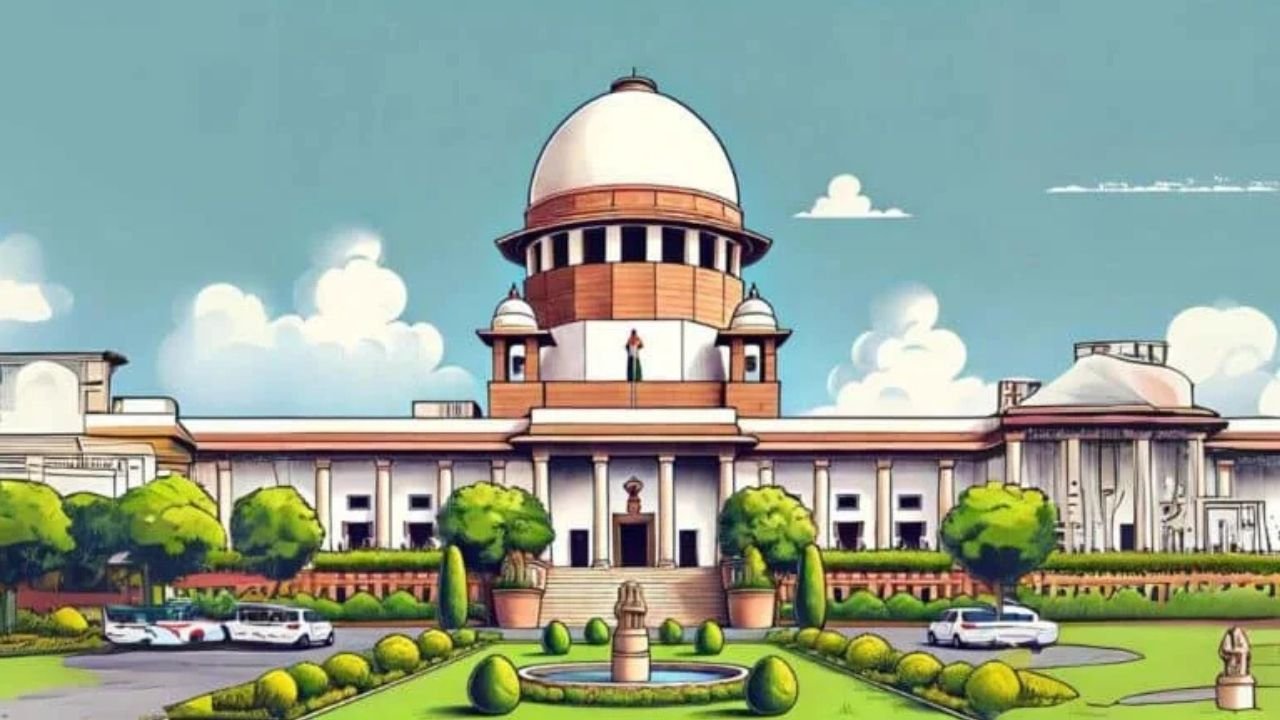

The Supreme Court has issued notices in a dispute concerning disqualification proceedings against a group of Trinamool Congress MPs who later aligned themselves with another political formation, bringing renewed attention to the Speaker’s role under the Tenth Schedule.
During the hearing, Solicitor General Tushar Mehta, appearing for the Speaker, argued that there was no need to issue notice to the Speaker because the office is a constitutional authority.
Justice Bagchi observed that the Speaker functions as a tribunal while deciding petitions seeking disqualification under the Tenth Schedule. The matter concerns the completion of disqualification proceedings within a reasonable period.
Algoritha Security Launches ‘Make in India’ Cyber Lab for Educational Institutions
The court also indicated that the Speaker’s constitutional status should be respected through the issuance of a formal notice. Mehta, however, submitted that he was personally present in court to represent the Speaker.
Court Issues Notice to Secretary General and MPs
Senior advocate Kalyan Banerjee, appearing for the Trinamool Congress leader, argued that formal notice was required because several other respondents had also been named in the petition.
The court proceeded to issue notice to the Secretary General and MPs Kakori Ghosh Dastidar, Sudip Bandyopadhyay, Satabdi Roy, Prasun Banerjee, Rachana Banerjee, Jagadish Chandra Barma Basunia, Partha Bhowmick, Arup Chakraborty, Adhikari Deepak Dev, Sayani Ghosh, Bapi Haldar, Md Abu Taher Khan, Kalipada Saren Kherwal, Asit Kumar Mal, June Maliah, Mitali Bag, Khalilur Rahaman, Mala Roy, Sharmila Sarkar and Yusuf Pathan.
Banerjee said he had met Speaker Birla on August 12 over the issue after sending a written reminder on July 27.
The proceedings centre on the question of how quickly disqualification petitions should be decided and the manner in which the Speaker should be treated during judicial proceedings concerning such petitions.
Row Follows Rebellion Within TMC Parliamentary Party
The dispute arose after 20 Lok Sabha MPs announced that they had joined or merged with the NCPI, described as a Tripura-based political outfit, and sought separate recognition in the House.
The rebel MPs were subsequently treated as an NCPI group in Parliament and participated in NDA parliamentary activities.
The development triggered a dispute over whether their move amounted to a valid merger or attracted disqualification under the anti-defection law.
The TMC has maintained that the MPs were elected on its symbol and that their decision to align with another political formation amounted to voluntarily giving up membership of the party.
TMC and Rebel Camp Take Opposing Positions
The TMC has argued that the MPs’ conduct attracts disqualification under the anti-defection provisions of the Tenth Schedule.
The rebel camp, however, has maintained that the move constituted a valid merger and should therefore not result in disqualification.
The Supreme Court proceedings now place the focus on the pending disqualification process and the Speaker’s role in deciding such petitions within a reasonable period.
The notices issued by the court will allow the respondents to place their positions on record as the dispute over the status of the MPs and the application of the anti-defection law continues.
Follow for daily updates on cybercrime, corporate fraud, DFIR, hacking, investigations, and digital forensics
