

As many as 1.41 lakh cooperative societies out of the 8.53 lakh registered across India are non-functional, while another 49,177 societies are under liquidation, according to data placed before the Lok Sabha. The figures also show that 6.63 lakh cooperative societies are currently functional, with audit coverage varying sharply across states.
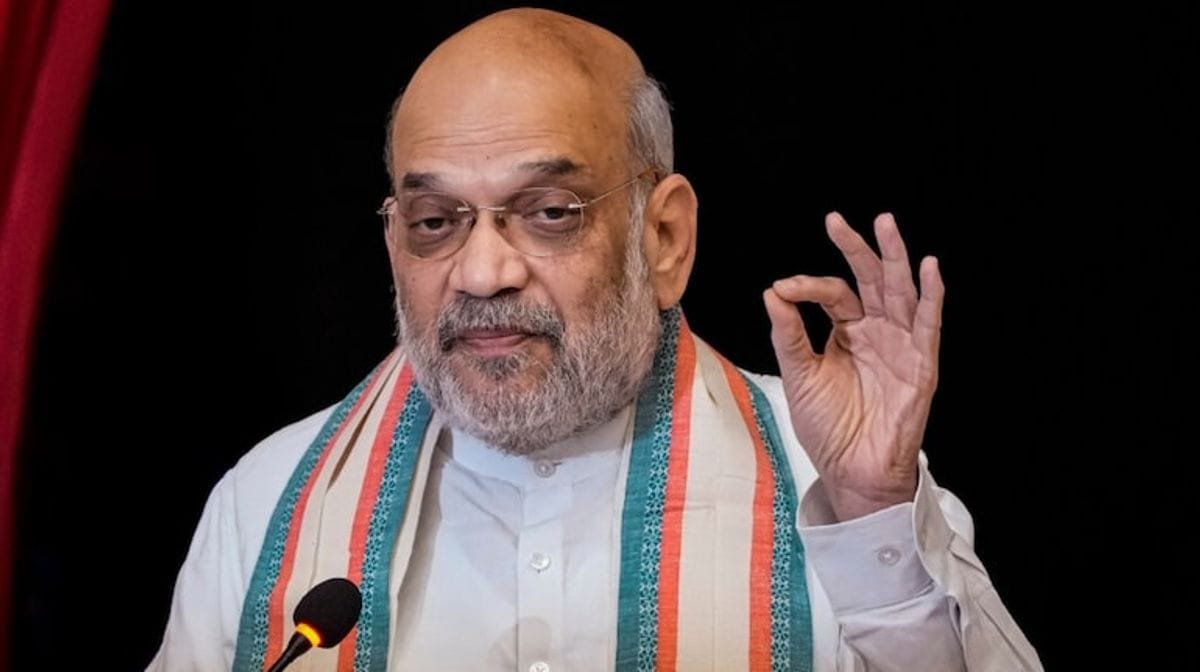
The data, maintained on the National Cooperative Database as of July 15, 2026, was provided by Union Home Minister and Minister of Cooperation Amit Shah in a written reply in the Lok Sabha. Of the 6.63 lakh functional societies, 5.95 lakh have been audited, while about 68,020 remain unaudited.
Maharashtra Leads in Number of Functional Cooperative Societies
Maharashtra has the country’s largest cooperative network, with 2,19,775 functional societies. Of these, 2,11,329 have been audited and 8,446 remain unaudited. Gujarat has 79,823 functional societies, including 73,340 audited and 6,483 unaudited societies. Telangana has 46,672 functional societies, of which 43,478 have been audited, while Karnataka has 40,440 functional societies and 37,732 audited societies. Rajasthan has 27,172 functional societies, with 23,497 audited, while Madhya Pradesh has 27,041 functional societies, including 25,479 that have undergone audit. Uttar Pradesh has 22,888 functional societies, of which 15,528 have been audited and 7,360 remain unaudited. West Bengal has 23,028 functional societies, including 16,977 audited and 6,051 unaudited societies. Bihar has 22,243 functional societies, of which 19,896 are audited. Tamil Nadu has 21,090 functional societies with 19,384 audited, while Haryana has 15,447 functional societies, including 13,228 audited. Kerala has 15,106 functional societies, of which 14,624 have been audited.
The figures also show relatively large audit gaps in some states. Jammu and Kashmir has 5,138 unaudited societies out of 9,132 functional societies, while Odisha has 3,198 unaudited societies out of 8,063. Assam has 2,957 unaudited societies against 8,071 functional societies.
115 Multi-State Cooperative Societies Placed Under Liquidation
The government said details of cooperative societies lying dormant because of financial irregularities, weak management or lack of timely audits are maintained by the respective State and Union Territory governments.
Multi-State Cooperative Societies operate as autonomous organisations under the Multi-State Cooperative Societies Act, 2002 and remain accountable to their members. Where irregularities, including financial embezzlement, are detected, winding-up proceedings can be initiated under Section 86 of the Act. A liquidator can then be appointed under Section 89 to liquidate the society’s assets and facilitate payments to investors and members in accordance with Section 90. So far, 115 Multi-State Cooperative Societies have been placed under liquidation. Rajasthan accounts for the highest number at 26, followed by Maharashtra with 23, Delhi with 16, Uttar Pradesh with 14 and Odisha with 12.
West Bengal has six such societies, Gujarat four and Tamil Nadu three. Andhra Pradesh and Telangana have two each, while Bihar, Chandigarh, Goa, Jharkhand, Karnataka, Punjab and Dadra and Nagar Haveli and Daman and Diu have one each.
Government Pushes Governance Reforms and PACS Computerisation
The Ministry of Cooperation, established on July 6, 2021, has introduced several measures aimed at improving transparency, accountability and protection of members’ interests under the vision of “Sahakar se Samriddhi”.
The Multi-State Cooperative Societies Act was amended in 2023 to strengthen governance, transparency, accountability and the electoral process. The amendment also created a Cooperative Rehabilitation, Reconstruction and Development Fund to support the revival of sick Multi-State Cooperative Societies and their infrastructure requirements. The government has also circulated Model Bye-laws for Primary Agricultural Credit Societies, allowing them to diversify into activities including storage, processing, LPG distribution and Common Service Centres while strengthening governance and member-focused operations.
A PACS computerisation programme is bringing functional societies onto a common ERP-based national software platform to improve transparency, efficiency, record management and service delivery. Capacity-building programmes are also being conducted for cooperative members, boards of directors, employees, state officials and aspiring youth through a network of 20 training institutes.
The National Cooperative Database covers 8.53 lakh cooperative societies and around 32 crore members. Rural Cooperative Banks have also been brought under the RBI Integrated Ombudsman Scheme as part of efforts to strengthen transparency and accountability in the cooperative sector.
