

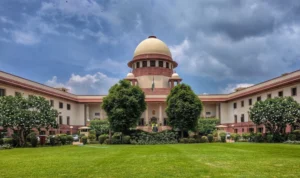
The Supreme Court has expressed serious concern over the growing menace of drug trafficking and the expanding networks involved in the illegal trade. During the hearing on Monday, the apex court observed that drug trafficking is a very serious problem and stressed that specialised investigation and enforcement agencies must work together through coordinated efforts to effectively tackle the threat. The court has issued notice to the Centre and sought its response to the plea.
A bench comprising Chief Justice of India Surya Kant, Justice Joymalya Bagchi and Justice V. Mohana was hearing a petition seeking a uniform mechanism for the investigation and trial of cases related to drug trafficking across the country. The petitioner highlighted the lack of coordination among different agencies and variations in investigation procedures, arguing that these gaps can delay action in cases involving organised drug networks.
The plea seeks clear guidelines for investigating drug trafficking cases and fixing specific timelines for completing investigations. It also calls for a uniform Standard Operating Procedure (SOP) for the trial of such cases. According to the petition, establishing clear standards from investigation and forensic examination to prosecution and trial could help reduce delays and ensure greater consistency in the handling of narcotics cases.
Claim of 53% rise in cases in 2025
The petition has cited data claiming that drug-related cases increased by 53% in 2025. It also claims that around 1,240 tonnes of narcotic substances were seized during the year. According to the plea, the figures indicate the expanding scale of illegal drug trafficking and the seriousness of the challenge faced by law enforcement agencies.
The petition has also highlighted the wider social impact of drug addiction. It states that substance abuse does not affect only an individual but can have a severe impact on entire families. Prolonged addiction can cause financial and social hardship, while also creating broader public health and law-and-order challenges. The plea has therefore urged the authorities to treat the issue as a serious and coordinated national challenge.
Petition highlights gaps in investigation and forensic systems
The petition before the Supreme Court has also pointed to several shortcomings in the existing investigation framework. It claims that investigation procedures and standards are not uniform across cases. Delays in forensic examination of seized substances and other evidence can further slow down the filing of charge sheets and subsequent trial proceedings.
The plea has also emphasised that drug trafficking is frequently organised and interstate in nature. Such cases may involve multiple agencies and jurisdictions, making coordination particularly important. The petitioner has sought stronger mechanisms for sharing intelligence, identifying trafficking networks, examining financial transactions and conducting timely forensic analysis of seized narcotics.
The bench has sought the Centre’s response in view of the seriousness of the issue. The proceedings could potentially lead to greater emphasis on coordination among investigation agencies, forensic laboratories, prosecutors and courts rather than limiting enforcement efforts to arrests and seizures. The next course of action is expected to become clearer after the Centre submits its response before the Supreme Court.
