

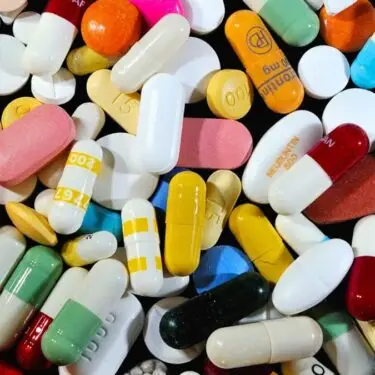
New Delhi: The seizure of life-saving medicines worth nearly ₹2.48 crore from a flat in Sector 76, Noida, Uttar Pradesh, has prompted investigators to widen the probe into what is suspected to be an organised interstate operation with possible international links. According to officials, the recovered stock includes anti-cancer injections, anti-rabies vaccines, anti-snake venom serum, immunoglobulins and several other high-value biological medicines. Investigators also found multiple medicines labelled “Government Supply – Not for Sale,” raising concerns over the alleged diversion of medicines from the public healthcare supply chain.
The seizure was carried out during a joint operation by the Delhi Police Crime Branch, the Central Drugs Standard Control Organisation (CDSCO) and the district drug department. Officials said the raid led to the recovery of a large quantity of tablets, capsules, injections, vaccines and other pharmaceutical products with an estimated market value of ₹2,48,66,658. Several medicines manufactured by reputed pharmaceutical companies were also among the seized stock.
Investigators believe the case extends beyond illegal storage of medicines. Preliminary findings indicate the possible existence of an organised network involved in the procurement, storage, transportation and distribution of pharmaceutical products. Agencies are now examining whether the operation has links across multiple Indian states and potential overseas connections.
The raid also uncovered serious concerns regarding storage practices. Several temperature-sensitive life-saving medicines and vaccines were allegedly stored at normal room temperature instead of under prescribed cold-chain conditions. Medical experts note that biological medicines such as anti-cancer drugs, anti-rabies vaccines, anti-snake venom serum and immunoglobulins generally require storage between 2°C and 8°C. Failure to maintain the required cold chain can significantly reduce their effectiveness and may compromise patient safety.
Another significant aspect of the investigation is the discovery of medicines carrying the label “Government Supply – Not for Sale.” Authorities suspect that medicines intended for government hospitals or public healthcare programmes may have been illegally diverted into the private market. Investigators are also examining whether some of the recovered medicines originated from supply chains linked to the Government of Bihar, although no official confirmation has been issued at this stage.
Drug department officials have collected samples of eight pharmaceutical products and sent them to an authorised laboratory for testing to determine their quality, authenticity and regulatory compliance. The laboratory findings are expected to establish whether the medicines meet prescribed quality standards or whether they involve counterfeit products, regulatory violations or other irregularities. Further legal action will be based on the test results.
The arrested accused, Anand Kumar, is being questioned extensively. Investigators are analysing his mobile phone, bank accounts, financial transactions, documents and other digital records to identify the structure of the alleged network, trace the movement of funds and determine the involvement of other individuals. Authorities are also examining supply routes and possible contacts in multiple states.
Experts at the Future Crime Research Foundation said that the illegal trade in life-saving medicines is not merely an economic offence but also poses a serious threat to public health. Improper storage or unauthorised distribution of temperature-sensitive medicines can reduce their therapeutic effectiveness and adversely affect patient treatment. They advised hospitals, pharmaceutical distributors and the public to purchase medicines only from authorised sources and immediately report any suspected illegal storage, sale or distribution of medicines to the concerned drug authorities or law enforcement agencies.
