

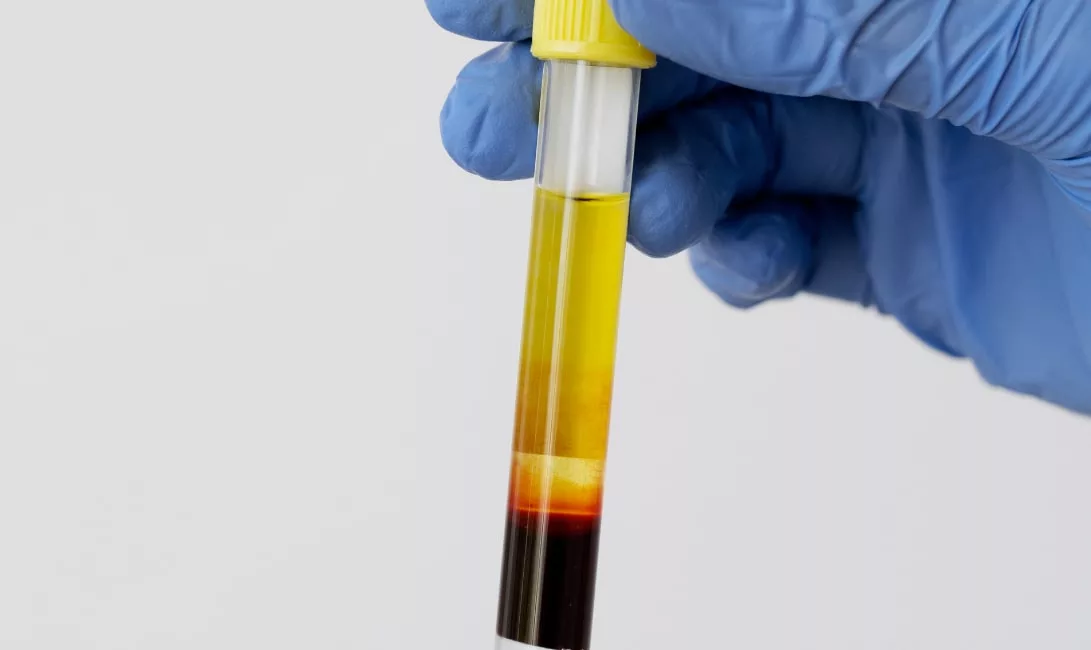
Adulterated Plasma Racket Exposed in Gujarat; 1,140 Contaminated Units fraud involving adulterated blood plasma has been uncovered by the Ahmedabad Rural Police Special Operations Group (SOG), revealing that 1,140 plasma units were allegedly tampered with and supplied through an interstate network. Preliminary forensic findings have confirmed that the seized plasma units were substandard, unsafe, and posed a serious risk to human life.
According to officials, the accused operated a highly organised racket in which genuine blood plasma was partially extracted and replaced with saline solution to manipulate volume and evade detection during inspections. The original high-quality plasma was allegedly diverted and routed to multiple blood banks outside Gujarat, while the diluted and compromised plasma was supplied further into the distribution chain.
Police have identified key accused, including Dinesh Chaudhary, laboratory owner Mohan Gaikwad, and two associates, who are believed to have played central roles in executing and managing the operation. The accused were allegedly running the racket for several months before the irregularities were detected during a coordinated enforcement action.
Registration Begins for FutureCrime Summit 2026, India’s Largest Cybercrime Conference
The pathology department of BJ Medical College in Ahmedabad conducted a detailed analysis of the seized samples and confirmed that all 1,140 units were adulterated. Officials stated that the contamination levels made the plasma unsuitable for medical use, triggering immediate protocols for destruction of the seized stock to prevent any accidental circulation.
Investigators said the racket followed a structured supply chain model. High-quality plasma collected from legitimate sources was allegedly siphoned off and replaced with saline to maintain apparent volume levels. This allowed the accused to balance inventory records while diverting original medical-grade plasma to other channels.
Preliminary findings indicate that the diverted plasma was allegedly supplied to multiple blood banks across Maharashtra, including locations in Washim, Ahmednagar, Dhule, Nashik, Bhusawal, Chhatrapati Sambhajinagar, and Jalna. Authorities are now examining whether pharmaceutical companies were also unknowingly supplied compromised material for downstream processing.
Ahmedabad Rural Superintendent of Police Om Prakash Jat confirmed that the investigation has been expanded beyond Gujarat. He stated that inter-state coordination is underway with regulatory bodies, including the Food and Drugs Department and the Gujarat State Council for Blood Transfusion, to trace the full extent of the supply network and identify all linked entities.
Officials clarified that, based on current findings, there is no evidence that the adulterated plasma entered hospitals or blood banks within Gujarat’s public healthcare system. However, the possibility of wider distribution is not being ruled out, and verification processes are ongoing.
Investigators believe the operation relied on systematic manipulation of laboratory processes and falsification of records to conceal the extraction and substitution of plasma. The accused are also suspected of maintaining parallel supply routes to distribute the original plasma discreetly across state borders.
Police sources said that financial transactions, transport records, and procurement logs are being examined to map the entire chain of movement. Digital devices and documents seized from the accused are also under forensic analysis to determine the scale of the operation and identify additional collaborators.
Authorities have indicated that more arrests may follow as the investigation progresses. Efforts are also being made to trace the end recipients of the diverted plasma and assess whether any regulatory violations occurred at intermediary blood banks.
The case has raised serious concerns over monitoring gaps in the blood supply ecosystem, with investigators focusing on how such a large-scale manipulation of life-saving medical material remained undetected for an extended period.
