
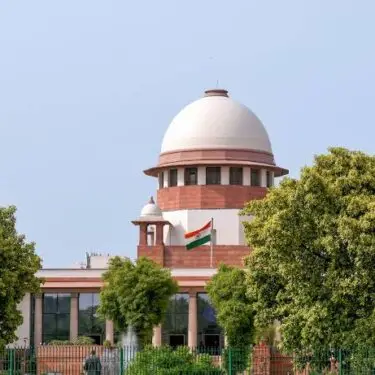
The Supreme Court has adopted a firm stance in a high-profile real estate and money laundering case involving thousands of homebuyers, directing former Haryana MLA Dharam Singh Chhoker and his family to disclose details of all their assets and submit a clear plan for compensating affected investors. The court has also sought an affidavit explaining how pending housing projects will be completed or how homebuyers will be refunded.
Pre-Condition Safeguards and Interim Release Obstacles
The case revolves around residential housing projects in which a large number of buyers invested their savings in the hope of securing affordable homes. Allegations suggest that despite collecting substantial funds from purchasers, the projects were not completed within the promised timelines, leaving many buyers waiting for possession of their flats.
The matter reached the Supreme Court after Chhoker challenged orders related to his arrest and denial of bail in a money laundering investigation linked to the housing projects.
A bench comprising Justice Joymalya Bagchi and Justice Vipul M. Pancholi emphasized during the hearing that the court needed clarity on how the interests of affected homebuyers would be protected. The bench directed Chhoker to file an affidavit within 24 hours detailing the manner in which claims of homebuyers would be addressed and how funds would be arranged for project completion or repayment.
Registration Begins for FutureCrime Summit 2026, India’s Largest Cybercrime Conference
Asset Registry Disclosures and Encumbrance Disclosures
The court further ordered the disclosure of all assets owned by Chhoker and his family, including properties held by his two sons, who have also been named as co-accused in the investigation. The affidavit must include information regarding any loans, mortgages, liens, or other encumbrances attached to those assets.
During the proceedings, the defence informed the court that two of the group’s three major housing projects were substantially complete, while the third primarily involved refund claims from buyers. Counsel representing Chhoker stated that a proposal was being prepared to resolve the claims of affected purchasers. However, the court made it clear that assurances alone would not be sufficient and that actual repayment progress would carry greater weight.
Attached Property Exclusions and Enforcement Liabilities
Counsel representing the Enforcement Directorate argued that total liabilities and claims linked to the case are estimated at around ₹1,100 crore. The agency urged the court not to consider any relief without first obtaining a complete picture of the family’s assets and a practical plan for compensating homebuyers. It also informed the court that assets already attached by investigators could not automatically be used for repayment purposes.
According to investigators, one of the housing projects was developed under an affordable housing scheme. Authorities allege that approximately ₹363 crore was collected from nearly 1,500 homebuyers, but possession of the flats was not delivered within the stipulated period. As delays mounted, numerous complaints alleging cheating and forgery were filed by affected purchasers.
Capital Diversion Traces and Bank Guarantee Falsifications
The Enforcement Directorate further claims that funds collected from buyers were diverted and that proceeds of crime were allegedly routed through various channels. The investigation is also examining alleged irregularities involving documents and bank guarantees associated with the projects.
Legal and real estate experts believe the court’s approach sends a strong message in cases where thousands of homebuyers face prolonged financial hardship because of delayed or incomplete housing projects. Renowned cybercrime expert and former IPS officer Prof. Triveni Singh said transparency, disclosure of assets and protection of investors’ interests are critical in large-scale financial and real estate disputes. He noted that safeguarding victims’ interests remains a key component of the judicial process.
The matter remains under consideration before the Supreme Court. During the next hearing, the court is expected to examine the affidavits, review details of the disclosed assets and assess the proposed plan for compensating homebuyers. Any final determination regarding liability or relief will depend on the outcome of the ongoing judicial proceedings.
The Supreme Court has taken a tough stand against former Haryana MLA Dharam Singh Chhoker, granting a 24-hour deadline to file a complete disclosure of family assets and present a definitive execution plan to reimburse or rehabilitate 1,500 homebuyers affected by a ₹1,100 crore real estate scam.
