
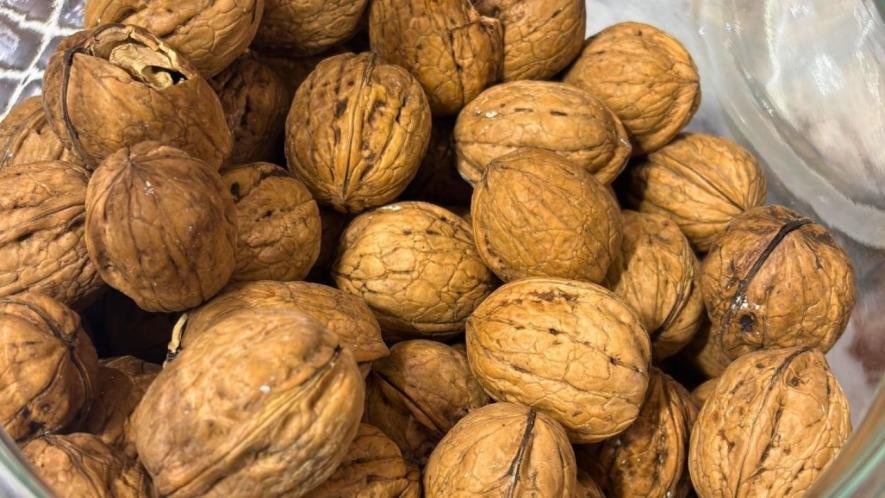
Authorities have busted a large-scale customs duty evasion racket involving walnut imports at Nhava Sheva port in Navi Mumbai, uncovering a fraud estimated at ₹138.84 crore and leading to the arrest of five individuals so far.
The syndicate allegedly manipulated country-of-origin declarations and forged transit documents to illegally claim preferential tariff benefits under international trade agreements.
According to officials, the Central Intelligence Unit (CIU) of Jawaharlal Nehru Customs House (JNCH) launched a targeted enforcement push codenamed “Operation CO-FIND” based on specific intelligence inputs. This operation led directly to the exposure of the organised network engaged in systematic misdeclaration of high-value walnut consignments.
Registration Begins for FutureCrime Summit 2026, India’s Largest Cybercrime Conference
The SAFTA Misuse Loop
Investigators revealed that shipments originally originating from China, the United States, and Chile were fraudulently rerouted through Jebel Ali in the United Arab Emirates and falsely declared as goods of Afghan origin. This deliberate misrepresentation enabled the proxy importers to unlawfully avail concessional duty benefits under the South Asian Free Trade Agreement (SAFTA).
Under the alleged scheme, the standard customs duty on walnuts—which normally sits around 110%—was artificially reduced to nearly 5%. This massive suppression resulted in immense illegal financial gains for the accused while causing a significant revenue drain on the public exchequer.
Officials said the accused created a fabricated paper trail using forged bills of lading and manipulated transit documentation, showing fictitious movement of goods through ports such as Bandar Abbas in Iran and Jebel Ali in Dubai. These documents were systematically used to establish a false chain of custody and mislead customs authorities regarding the true origin of the goods.
Abnormal Import Spikes and Market Distortion
The investigation further revealed highly abnormal import trends at Nhava Sheva port, where Afghanistan-origin declarations for in-shell walnuts saw a sudden spike during the period under scrutiny, followed by an unusual decline. Authorities said this pattern was completely inconsistent with normal seasonal trade flows and strongly indicated deliberate manipulation of origin data.
Officials added that the racket not only caused substantial revenue leakage but also distorted the domestic walnut market. The influx of underpriced imports harmed genuine traders and farmers in Jammu and Kashmir, Himachal Pradesh, Uttarakhand, and Arunachal Pradesh, where walnut production forms an important part of the local agricultural economy.
As part of the ongoing crackdown, coordinated searches were conducted at multiple locations in Mumbai and surrounding areas, leading to the seizure of critical digital and documentary evidence. Five individuals have been arrested, including Sneh Dipakbhai Kakadiya, who investigators claim played a key role in financing, procurement, customs clearance, and distribution through proxy import entities.
Judicial Intervention and Revenue Security
Kakadiya was formally remanded to judicial custody for 12 days as investigations continue to trace the broader financial and operational network behind the scam. In a related judicial development, the Bombay High Court declined to issue a blanket order for the release of seized consignments claimed to be of Afghan origin.
The court instead allowed conditional clearance, subject to a mandatory deposit of the full differential duty of ₹2.78 crore or the submission of an equivalent bank guarantee, reinforcing the customs department’s authority to secure revenue interests before clearance of disputed goods.
Authorities said further investigation is underway to identify all beneficiaries, facilitators, financial intermediaries, and linked consignments involved in the racket. Agencies are also examining cross-border trade routes and financial transactions to determine whether similar misdeclaration schemes have been used in other import categories.
